Best Glue for Wood Model Kits of 2026

Wood model kits are less forgiving than furniture. The pieces are tiny, the joints sit where you'll look at them, and a bead squeezed onto bare balsa leaves a stain you can't sand out without flattening a spar. A good glue gives you a minute to slide a part into place, goes on through a tip fine enough for a quarter-inch joint and dries to a line a finish will hide. The wrong one grabs in four seconds, usually a quarter inch off center.

Water resistance and clear drying are separate purchases, which surprises first-time builders, and a bottle gone stringy will fail a joint you were sure you clamped. Most builders end up with two: a slow PVA for structure and a gel CA for tacking. Our picks, from 16 bottles used on wing spars, cabin trim and snapped fittings, cover both.

Our Top Picks

The Best Glue for Wood Model Kits

1.

Titebond Original Wood Glue Best Overall
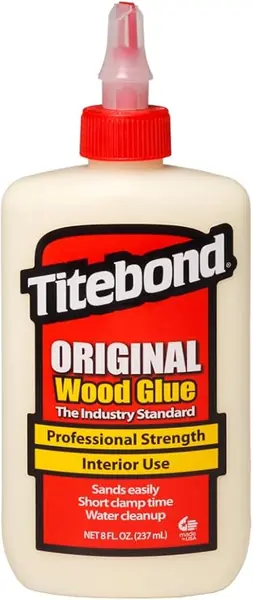
Titebond Original wood glue in an eight-ounce yellow squeeze bottle

Structural wood joints

Track Score 98/100
Bottle Size
8 fluid ounces
Water Resistance
Not water resistant
Tensile Strength
3,600 psi
Dried Film
Translucent, sandable
View on Amazon

The film it leaves is why this bottle comes first. Titebond Original dries translucent instead of chalky, sands without softening or balling up the paper, and takes stain and paint without a pale ring around the seam, so on an open frame or a visible deck a well-fitted joint simply disappears. It is rated at 3,600 psi and built to exceed the strength of the wood itself, which means a tight joint in balsa, basswood, or plywood is limited by the wood rather than by the glue line.

Cleanup and smell are the quiet advantages. The formula grabs quickly enough to shorten clamp time, wipes off with a damp swab before it skins, and runs low enough in VOC, under 0.2 grams per liter, that a three-hour session at the dining table leaves nothing behind in the air. Squeeze-out on a balsa stringer is exactly the mistake you want to fix with a wet fingertip, and this is one of the few bottles here where that works.

The bottle, though, is built for furniture. Its nozzle lays a bead wider than most joints on a model, so we decant an ounce into a fine-tip bottle or load a syringe for anything smaller than a matchstick. That is a five-minute habit rather than a flaw in the glue, and it turns a shop-size bottle into a model-building supply that lasts through several kits, which is why we tell people to buy it first and fit a fine tip.

Worth Noting

  • Needs solid contact area to hold
  • Not water resistant, so indoor models only
Our Verdict

For balsa frames, plywood formers, and hardwood trim alike, this is the bottle we keep on the bench: a bond stronger than the wood, a sandable film, and water cleanup.

Check Latest Price
2.

Bearly Art Precision Craft Glue Best for Fine Detail

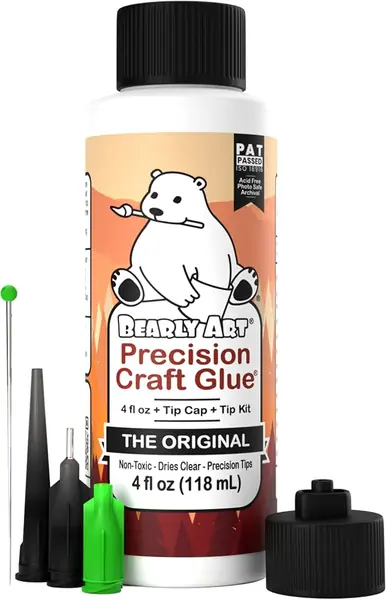
Bearly Art precision craft glue bottle with fine twist-on applicator tips

Fine detail work

Track Score 97/100
Bottle Size
4 fluid ounces
Dried Finish
Clear and archival
Shelf Life
1 year
Applicator Tips
Multiple sizes, twist-on
View on Amazon

Three applicator tips twist and snap onto the bottle, and the finest of them runs a line of glue down a laser-cut stringer without spreading onto the planking beside it. Control is the entire point here. On a kit where half the joints are smaller than a grain of rice, a fine tip is the difference between gluing a part and gluing the part plus everything touching it.

What we appreciate most is the dry. It goes on white, cures clear and flat, and stays flat, because the formula is built to resist wrinkling and warping when the bead stays small. That matters on a veneer deck or a printed instrument panel, where a swollen seam is permanent and paint will not hide it. The acid-neutral, archival chemistry is a quiet bonus for paper parts and thin veneer that will sit on a shelf for years.

Two things to know before you buy. It is a craft PVA rather than a structural wood glue, so a hull frame, a wing spar, or any joint that carries load is better served by the aliphatic glues here. And the fine nozzle needs a wipe before the cap goes on, or the next session starts with a clog, which is a two-second habit that keeps it flowing for the life of the bottle.

Worth Noting

  • Premium price for a four-ounce bottle
Our Verdict

We hand this to anyone whose joints are smaller than a pinhead: the twist-on tips, the clear flat dry, and the archival formula earn their premium.

Check Latest Price
3.

Titebond III Ultimate Wood Glue Best for Long Assemblies

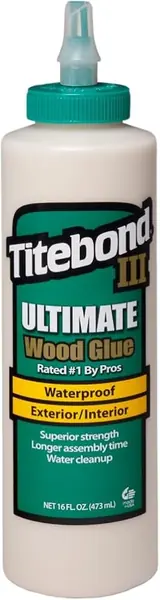
Titebond III Ultimate waterproof wood glue in a sixteen-ounce bottle

Long glue-ups

Track Score 96/100
Bottle Size
16 fluid ounces
Water Resistance
Waterproof, ANSI/HPVA Type I
Tensile Strength
4,000 psi
Open Time
8 to 10 minutes
View on Amazon

Eight to ten minutes of open time sounds generous until you have used it. Then it becomes the reason a long seam goes together straight: time to set a plank, slide it into register, lift a corner, and reset it before the glue grabs, with enough tack left that a strip of tape can hold it while you move on. On a hull, a wing skin, or any subassembly where more than two parts meet at once, that window is the whole job.

It is also the highest tensile rating in this group at 4,000 psi, and it passes ANSI/HPVA Type I, which is the waterproof classification rather than the water-resistant one. For a pond yacht, a garden railway building, or a model stored in a humid basement, that matters more than anything else on this list. The mix is on the runny side, so keep the bead thin and wipe the squeeze-out before it creeps into detail you would rather not sand.

Our rule is simple. If three or more parts are coming together at once, or the finished model will ever see weather, this is the bottle we pick up. For a single strut on a display kit, the extra working time buys nothing you cannot get from a smaller, cheaper bottle of the Original.

Worth Noting

  • Tan bond line shows under a clear finish
Our Verdict

For a long seam, a multi-part subassembly, or a model that lives outdoors, we take the eight-to-ten-minute open time over a prettier bond line.

Check Latest Price
4.

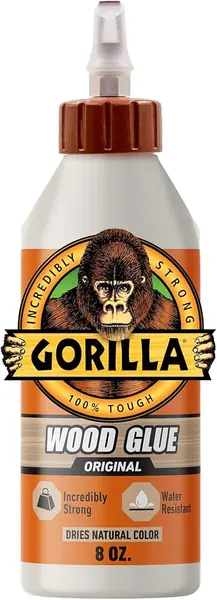
Gorilla Wood Glue Best Fast-Clamp Wood Glue

Gorilla Wood Glue eight-ounce bottle of natural-color PVA adhesive

First-time kit builders

Track Score 95/100
Bottle Size
8 fluid ounces
Water Resistance
ANSI/HPVA Type II
Clamp Time
20 to 30 minutes
Dried Color
Natural wood color
View on Amazon

Twenty to thirty minutes of clamp time is the number to look at when a kit is mostly subassemblies. It is long enough to line up a roof panel or a cabin side and get tape on it, and short enough that the clamps come off while you are still in the session. It cures to a natural wood color with no foaming, sands and paints cleanly, and passes ANSI/HPVA Type II, so a model that lives in a humid room or gets handled a lot needs no special treatment.

The reason we hand this bottle to someone building a first kit is forgiveness. It cleans up with water, it can be thinned with a splash of water, no more than five percent by weight, when you want it to flow into a tight seam instead of sitting on top of one, and a damp fingertip smooths a fillet along an inside corner so a plain butt joint reads as intentional on an open frame. None of that is dramatic. It is simply the bottle that makes a first model less nerve-racking.

Worth Noting

  • Bottle top gums up with dried glue
Our Verdict

Twenty to thirty minutes in the clamps, a natural bond line, and water cleanup make this the wood glue we hand a first-time kit builder.

Check Latest Price
5.

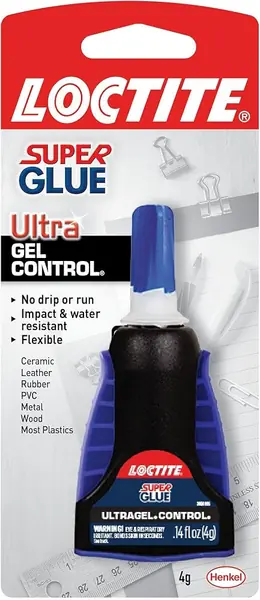
Loctite Super Glue Ultra Gel Control Best for Pinpoint Repairs

Loctite Super Glue Ultra Gel Control in a small side-squeeze bottle

Rigging and fittings

Track Score 94/100
Bottle Size
0.14 fluid ounces
Water Resistance
Water resistant
Tensile Strength
3,625 psi
Form
Rubber-toughened gel
View on Amazon

Squeeze the sides of the bottle and the gel arrives a drop at a time, which is why this is the one we keep for rigging, struts, and small metal fittings. The side-squeeze design puts the pressure where your fingers already are, so there is no surge when the seal breaks and nothing running down a vertical strut while you line a part up against it.

The gel is rubber-toughened, and that counts for more on a model than on a household repair. A landing gear leg or a display stand takes knocks, and a toughened cyanoacrylate flexes rather than shattering at the bond line. It sets without clamping and dries transparent, which is what makes it useful on a photo-etched fitting or a resin aftermarket part that no wood glue would grip.

Keep it capped and stored upright between sessions. CA skins over in the tip faster than any PVA, and a bottle that sits open on the bench all afternoon is a bottle you throw away. On a load-bearing wood joint it is the wrong tool regardless, because cured CA is hard and brittle under the flex a hull or an airframe takes, so tack with it and let a wood glue carry the load.

Worth Noting

  • Four-gram bottle empties quickly
Our Verdict

The side-squeeze bottle puts a dot exactly where you want it, which is why this is the super glue we keep for rigging and small fittings.

Check Latest Price
6.

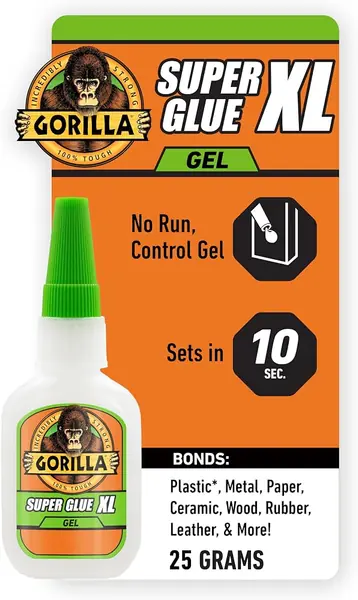
Gorilla Super Glue Gel XL Best for High-Volume Tacking

Gorilla Super Glue Gel XL 25-gram bottle with a metal pin cap

High-volume tacking

Track Score 93/100
Bottle Size
0.88 oz
Water Resistance
Not water resistant
Form
No-run gel
Set Time
10 to 45 seconds
View on Amazon

Twenty-five grams is a lot of super glue. Where the Loctite bottle is a four-gram repair kit, this one is a working supply: enough gel to run a bead along a balsa fillet, tack a whole set of ribs, and still have some left for the next kit in the stack.

The gel formula is the part that matters for model work. It does not run, so it stays where you put it on a vertical former or a strut, and it does not wick away into end grain the instant it touches balsa the way a thin liquid CA does. Set time runs ten to forty-five seconds, long enough to place a part and short enough that you are not sitting there holding it.

The cap is the detail we appreciate most. A metal pin sits in the nozzle and seals it, so the second and third sessions are not a fight with a glued-shut tip, and a bottle that stays usable is worth more than a smaller one that does not. That is the case this one makes for a place in the box.

Worth Noting

  • Short set time leaves no room to reposition
  • Not water resistant once cured
Our Verdict

A big bottle of no-run gel that is still liquid at the next session.

Check Latest Price
7.

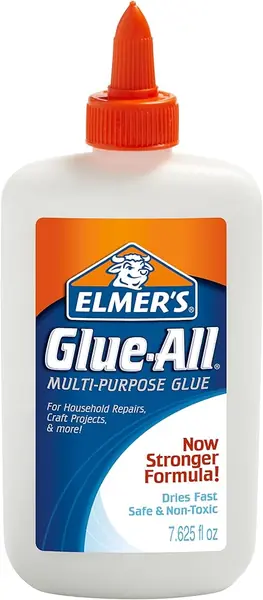
Elmer's Glue-All Best for Mixed-Material Craft Work

Elmer's Glue-All multi-purpose liquid glue in a 7.625-ounce white bottle

Mixed-material craft work

Track Score 92/100
Bottle Size
7.625 fluid ounces
Dried Finish
Clear
Formula
Non-toxic, quick-drying
Compatible Materials
Wood, paper, fabric, ceramic, leather
View on Amazon

Plenty of joints on a wooden kit are not wood to wood. There are paper plans to fix to balsa, printed instrument panels, cardstock shims, fabric for a sail, and leather for a seat cushion, and a bottle that handles all of them without a second purchase is worth having on the bench. This is that bottle: a multi-purpose PVA that bonds wood, paper, fabric, ceramic, and leather, and dries clear.

Clear is the useful part. On light balsa or a pale plywood deck, a white glue line is a permanent reminder of where you were working, and this one dries transparent with none of the chalky residue that makes a builder reach for sandpaper. It is also non-toxic and cleans up with water, which is why it is the bottle we leave out when a younger builder is working beside us.

It stays workable long enough to be forgiving. You can run a thin film along a printed plank line, press it down, and slide the piece into register before it grabs, an adjustment a fast wood glue takes away from you. A damp swab lifts anything that squeezes out, and if you miss a smear it dries clear instead of leaving a yellow line across the deck.

We keep it for the jobs the wood glues are wrong for, and for the builder who is still learning how much glue is enough. It is the least expensive bottle here and the one we are happiest to see used generously, because a bottle that gets used up beats a bottle that gets saved.

Worth Noting

  • Softer hold than aliphatic glue on frames
Our Verdict

For a first kit, a kid at the table, or a paper part glued to wood, this is the inexpensive, forgiving bottle we keep within reach.

Check Latest Price

How We Tested Wood Glue for Model Kits

Every bottle here came off the same shortlist: wood glues and craft adhesives that kit builders name in forums and hobby-shop threads, filtered by published specs — open time, water resistance, bottle size — and by whether the stuff would be practical on a small joint. We ordered 16 bottles, a mix of water-based wood glue, cyanoacrylate gel, and multi-purpose craft glue, and worked through them over five months.

Most of the testing happened at a kitchen table on weeknights — wing spars, cockpit trim, fascia strips — plus a garage bench for anything that needed a clamp and a wet rag. We timed open time with a stopwatch, pressing a scrap into a bead at one-minute intervals until it stopped sliding, and timed clamp time by tugging a clamped joint every five minutes. Applicator control we judged by running a bead down a quarter-inch joint to see whether it stayed on the line or wandered, and whether the tip clogged between passes.

For strength, we glued scrap joints in the same woods our kits used, cured them a full day, then pulled them apart by hand and with a clamp; a good joint tears wood fibers, a bad one pops clean at the glue line. Parts got held with tweezers, tape, or clamps rather than fingers, since CA bonds skin in seconds, and CA work happened with the windows open. We sanded cured squeeze-out to see whether it clogged paper or showed under stain.

Water resistance we checked by dripping water on cured joints and leaving samples in a humid room for a week. Bottles were weighed before and after each build to see how much actually left the bottle, stored upright at room temperature, and checked weeks later for stringiness.

How to Choose Glue for Wood Model Kits

Start With Two Bottles, Not One

A kit asks two different things of an adhesive. Wood-to-wood structure, meaning frames, formers, planking, and spars, wants a PVA or aliphatic wood glue that soaks into the fibers and dries harder than the wood around it. Tacking, metal fittings, resin aftermarket parts, and anything you cannot clamp wants a cyanoacrylate. Covering both with a single bottle means compromising the joint that matters most.

Which wood glue depends on the model's life. A display kit that stays indoors is well served by Titebond Original or Gorilla Wood Glue; a pond yacht or a garden building wants a Type I waterproof formula like Titebond III. The classification matters more than the label copy: Type I is waterproof, Type II is water resistant, and an unclassified craft PVA is neither.

Open Time and Clamp Time Are Two Different Clocks

Open time is how long you can move a part before the glue grabs. Clamp time is how long the part stays clamped. They are not the same number and they do not both reward the same choice. Titebond III gives eight to ten minutes of open time, which is what a long plank seam or a four-part subassembly needs, while Gorilla Wood Glue wants twenty to thirty minutes in the clamps and suits a kit built from small subassemblies.

The trap is buying the fastest-grabbing bottle on the shelf for a model where a lot of parts meet at once. A quick grab is a gift on a single strut and a liability on a wing that needs six ribs lined up. Match the clock to the assembly in front of you, not to your own patience.

Choose a Bond Line You Can Live With

Glue color is the specification nobody reads until a seam shows through a clear finish. Titebond Original dries translucent and sands to nothing, Gorilla Wood Glue cures to a natural wood color, Titebond III dries tan, and Elmer's Glue-All and Bearly Art dry clear. If the model gets painted, any of them will do. If it gets finished clear, with dope over tissue or varnish over planking, stay with the translucent and clear options.

Sandability belongs in the same decision. A glue that cures hard and glassy clogs paper and leaves a ridge along the seam, while one that powders cleanly lets you fair a joint flush with the surface. Try a bead on scrap before you commit a whole hull to it.

Match the Applicator and the Bottle Size to the Job

A shop bottle's nozzle lays a bead wider than most joints on a model, which is how builders end up with glue where they did not want it. The fix costs almost nothing: decant an ounce into a fine-tip bottle or a syringe, or buy a PVA that comes with precision tips, as Bearly Art does. A toothpick still works for a single dot.

Buy the size you will actually finish. PVA has roughly a year of shelf life, so a large bottle rewards a builder who works steadily and penalizes one who builds a kit a winter. Cyanoacrylate skins over in the tip far sooner, so small bottles or a pin-sealed cap beat a large one you open twice.

Frequently Asked Questions

Final Verdict

Titebond Original is the bottle to buy. It dries translucent, sands clean, forms a bond stronger than the wood, and costs less than any other wood glue here, and with a fine tip fitted it handles nearly everything a kit asks of it. If the model will live outdoors or you routinely bring several parts together at once, Titebond III's waterproof bond and eight-to-ten-minute open time are worth the tan seam.

For joints smaller than a pinhead, Bearly Art's twist-on tips and clear, flat dry earn their premium, and a first-time builder will have an easier time with Gorilla Wood Glue's forgiving clamp time.