Best Glue for Diecast Models of 2026

A snapped wing mirror on a 1:18 model should be a two-minute repair, until the glue fogs the paint. Diecast means metal, usually painted and often joined to plastic, and the adhesive has to hold both without leaving a white haze across a visible surface. Thin CA that wicks past a joint onto a chrome bumper is the classic way it goes wrong.

Viscosity separates these glues. Thin CA wicks into hairline seams and sets before you can nudge the part; medium and gel formulas stay where you put them, giving a few seconds to adjust and enough body to fill a snapped tab. Applicator control matters as much: a brush lays a film, a microtip reaches into a wheel well, and an anti-clog cap keeps the bottle from sealing itself shut. All seven picks dry clear on metal-to-metal and metal-to-plastic joints.

Our Top Picks

The Best Glue for Diecast Models

1.

Gorilla Super Glue Brush & Nozzle Best Overall
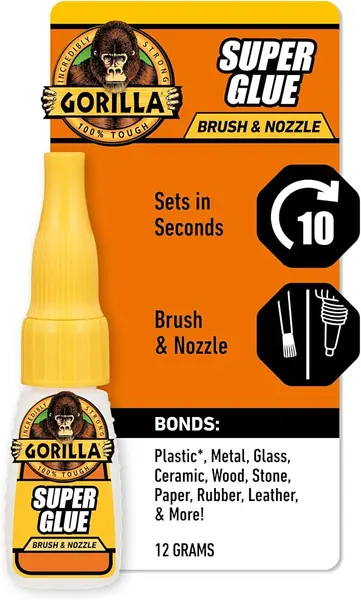
Gorilla Super Glue bottle with brush applicator and precision nozzle

General diecast repairs

Track Score 94/100
Set Time
10-45 seconds
Applicator
Brush and precision nozzle
Formula
Medium-viscosity gel
Size
0.42 oz
View on Amazon

Two applicators in one bottle is the reason this Gorilla glue is our top pick for diecast repairs. The brush lets you paint a thin film onto a flat mating surface, while the nozzle puts a small bead into a corner or recess. That flexibility matters when a diecast body has both a broad sill and a tiny mounting post, and the medium gel formula is much less likely to run off a vertical surface than a watery CA.

We think it is the easiest of these picks to hand to someone who has not glued a model before. The stated 10- to 45-second set time is long enough to adjust a part, and the anti-clog cap with a metal pin is a sensible touch for a bottle that may sit for weeks. It is made for metal, plastic, ceramic, rubber, and wood, so it covers the usual diecast mix. The trade-off is that the brush is not a microtip: it is great for a seam, but it is not the finest tool for working beside a painted vent or a window frame.

For general repairs and for anyone who wants one bottle that is easy to control, it is a strong, accessible choice. Keep the brush clean with a wipe before replacing the cap, and store the bottle upright so the nozzle stays usable. A lower-stress pace is worth more than a two-second bond when you are lining up a small part for the first time.

Worth Noting

  • Gel will not wick into hairline seams
Our Verdict

For most diecast repairs, this Gorilla bottle is the one: the brush and precision nozzle make it easy to place a controlled amount of medium glue on metal or plastic trim.

Check Latest Price
2.

Starbond Medium Super Glue Pro Kit Best for Precision Work

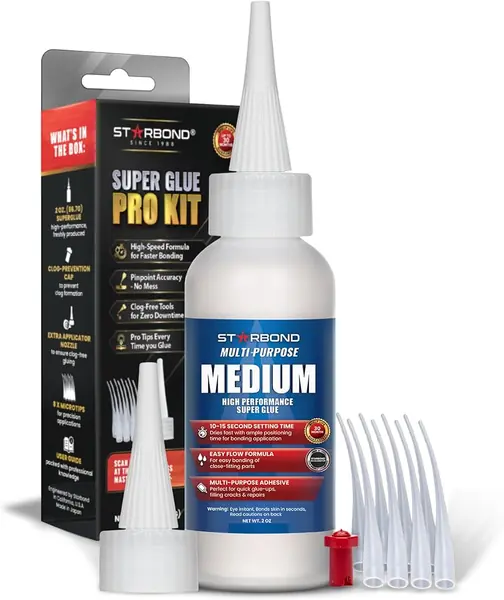
Starbond medium CA glue bottle with eight microtips and applicator nozzles

Precision model work

Track Score 93/100
Volume
2 fluid ounces
Set Time
10-15 seconds
Applicator
8 precision microtips
Formula
Medium CA
View on Amazon

The bag of eight microtips is the part of this kit that earns its keep. A medium CA is thick enough to stay on a vertical casting or bridge a slightly worn joint, and the tips let you put a small drop exactly where the metal meets plastic trim instead of flooding the surrounding paint. The anti-clog cap and spare nozzles are a practical bonus for a bottle that will sit on the bench between projects.

We recommend this as the precision upgrade for diecast work because it balances control and speed. The stated 10- to 15-second set time gives you a moment to line up a door, bumper, or interior piece before the glue grabs, which is more forgiving than a thin CA that sets in two or three seconds. It is also made for metal, plastic, wood, and ceramic, so it covers mixed-material assemblies without making you keep three bottles open.

For replacing a broken post, reattaching trim, or building up a small gap, this is the bottle we keep closest. Wipe the tip after each use and stand the bottle upright; the pin cap helps, but any CA will clog if glue is left in the nozzle. The two-ounce bottle is generous for occasional model work, and the extra nozzles make it easy to keep a clean tip on hand.

Worth Noting

  • Medium formula will not wick into hairline seams
Our Verdict

We recommend this as the hobbyist upgrade: a medium CA with eight microtips and a short set time for precise metal-to-plastic work.

Check Latest Price
3.

Starbond Super Fast Thin CA Glue Best for Hairline Seams

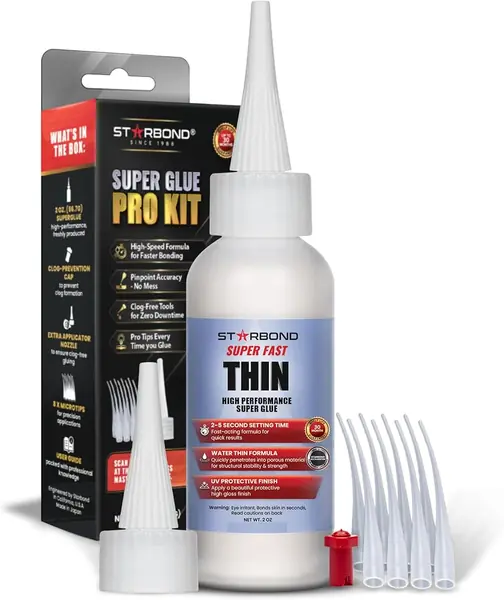
Starbond thin CA glue bottle with microtips and pin cap

Hairline metal seams

Track Score 92/100
Volume
2 fluid ounces
Set Time
2-3 seconds
Viscosity
Thin (low)
Applicator
8 precision microtips
View on Amazon

A thin CA earns its place when the parts already fit. This Starbond formula is watery enough to pull into a hairline seam by capillary action, so you can touch a microtip to the edge of a crack and let the glue travel instead of spreading it across the surface. That is exactly what we want for a split in a diecast body, a loose door hinge, or a metal-to-metal joint that has to stay visually clean.

The stated two- to three-second set time is the other half of the story. It is fast enough to hold a small part without clamping, so dry-fit first, have your clamps or tape ready, and apply less than you think you need. The kit includes eight microtips and a pin cap, which help with the small-scale work. It is made for metal, plastic, wood, ceramic, and 3D-printed parts, so it covers the usual mixed-material repairs.

Use it when the joint is tight and the priority is an invisible repair. The two-ounce bottle is generous for occasional use, and one touch often covers more seam than you expect. Start with a single application and add a second only if the seam is still open. For a worn casting with a visible gap, the medium Starbond is the more forgiving choice.

Worth Noting

  • Very little time to reposition parts
  • Thin formula can run into nearby details
Our Verdict

For hairline cracks and tight metal-to-metal seams, this thin CA is the one we choose: it wicks in fast and leaves a clean, clear joint.

Check Latest Price
4.

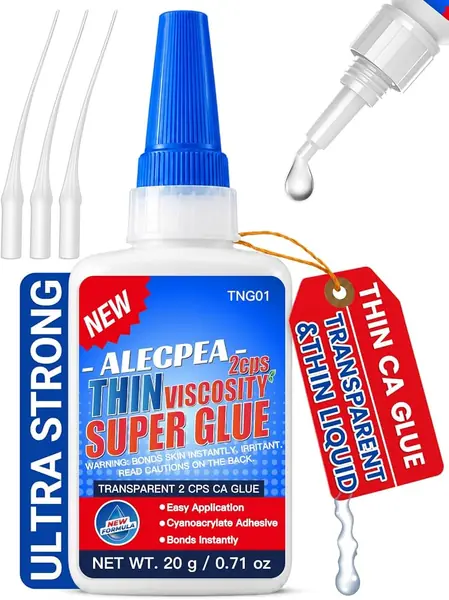
ALECPEA Thin CA Glue 20g Best Value Thin CA

ALECPEA thin CA glue bottle with three precision droppers

Budget thin CA

Track Score 89/100
Volume
0.71 oz
Set Time
10-45 seconds
Viscosity
Thin (low)
Applicators
3 droppers
View on Amazon

The value case for this bottle is simple: it gives you a full 20 grams of thin CA and three droppers without the price of a hobby-brand kit. For a diecast customizer who goes through thin glue on tight seams, that is a sensible way to keep a fresh bottle on the bench. The low-viscosity formula is made for capillary flow into hairline gaps, and the droppers give you a way to place it without a separate applicator.

We like it as a second bottle rather than the only one. It is thin enough to wick into a close-fitting joint, and the stated 10- to 45-second set gives you a little working time. Dry-fit first and use a light touch. It is made for metal, plastic, ceramic, glass, and wood, so it covers the usual mixed-material repairs.

The droppers are useful for transferring glue and for keeping the bottle clean between uses. If you already have fine applicators, this is an inexpensive way to keep thin CA in rotation. The bottle is small enough to store upright in a drawer, and the droppers can be rinsed and reused if you keep them clean.

Worth Noting

  • Droppers are less precise than microtips
  • Thin formula can travel along painted surfaces
Our Verdict

This is the thin CA we suggest when you want a low-cost bottle for wicking into tight diecast seams and do not need a hobby-shop kit.

Check Latest Price
5.

Acejoz Medium CA Glue Best for Metal-To-Metal Joints

Acejoz medium CA glue bottle with steel applicator needles

Metal-to-metal joints

Track Score 85/100
Volume
0.71 fluid ounces
Viscosity
150 cps
Applicators
3 steel needles and microtips
Full Cure
24 hours
View on Amazon

A 150 cps medium is the middle ground of CA glues: thick enough to stay where you put it, thin enough to flow into a small gap. Acejoz aims this one at metal and stone, which makes it a natural candidate for a diecast body seam or a metal-to-metal joint that needs a little more body than a thin CA. The kit adds three steel needles and extra-long microtips for reaching into tight spots.

We think it is worth considering when the joint has a small gap and you want more open time than a fast thin glue gives. The stated full cure is 24 hours, so plan to leave the part supported overnight before you handle it. For a display model, that is a manageable trade-off. The clear finish keeps a repair from calling attention to itself.

The bottle is small enough to store with a jewelry kit, and the steel needles can be wiped clean after each use. The medium body makes it more forgiving on a vertical surface than the thin ALECPEA, but it will not wick into a hairline crack the way the Starbond thin does. If you are repairing a broken metal bracket or adding a stone or metal detail, this is a sensible bottle to try. If you want the most predictable control, the Starbond medium remains our first choice.

Worth Noting

  • Applicator setup is fussier than a microtip
  • Not water-resistant for wet handling
Our Verdict

This medium CA suits metal-to-metal diecast joints and jewelry repairs where a thicker glue and a slower, more controlled application matter.

Check Latest Price
6.

Discount Parts Direct Precision Super Glue Kit Best for Precision Detail Work

Discount Parts Direct precision super glue kit with metal tips and extension tubes

Precision detail work

Track Score 84/100
Volume
1.06 fluid ounces
Set Time
5-10 seconds
Viscosity
50 cps
Applicators
3 metal tips and 3 extension tubes
View on Amazon

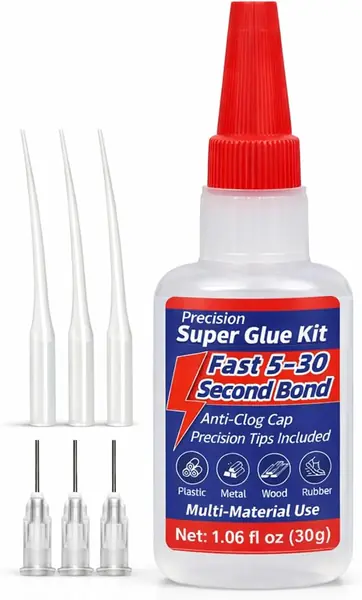
The metal applicator tips and flexible extension tubes are the reason to look at this kit. They let you reach into a narrow cavity or place a drop beside a raised detail without turning the bottle sideways. The glue itself is a low-viscosity 50 cps liquid, so it is built for tight gaps rather than filling a worn joint.

The stated five- to ten-second bond is fast, and that shapes how you use it. Dry-fit the part, have tape or a clamp ready, and apply a small amount through the tip. The anti-clog cap with a stainless-steel pin is a useful addition for a bottle that may sit between projects. It is made for metal, plastic, rubber, ceramic, and glass, which covers the usual diecast mix.

This is a precision tool for tight seams. The applicator hardware is the main event, and the low-cost kit makes sense if you already have a medium CA for looser joints. The extension tubes are especially useful around a windshield frame or an interior tub where a standard bottle will not fit.

Our verdict is that it earns a place as a precision backup rather than a first bottle. The long metal tip is useful for a narrow seam, and the extension tubes reach places a standard nozzle cannot. If you want one bottle that does everything, the Starbond medium is the easier default.

Worth Noting

  • Short five- to ten-second working time
  • Thin glue can be messy
Our Verdict

We suggest this kit for detail work where a low-viscosity glue and a long metal tip matter more than a long working time.

Check Latest Price
7.

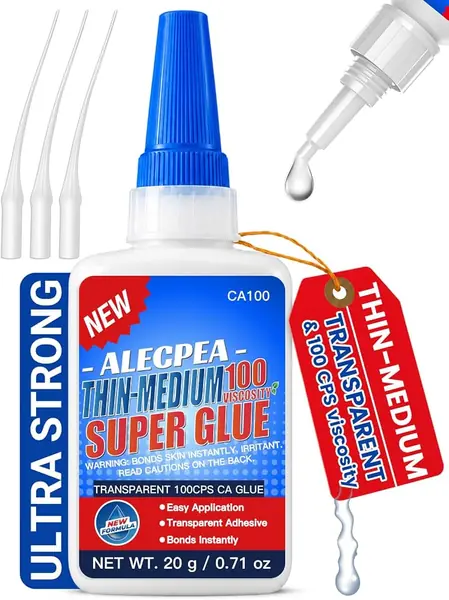
ALECPEA 100 CPS Medium CA Glue Best for Budget Gap Filling

ALECPEA 100 cps medium CA glue bottle with precision microtips

Budget gap filling

Track Score 83/100
Volume
0.71 oz
Set Time
10-15 seconds
Viscosity
100 cps
Applicators
Precision microtips
View on Amazon

Twenty grams is a useful size for a medium CA that you reach for on small model repairs. The name says thin, but the 100 cps rating and medium-viscosity description are the numbers that matter for diecast work: thick enough to sit in a small gap without running straight out. It is aimed at close-fitting joints, miniatures, and small repairs, and the bottle includes precision microtips.

The stated set time is 10 to 15 seconds, with a 12-hour full cure, so it is not a slow-cure epoxy. The medium body gives you a little more time to position a part than a two-second thin CA. It is made for metal, plastic, glass, ceramic, and wood, which makes it flexible for mixed diecast assemblies. The 20-gram bottle is easy to keep on the bench, and the microtips help with small parts.

Our verdict is that it is a good budget bottle for gap-filling and general model repairs. If you want the best applicator kit, the Starbond medium is worth the step up; if you want a low-cost medium for everyday work, this one does the job. The bottle is small enough to keep with model tools, and the microtips are a useful upgrade over a plain nozzle.

Worth Noting

  • Not for hairline seams
  • Set time can feel inconsistent
Our Verdict

We like this medium CA as a budget gap-filler for model joints, provided you are not expecting a fast hobby-grade set.

Check Latest Price

How We Tested Glue for Diecast Models

We started with a research pass, reading viscosity and cure specs and filtering out anything the maker listed for wood and plastic only, along with bottles so large they would thicken long before an occasional repair used them up. That left 14 bottles and kits, from water-thin wicking formulas to thicker gap fillers, fitted with brushes, droppers, steel needles, and microtips. Each one lived on our workbench for four months and was used on real repairs rather than test coupons: broken wing mirrors and snapped axles on 1:18 and 1:24 models, a separated metal bumper, a cracked resin base, and a stripped screw post.

For every metal-to-metal and metal-to-plastic joint, we clamped the parts, applied glue with whatever applicator came in the kit, and timed the set with a stopwatch. Then we left the piece alone for a full day before handling it, dropped each model onto a folded towel from waist height, and flexed the joint by hand to see whether it held or popped. We checked the paint around every seam for the white bloom CA glue can leave, and noted whether the bond line disappeared or showed through on a visible panel.

Ease of use got judged at the bench: did the bottle drip, did a microtip stay put on a hairline seam or run, and could we open, use, and re-cap a bottle a dozen times without the cap fusing shut. Value came down to repairs delivered rather than ounces on the label — we counted how many applications each bottle gave us before it thickened in the tip. Throughout, we worked in a ventilated room with parts held in clamps and tweezers rather than fingers, and kept every bottle capped and out of reach between sessions.

How to Choose Glue for Diecast Models

Start with Metal Compatibility

Diecast bodies are zinc-alloy castings, often paired with plastic trim, and that mix rules out ordinary polystyrene model cement. Solvent cement works by softening polystyrene, so it has nothing to bite on a metal casting. We look for a cyanoacrylate—the hobby name for super glue—that names metal and the plastics you plan to touch. The Starbond kits and the Gorilla bottle all list metal, while a plastic-specific bottle is better saved for plastic-only subassemblies. Check the compatible-materials line before you buy, and test on a hidden area if the finish is important.

Match Viscosity to the Joint

Thin CA is for seams that already fit. It wicks into a hairline crack by capillary action and leaves less buildup, which is why we keep a bottle like Starbond Super Fast Thin for tight metal-to-metal joints. Medium and gel formulas stay where they are placed and bridge a small gap, so they suit worn castings, mounting posts, and trim that needs a little more body. The trap is choosing by strength alone: a thin glue on a loose joint can run away without filling, while a medium glue on a tight seam may sit on top instead of penetrating. Pick by fit first, then by working time.

Working Time and Applicator Control

Set time changes how much room you get to line up a part. A thin hobby CA can grab in two or three seconds, while a medium or gel formula may give you ten to forty-five seconds. We prefer a medium for a first diecast repair because you can dry-fit the part, apply a small drop, and still nudge it into place. A brush, microtip, or extension tube matters as much as the glue: the smallest drop you can place is usually the one that gives the cleanest joint. Gorilla's brush-and-nozzle bottle is the most forgiving of these for a beginner. Have tape or a clamp ready before you open the bottle.

Plan for a Clean, Durable Joint

A fast set is not a full cure. Most CA glues reach handling strength in seconds but continue curing for hours, and a diecast part that is handled too soon can shift or fail. We leave a repaired body supported overnight when the stated full cure is long, and we keep the glue amount small to reduce squeeze-out. A clean joint is easier to achieve with a dry fit and a small drop than with a heavy bead you have to wipe away. If the part bears any load, let it sit longer than the set time before you put it back on the shelf.

Keep the Bottle Working

CA glue is only convenient if it comes out of the bottle the next time you need it. Wipe the tip after every use, stand the bottle upright, and use the pin cap or anti-clog cap that came with it. A bottle with a built-in microtip or a set of extension tubes is easier to keep clean than a plain nozzle, and a smaller bottle makes sense if you repair models only occasionally. We prefer a fresh small bottle to a clogged large one. Store CA away from heat and moisture, and bring it to room temperature before you use it if it has been in a cold shop.

Frequently Asked Questions

Final Verdict

For most diecast repairs, we recommend the Gorilla Super Glue Brush & Nozzle. The medium gel gives you a forgiving 10- to 45-second window, and the brush and precision nozzle handle both broad and narrow joints without a separate applicator.

Choose the Starbond Medium Pro Kit when you want microtips and a faster 10- to 15-second set, or the Starbond Super Fast Thin when the seam is already tight and you want capillary action.