Best FPV Drone Frames of 2026

A drone frame's job is to take the hit so everything bolted to it doesn't. You will crash, into a tree at the edge of the field or a goalpost you misjudged, and the difference between a quick arm swap and a full rebuild is what the carbon looks like afterward. The frame also has to fit your stack, motors, camera and the wiring crammed between them.

Arm thickness alone is a poor guide: a thick arm bolted through sloppy hardware onto a flexing plate fails before a thinner, better-machined one. Weight is the quieter cost, since an extra ounce of frame gives away real flight time. The frame is also the cheapest part of the build, so saving on it while hanging expensive electronics off it is false economy.

Our Top Picks

The Best FPV Drone Frames

1.

FPVDrone 225mm 5-Inch Frame Best Overall
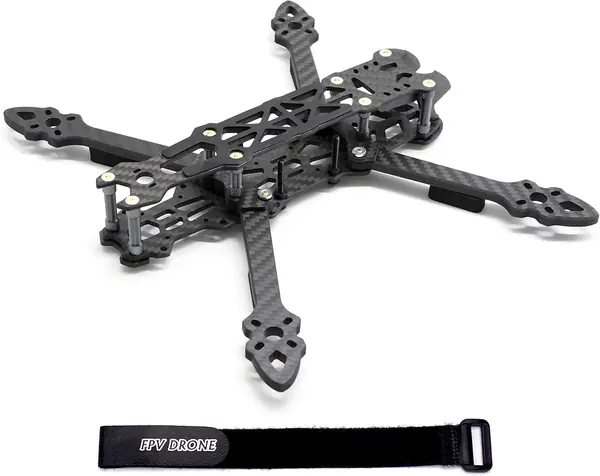
FPVDrone 225mm carbon fiber five-inch freestyle frame with battery strap

5-inch freestyle builds

Track Score 88/100
Wheelbase
225mm
Arm Thickness
5mm
Frame Weight
3.6 oz
Stack Mounting
30.5*30.5 and 20*20
View on Amazon

At 102g and 225mm, this is the five-inch frame we recommend to most builders because it gets the everyday formula right: 5mm arms, a 102g frame, and room for either a 30.5x30.5 or 20x20 stack. We like that flexibility because it lets you move a familiar analog stack into a fresh chassis or start with a smaller digital board without shopping for a different frame. The 25mm standoffs also give you a little breathing room above the stack, which matters when the battery lead and VTX wiring start competing for the same corner.

The H layout keeps the build straightforward, and the 5mm arms are at the top of this group for crash margin. That is the trade we want for freestyle: a few grams more than a pure race frame, but less time spent swapping arms after a bad tumble. The 2.5mm top, bottom, and side plates balance protection with the 102g target, so the frame does not feel overbuilt before the electronics go in.

The one place we pause is the included hardware. It is not the reason to choose this frame, and a fresh set of M3 screws is cheap insurance against a stripped head on build day. We also treat the 102g figure as a frame weight, not a finished-quad weight, so plan your motor and battery choice around the total.

For a first 5-inch freestyle build, this is the least risky place to start. If you already own a 30.5mm stack and a set of 2207 motors, this frame is a short path to getting them back in the air.

Our Verdict

We recommend the 225mm frame to most 5-inch builders: its 5mm arms, 102g weight, and dual stack patterns make it a flexible, durable base.

Check Latest Price
2.

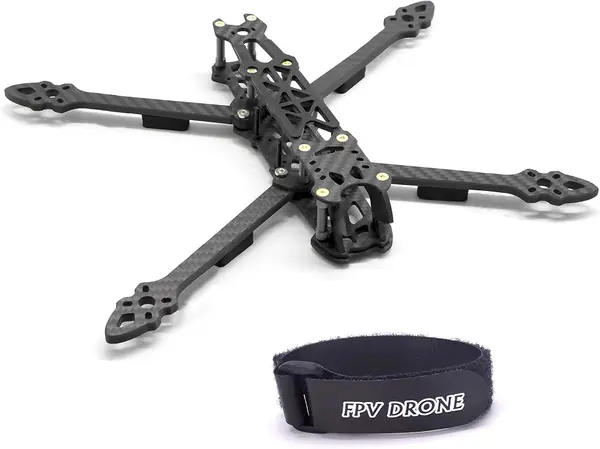
FPVDrone 295mm 7-Inch Frame Best 7-Inch

FPVDrone 295mm carbon fiber seven-inch frame kit with battery strap

7-inch long-range builds

Track Score 86/100
Wheelbase
295mm
Arm Thickness
5mm
Frame Weight
4.27 oz
Prop Size
7 inch
View on Amazon

A 7-inch build is a different assignment: you are trading snap for smoothness and flight time, and the frame has to manage longer arms without turning flex into vibration. The 295mm FPVDrone frame starts in the right place with 5mm arms and a 121g frame weight.

We recommend it for long-range and cinematic cruising rather than tight freestyle. The 5mm arm thickness is the right call for the extra leverage of 7-inch props, and the 121g frame is only a little heavier than our 5-inch pick, which is a useful sign that the size has not been won with slabs of unnecessary material. The kit includes a battery strap, but no motors, electronics, or props, so the final weight is yours to control.

The layout is simple, with 2.5mm top, bottom, and side plates and full 3K carbon construction. We like that simplicity for a long-range build because there are fewer plates and standoffs to chase down when you are routing a GPS lead or a VTX antenna. It is not the frame for a day of mostly crashing; that is where the 5-inch pick earns its keep.

Our Verdict

We suggest this 7-inch frame for long-range cruising, where its 5mm arms and 121g weight suit a smooth build with your own electronics.

Check Latest Price
3.

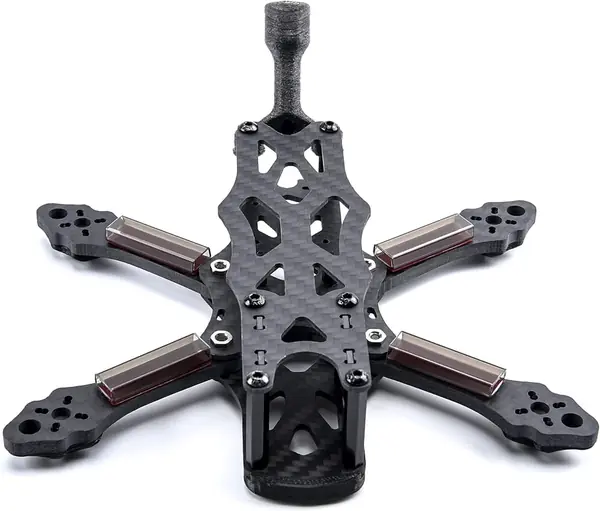
Readytosky 150mm 3-Inch Frame Best 3-Inch Freestyle

Readytosky 150mm black carbon fiber three-inch frame with 4mm arms

3-inch freestyle builds

Track Score 85/100
Wheelbase
150mm
Arm Thickness
4mm
Flight Controller Mount
20*20mm
Motor Size
1406/1507
View on Amazon

Small frames live or die on crash damage, and the Readytosky 150mm makes its case with 4mm arms and a simple 20x20 stack bay. It is a 3-inch frame, so it fits the smaller parks and vacant lots where a 5-inch quad feels like overkill.

We like it as a first 3-inch freestyle frame. The 4mm arms are the right compromise between the 1.5mm plates on a micro and the 5mm slabs on a 5-inch build, and the 20x20 mount keeps the center of the frame compact. The recommended 1406 or 1507 motors and a 4S to 6S 850mAh pack give you a coherent parts list rather than a guessing game.

The kit is just the frame, which we prefer at this size: you can choose a light VTX and camera instead of inheriting whatever the kit happened to include. For a small quad that needs to take a beating in tight spaces, this is the one we point to first.

Worth Noting

  • Only accepts 20x20 stacks
Our Verdict

We like this as a first 3-inch freestyle frame: 4mm arms and a 20x20 bay make a tough small quad, provided your stack fits.

Check Latest Price
4.

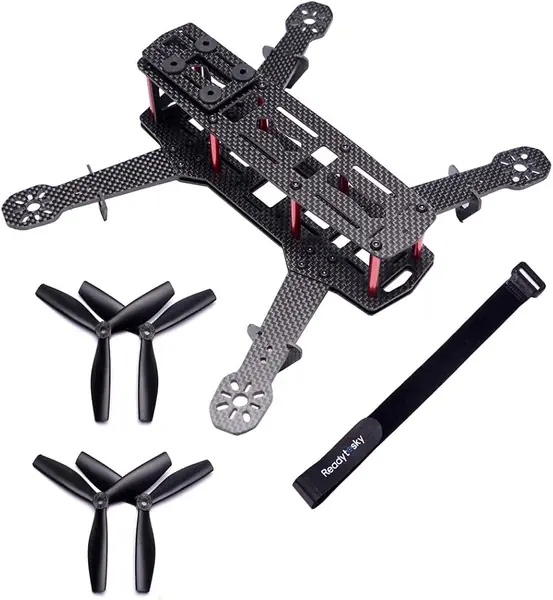
Readytosky 250mm 5-Inch Frame Best Budget 5-Inch

Readytosky 250mm black carbon fiber five-inch frame with battery strap

Budget 5-inch builds

Track Score 84/100
Wheelbase
250mm
Arm Thickness
4mm
Frame Weight
6.35 oz
Flight Controller Mount
30.5x30.5mm
View on Amazon

The Readytosky 250mm is the budget play: a 5-inch frame with a 30.5mm stack mount, generous plates, and a battery strap in the box. For a first build, that combination removes a lot of the small decisions that slow a project down.

There is more room here than in the compact 5-inch frames, and we appreciate that when the build includes a separate VTX, a receiver, and a buzzer. The rubber damper is a nice touch for cutting vibration, and the 4mm arms keep the frame from gaining weight it does not need.

We recommend it for a budget first 5-inch build. The lower cost is the point: it leaves more room in the budget for decent motors, a spare set of props, and the tools you will actually use. The plate size also leaves space for a GPS module or a larger battery, so this is a frame that can grow with you as you add parts.

Worth Noting

  • 4mm arms are less forgiving in hard crashes
Our Verdict

This 250mm frame suits budget first 5-inch builds that need a 30.5mm stack mount and room to route wiring.

Check Latest Price
5.

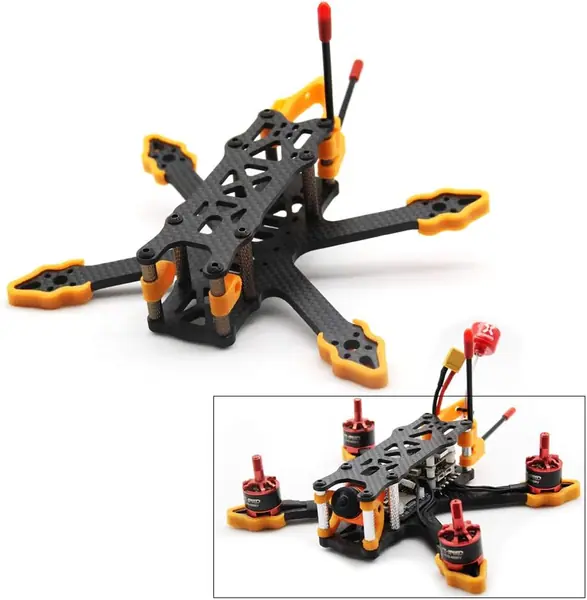
Usmile GX140 3-Inch Frame Best for HD Split Builds

Usmile GX140 black carbon fiber three-inch frame with camera mount

HD split builds

Track Score 80/100
Wheelbase
140mm
Flight Controller Mount
20*20
Upper Plate
2mm
Bottom Plate
4mm
View on Amazon

The GX140 is the frame for a very specific 3-inch build: an HD split-camera quad with two separate stacks, one up front and one in the rear. The twin-tower layout is the reason to notice it, and the 4mm bottom plate gives the design some backbone.

We like the packaging more than the generic 3-inch frames here: it includes a camera mount, four motor protectors, and a 3-in-1 holder for the antenna and power lead. That is the kind of small part that usually gets ordered separately and delays a build.

Our reservation is fit. The 12x12 motor pattern is narrower than a 5-inch frame's, and the camera mount is sized around specific HD split cameras. We recommend it to a builder who has already chosen a compatible camera and 13xx-to-16xx motors, not to someone who wants a universal 3-inch frame.

At 140mm, it is smaller than the 150mm Readytosky, so it is the more compact choice for a tight build. That compactness is the point: this frame is for a purpose-built HD cruiser, not a generic basher.

Worth Noting

  • Does not fit 11xx motors
Our Verdict

The GX140 is for a dedicated HD split-camera 3-inch build with 13xx-to-16xx motors, not for spare 11xx hardware.

Check Latest Price
6.

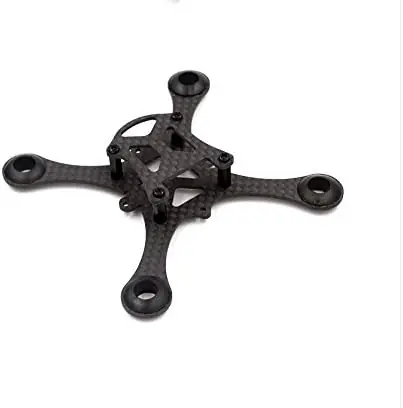
Usmile 100mm Micro Frame Best for Micro Indoor Builds

Usmile 100mm micro carbon fiber frame for 820 brushed motors

Micro indoor builds

Track Score 79/100
Wheelbase
100mm
Motor Type
820 brushed
Motor Mounts
Rubber
Plate Thickness
1.5mm
View on Amazon

The 100mm Usmile frame is the micro pick we recommend for an indoor brushed build, not a scaled-down 5-inch quad. The 1.5mm carbon plate and rubber motor mounts are the whole story: light, simple, and cheap to keep flying.

We like it for a first micro or a winter indoor project because the rubber mounts hold 820 motors without a lot of fuss, and the simple plate layout is easy to rebuild after a hard knock. The frame is small enough that a gym or a garage becomes a flying space, which is the point of a 100mm build.

That small size is the trade: it is an indoor and backyard specialist, not the frame you take to a big field. If you already have a set of 820 motors and a tiny AIO camera, this is a cheap way to put them back to work; if you are starting from scratch and want one frame to grow with, choose the 150mm Readytosky instead.

Worth Noting

  • Brushed 820 motors only
Our Verdict

For a cheap brushed indoor build, where its carbon plate and rubber mounts keep a micro flying.

Check Latest Price

How We Tested These FPV Frames

We started by pulling every frame we could find between micro indoor sizes and 7-inch long-range rigs, then cut anything with no published mounting pattern, no plate thickness, or hardware in the photos that didn't match the description. That left 14 frames, which we built, flew, and rebuilt over six months.

Each frame got assembled at least once before it flew. We sanded and chamfered every edge with eye protection on, then counted the hardware bag and ran each screw into its standoff by hand to see which ones galled, wobbled, or sat proud of the plate. We test-fit flight controllers and cameras against the stack pattern and the motor mounts, and noted whether a battery strap came in the box and whether it fit the packs we fly.

Flying looked like real flying. Micros went up in a basement and a garage, the 3- and 5-inch builds went to a park and a concrete parking structure, and the 7-inch frames went to an open field. Every frame got crashed onto grass deliberately, and after each hard hit we inspected arms and plates for cracks and delamination and re-checked fastener torque.

Between flights we weighed each frame bare and built, timed an arm swap, and checked whether wiring could be routed without scraping the plates. Value got settled last: we added up what the electronics would still cost and asked whether the frame saved enough to be worth it.

How to Choose an FPV Drone Frame

Start With Prop Size and Wheelbase

Prop size decides the frame's job before anything else. A 5-inch quad is the all-rounder: enough power for freestyle and enough parts commonality to find help when something breaks. A 3-inch frame is the smaller-park and backyard choice, while a 7-inch frame trades response for smooth long-range flight and a larger battery. Micro frames go smaller again and suit indoor flying. We start most builders on a 5-inch frame because the electronics ecosystem is broad and the 225mm FPVDrone is a straightforward example of the class. Pick the prop size first, then match wheelbase and motor mounts to it.

Read Arm Thickness With the Rest of the Frame

Arm thickness is the crash budget. A 5mm arm gives you more material to absorb a hard impact, but it also adds weight; a 4mm arm is lighter and cheaper, and it is the right choice for a first build that will not be flown to the edge. Plate thickness matters too: a 1.5mm micro plate is fine at 100mm, while a 5-inch frame with thin top and bottom plates can feel flexible. We look for clean edges and a layout that lets you replace an arm without rebuilding the whole stack. Do not read a single thickness as a guarantee of durability.

Match the Stack Camera and Motor Mounts

The quadcopter frame is only useful if your parts bolt to it. Check the flight-controller pattern first: 30.5x30.5mm is common on 5-inch builds, while 20x20mm dominates small digital builds and micros. Then check motor mounting: 12x12mm covers many 3-inch motors, but not every 14xx can, and 5-inch frames use a different pattern. Camera mounting is the third fit point, especially if you are building around a DJI Air Unit or a split-style HD camera. Measure your stack, motor footprint, and camera before ordering; a frame that needs an adapter is not a bargain.

Plan for Hardware Repairs and Weight

Budget for the small parts. Included screws and standoffs are often the first thing to replace, and a set of quality M3 hardware is cheaper than losing a build day to a stripped head. Use medium-strength threadlocker on metal-to-metal fasteners, and inspect arms and plates after a hard crash rather than waiting for a failure in the air. Weight compounds: a 102g frame leaves more room for a bigger battery than a 121g frame, but the heavier frame may be the better match for a 7-inch build. We also check whether replacement arms are sold separately before committing to a frame we plan to crash.

Frequently Asked Questions

Final Verdict

For most builders, the FPVDrone 225mm is the frame we recommend: 5mm arms, a 102g frame, and both 30.5x30.5 and 20x20 stack patterns make it a flexible base for a 5-inch freestyle quad. It is the straightforward build with room to grow.

If your flying is mostly smooth long-range, the FPVDrone 295mm is the better 7-inch starting point. If the budget is the deciding factor, the Readytosky 250mm gets a 5-inch build in the air with a 30.5mm stack and a roomy layout.