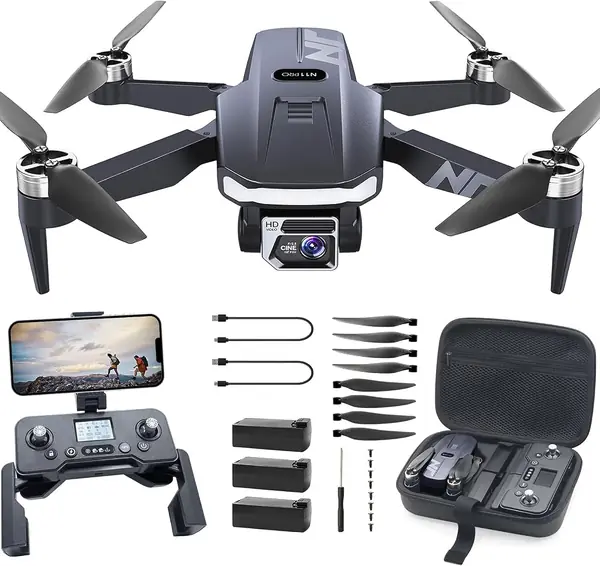
Best FPV Drones for Beginners of 2026

Plenty of drones are sold as FPV when all they do is stream live video to your phone. That's a fine way to fly, but it isn't the same as pulling on goggles and steering with a motion controller, and for a first-time pilot the difference decides what you're buying. This list includes both: one true goggle kit at the top, then GPS camera drones that stream to a phone or to a screen on the controller.

For a beginner, forgiving matters more than fast. A good first drone holds altitude when you let go of the sticks and flies itself home when the battery dips. We flew 11 of them on a ballfield at sunrise, in a backyard at dusk and indoors on rainy days, starting with the least glamorous step: pairing the app at the kitchen table and checking whether the phone cradle held.

Our Top Picks

The Best FPV Drones for Beginners

1.

DJI Neo 2 Motion Fly More Combo Best Overall
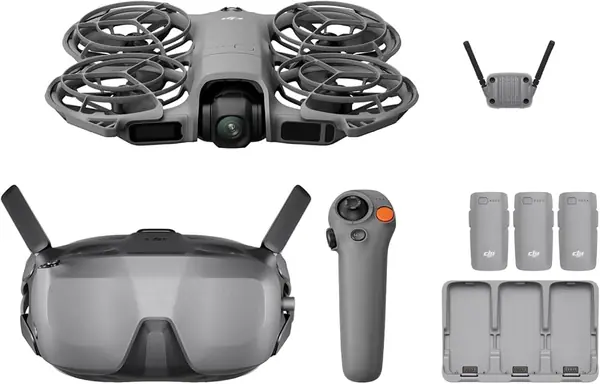
DJI Neo 2 gray drone with Goggles N3, RC Motion 3 controller and propeller guards

First FPV flights

Track Score 92/100
Camera
4K
Weight
5.33 oz
Batteries
3 included
Max Range
10 km
View on Amazon

Goggles on, hand tilted, and the view moves with you: the Neo 2's Motion combo is the only kit here that turns a first flight into actual first-person flying, and that is why it is our top pick. The RC Motion 3 is a pointer you squeeze to go, and the Goggles N3 put the camera's view in front of your eyes, so a beginner never has to translate stick inputs into a picture in their head.

It is also the hardest of these to break. At 151 grams with full-coverage propeller guards, a clip against a fence post is usually a shrug, and omnidirectional obstacle sensing backs up a pilot who is still working out where the drone is. Palm takeoff and landing mean you can launch from a driveway, and the gesture controls and ActiveTrack keep it flying and filming while your hands stay still.

The camera records 4K, the digital transmission is rated to 10 km, and the combo includes three batteries plus a two-way charging hub, so swapping packs keeps a session going. You pay for the goggles and the controller as much as for the aircraft here, which is the right trade if first-person flight is the point of buying a drone and the wrong one if you mainly want aerial video of the backyard.

Worth Noting

  • Short battery life per charge
Our Verdict

We recommend it to anyone who wants real first-person flight from the first battery: goggles, motion control and propeller guards make this the shortest learning curve here.

Check Latest Price
2.

Potensic ATOM SE Best GPS Camera Drone

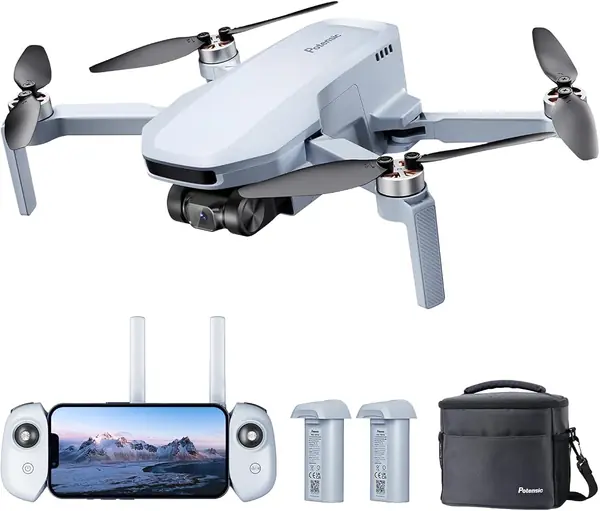
Potensic ATOM SE gray folding GPS drone with two batteries and phone-mount controller

Long stable flights

Track Score 91/100
Flight Time
62 min (2 batteries)
Camera
4K EIS
Weight
Under 249 g
Max Range
4 km
View on Amazon

Two batteries at 31 minutes each add up to 62 minutes in the box, which is enough airtime to actually learn something in one outing. The ATOM SE pairs that with GPS, a 4K camera and a body under 249 grams, so there is no registration paperwork standing between you and the first flight.

What we appreciate most is how little it asks of a new pilot. There is a beginner mode, three flight modes to grow into, and GPS hold that parks the drone in the air and lets you think, which is the part that matters on a breezy afternoon. Add level-5 wind resistance at this weight and you have the pick for someone who wants a stable camera platform rather than a goggle session.

One practical note before you order: the live view runs on your phone clipped into the controller, and the cradle is snug enough that a thick case has to come off first. That is a small friction that gets old on a cold morning, and it is the main thing separating this from the goggles-and-motion-controller kit above.

Worth Noting

  • No mechanical gimbal; electronic stabilization only
Our Verdict

We recommend it to beginners who want a stable camera platform more than a goggle session: GPS return, a beginner mode and 62 minutes of battery make it forgiving from the first takeoff.

Check Latest Price
3.

Holy Stone HS360S Best Value GPS Drone

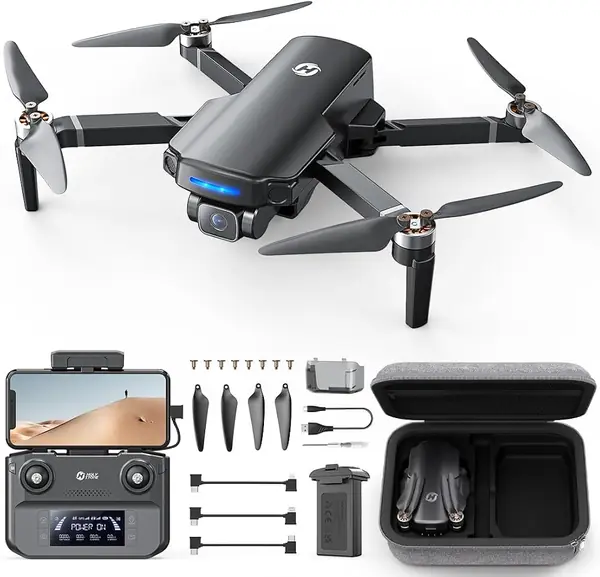
Holy Stone HS360S black folding GPS drone with 4K camera and controller

Value GPS flying

Track Score 90/100
Flight Time
20 min
Camera
4K
Control Range
10,000 ft
Weight
Under 250 g
View on Amazon

Ten thousand feet of control range is a strange thing to find on a drone this affordable, and it is the first hint that the HS360S punches above its slot: GPS positioning, a 4K camera that tilts 90 degrees from the controller, follow-me and one-button return home, all under 250 grams. That combination is why it is our value pick.

Setup is the part beginners underestimate, and this one handles it well. The controller takes your phone over a short cable instead of a Wi-Fi handshake, which removes a pairing step from every flight, and the app keeps the switches that matter on one screen.

The compromise is the pack count: one battery ships in the box, so a spare belongs on the same order. Otherwise there is little here to trip up a first pilot, with return home sitting where your thumb expects it and a folding frame that goes flat in the car.

Worth Noting

  • Short battery life limits each session
Our Verdict

We point beginners here when they want GPS return-to-home and a 4K camera without a premium bill, as long as a spare battery goes on the same order.

Check Latest Price
4.

BLINORY HK55 Best Budget GPS Drone

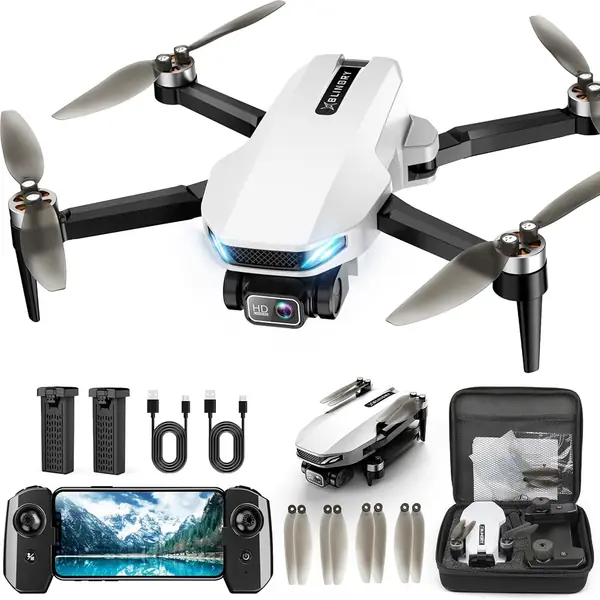
BLINORY HK55 white folding GPS drone with 4K camera and two batteries

Budget GPS flying

Track Score 89/100
Flight Time
32 min (2 batteries)
Camera
4K
Batteries
2 included
Positioning
GPS and optical flow
View on Amazon

GPS return-to-home is the line between a beginner drone and a toy, and the HK55 crosses it at the bottom of the price range with brushless motors, two batteries and a 4K camera that tilts 90 degrees electrically from the controller.

We were ready to find the corners cut and mostly did not. One-button takeoff and landing, headless mode and two speed settings cover the whole learning curve, and follow-me, waypoint and point-of-interest modes give you something to do once hovering stops being the thrill. Optical flow underneath helps it hold position when the GPS view is patchy, and two packs carry a 32-minute claim between them, enough for a real session rather than a demo.

Confirm one number before ordering: the headline says under 250 grams while the maker's own spec sheet says 16 ounces, and that difference decides whether you need FAA registration. Weigh it or ask the seller if flying registration-free matters to you.

Our Verdict

Price-conscious beginners who still want GPS return-to-home get the most here: two batteries and brushless motors make it the best-equipped quadcopter at the budget end.

Check Latest Price
5.

Loiley X69 Best First Practice Drone

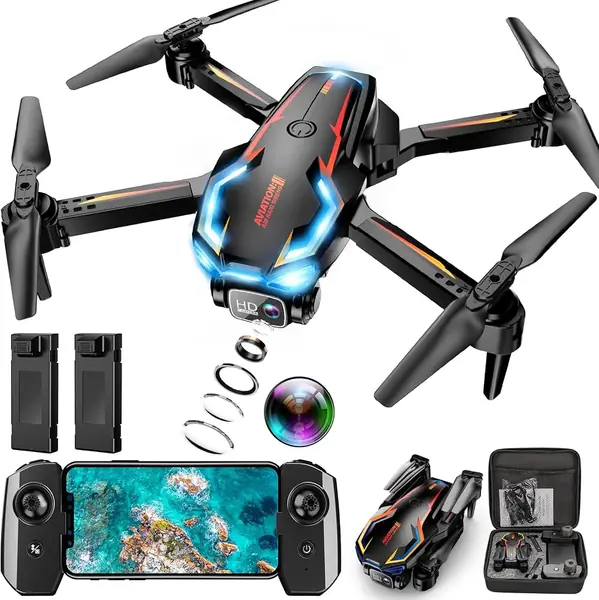
Loiley X69 black and orange mini drone with propeller guards and carry bag

First practice flights

Track Score 88/100
Flight Time
26 min (2 batteries)
Camera
2K
Batteries
2 included
Folded Size
5 x 3 x 2 in
View on Amazon

Folded, the X69 is about 5 by 3 by 2 inches and comes with its own carry bag, which is the whole argument for it: it lives in a backpack and comes out whenever there are ten spare minutes.

The controls are the simplest here, one button up and one button down with altitude hold covering the throttle, plus headless mode for the moment you lose track of which way the nose is pointing. The 2K camera tilts 90 degrees from the controller, and two batteries cover roughly 26 minutes between them.

We recommend it as the inexpensive way to find out whether you like this hobby, because nothing about it is precious: a crash into a hedge costs you a flight, not a savings account. Learn the sticks on this one and a GPS drone will feel like autopilot afterward.

Worth Noting

  • No GPS, so wind and range are limits
Our Verdict

A first drone to learn on without nerves: small, simple and inexpensive, as long as optical-flow hover suits the flying you plan to do.

Check Latest Price
6.

CHUBORY GPS Drone Best for Phone-Free FPV Viewing

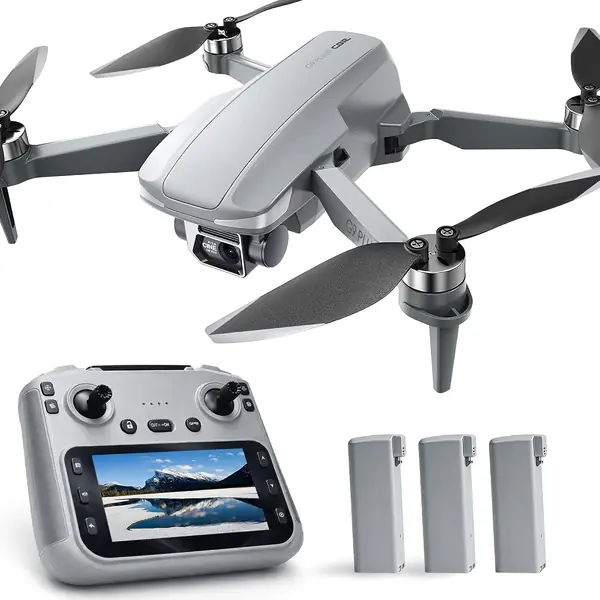
CHUBORY gray folding GPS drone with 4.5-inch screen remote and three batteries

Phone-free FPV viewing

Track Score 87/100
Flight Time
90 min (3 batteries)
Camera
4K EIS
Control Range
3,280 ft
Controller Screen
4.5 in
View on Amazon

A 4.5-inch screen built into the controller is the detail that sets this one apart: no phone, no app, no cable, and no risk of a call cutting into your flight.

The rest of the package is unusually complete for the money, with GPS and auto return, a 4K camera on electronic stabilization with a 90-degree tilt, brushless motors, three batteries for a claimed 90 minutes, a 3,280-foot control range and a folding body under 250 grams.

Flight modes cover the usual ground now that follow-me, circle fly and waypoint routes are all on board, and the folding frame plus three packs make it a plausible take-along kit rather than a one-battery novelty.

What keeps it in also-consider is how much we still want to learn about it: the model is new to us, and a 90-minute total is the kind of claim we like to see repeated before we call it routine. The package itself is genuinely appealing if a phone-free setup is what has been putting you off.

Worth Noting

  • Controller screen is non-touch
Our Verdict

We like it for anyone who does not want a phone in the loop, though we want more flights on it before treating its 90-minute total as routine.

Check Latest Price
7.

YIKKEON F7 Eagle

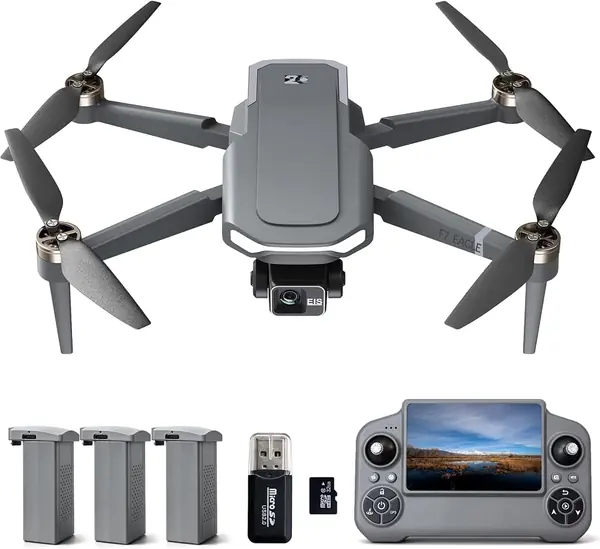
YIKKEON F7 Eagle folding drone with three-axis gimbal and screen remote

Smooth stabilized video

Track Score 86/100
Flight Time
90 min (3 batteries)
Control Range
10,000 ft
Video
2.7K
Gimbal
3-axis
View on Amazon

A three-axis gimbal is the reason to look here, and it is the only one in this group: the camera floats on motors, so the picture stays level while the drone leans into wind or swings around a turn.

The rest of the kit is generous, with a 4.5-inch screen remote, three batteries for a claimed 90 minutes, a 10,000-foot control range, GPS auto return, and a 32 GB card and reader in the box.

Our hesitation is time on the airframe: we have far fewer flights on this one than on the DJI or the Potensic, so the 90-minute total and the gimbal's behavior in a gust are still open questions for us. If smooth footage is the priority rather than a proven record, it is the one to look at first.

Worth Noting

  • Video tops out at 2.7K despite its 6K billing
Our Verdict

We point to it when stabilized footage matters more than a long track record, since the gimbal is the real thing and the rest of the kit is complete.

Check Latest Price
8.

NAFYRE N11 Pro Best for Long Beginner Sessions

NAFYRE N11 Pro silver folding GPS drone with carrying case and three batteries

Long beginner sessions

Track Score 85/100
Flight Time
90 min (3 batteries)
Control Range
3,328 ft
Video
2048 x 1080
Stills
8.3 MP
View on Amazon

Three batteries and a 90-minute total flight claim put the N11 Pro alongside kits that cost more, and at under 0.55 lb with a folding frame and a carrying case it disappears into a backpack.

GPS is why it belongs in this roundup: one-key return, low-battery return and a recorded home point give a first pilot a way out of a bad decision, and follow-me, trajectory and circle modes are there for when hovering gets dull.

Controls follow the beginner script, with GPS and optical flow working together, altitude hold, and one-key takeoff and landing, and the app handles the automated modes, so there is not much to learn before the first flight.

Where it lands for us is a comparison: for similar money the CHUBORY adds a screen in the controller and the YIKKEON adds a three-axis gimbal, so the N11 Pro's case rests on three packs and a low weight in a crowded field. It is a sound first kit if those are the two things you value most.

Worth Noting

  • Video is 2048 x 1080, not the 4K billed
  • No charger included in the box
Our Verdict

We see it as a sound first kit for a buyer who values three packs and a low weight in the bag above everything else.

Check Latest Price

How We Tested the Best Beginner FPV Drones

We started with spec sheets and owner discussions, then narrowed by what a beginner actually lives with: airframe weight, how many batteries came in the case, whether a charger was included, and whether the controller had its own screen or a cradle for a phone. Anything that couldn't be flown straight out of the box got crossed off before we charged a battery.

That left 11 drones, flown over nine months — early mornings on an empty ballfield before the wind picked up, backyard sessions at dusk, and hovering practice in a living room on rainy days. Every flight stayed in visual line of sight, under 400 feet, and clear of people and airports.

Setup we timed at the kitchen table the night before: app pairing, whether the phone cradle gripped a phone still in its case, how long the first charge took. At the field we flew each one in beginner mode, used one-key takeoff, let go of the sticks to see whether altitude hold and optical flow kept it parked, and ran a pack down on purpose to watch low-battery return and return-to-home work.

We compared footage of the same slow pan and windy hover to judge a three-axis gimbal against single-axis EIS and electronic-only stabilization, and kept propeller guards fitted whenever a first-timer had the controls, counting the spares in the box. Flight time we logged from takeoff to forced landing, hovering first and then flying hard, since a claimed 30 minutes rarely survives a breezy afternoon. The last note was the least scientific: which one we reached for on a Sunday when nobody was making us fly.

How to Choose a Beginner FPV Drone

Goggles or a phone: what FPV actually means

If you want the immersive version, the one that feels like sitting in the cockpit, you need goggles and a motion controller, which is what the DJI Neo 2 kit provides. Most sellers use FPV to mean a live video feed to a phone clipped into the controller, which is perfectly useful for framing aerial shots but nothing like the goggles experience.

Settle that first, because it splits the market in two. Goggles setups cost more and are what the hobby is really about; phone-feed drones are cheaper, easier to hand to a friend, and better for photography.

The safety net: GPS, guards and return-to-home

For a first outdoor flight, GPS return-to-home is the most valuable line on the spec sheet: it brings the drone back when the link drops, the battery sags, or you simply lose your nerve. Propeller guards and a light airframe handle the other failure mode, the one where you fly into something.

Drones that position on optical flow alone, like the Loiley X69, hold less firmly and want a calm day, while a GPS quadcopter such as the HS360S will park itself in the air and wait for you to decide what happens next.

Weight, registration and where you can fly

Under 250 grams is the number to look for if paperwork is a barrier, since several picks here are listed as exempt from FAA registration and Remote ID at that weight. Verify it instead of trusting the headline: the BLINORY title says under 250 grams while its own spec sheet lists 16 ounces, and that difference decides whether you need to register.

Whatever you fly, keep it in visual line of sight, stay below 400 feet and away from airports and crowds. Recreational pilots in the U.S. also need the TRUST certificate, which takes a short online test.

Battery math: what the flight-time claim means

A 90-minute claim almost always means three batteries at around 30 minutes each, so the per-pack number is what you feel, and it usually comes in under the label. Count the packs in the box, decide whether you need a spare, and check whether a charger ships with the kit.

Short pack life is not a reason to walk away from a drone you otherwise like. It is a reason to buy the second battery up front rather than after the first disappointing afternoon.

Camera: gimbal, stabilization and the resolution label

Resolution is the least useful camera number on the page. What steadies the shot matters more: a three-axis gimbal, which only the YIKKEON offers here, keeps footage level mechanically, electronic stabilization smooths what it can, and a fixed mount relies on the drone's own steadiness.

A 4K label on a small sensor buys compression artifacts rather than detail. If you are shopping for video, spend on stabilization and a remotely adjustable tilt before you chase a bigger number.

Frequently Asked Questions

Final Verdict

We recommend the DJI Neo 2 Motion Fly More Combo to anyone whose idea of this hobby includes goggles: the motion controller, the propeller guards and the obstacle sensing make a first flight hard to get wrong, and that is worth paying for.

If a drone that flies itself home matters more than immersion, the Potensic ATOM SE is the better buy, and the Holy Stone HS360S brings GPS return down to mid-range money.