Best Mini FPV Drones of 2026

The first FPV flight humbles everyone. It looks like a movie trailer until the goggles go on, the world tilts and the drone ends up in a hedge. A kit you keep flying teaches without punishing every mistake, with guards for the inevitable bumps, beginner modes that bail you out, and goggles, controller and batteries in the box instead of on a wish list.

The drone is rarely the expensive part. Batteries, goggles and a charger decide how much flying you get per outing, so we counted what came in every box before takeoff, and since a 4K label means little on a shaky feed, every clip got watched on a full-size screen. Seven months of flying in a garage on rainy weekends, over an empty ball field and along a hiking trail left four kits worth recommending.

Our Top Picks

The Best Mini FPV Drones

1.

DJI Neo 2 Motion Fly More Combo Best Overall
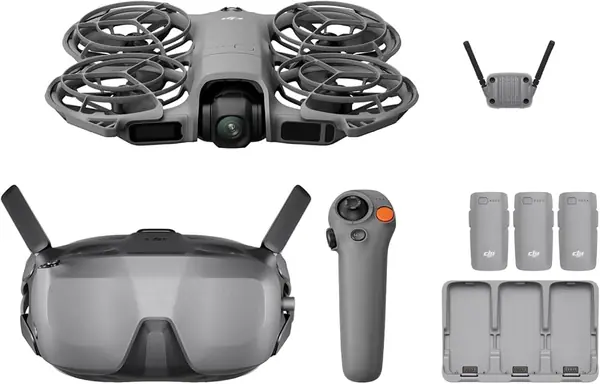
DJI Neo 2 gray FPV drone with propeller guards Goggles N3 and RC Motion 3

First-time FPV pilots

Track Score 91/100
Video Resolution
4K
Weight
5.33 oz
FPV Kit
Goggles N3 and RC Motion 3
Battery Capacity
1,606mAh
View on Amazon

A 151-gram drone that arrives with goggles, a motion controller, and three batteries is the least fussy way into FPV we've seen in this group. The Neo 2's full-coverage propeller guards and C0-certified body make it feel like a trainer you can actually knock around, and the palm takeoff and landing mean you don't need a flat launch pad. We appreciated that DJI includes the Goggles N3 and RC Motion 3 rather than making you assemble a kit.

Motion control is the reason this is our top pick for beginners. Tilt your hand and the drone follows; it is far less intimidating than learning manual acro on a tiny whoop, and the omnidirectional obstacle sensing adds a buffer when you fly indoors. The 4K camera and ActiveTrack are good enough for travel clips, and the Apple Watch live-feed option is a neat extra when you don't want to raise goggles in public. We were surprised by how much control flexibility a 151g drone can pack.

The catch is battery life. The 1,606mAh pack is small for 4K FPV, so plan on swapping cells more often than you might like. That is why the three-battery bundle matters: it turns a short flight into a session. If you already own DJI goggles and a controller, the drone-only version makes more sense; if you are starting from zero, this combo is the one we recommend.

Worth Noting

  • No memory card slot for extra storage
Our Verdict

We recommend the Neo 2 Motion Fly More Combo as the best first mini FPV drone: it arrives with goggles, a motion controller, and three batteries, and its 151g guarded body is ready for indoor and backyard flight.

Check Latest Price
2.

DJI Avata 2 Fly Smart Combo Best Cinematic FPV

DJI Avata 2 black FPV drone with built-in propeller guards and Goggles N3

Cinematic FPV flights

Track Score 86/100
Video Resolution
4K/60fps
Weight
13.3 oz
FPV Kit
Goggles N3 and RC Motion 3
Camera Sensor
1/1.3-inch
View on Amazon

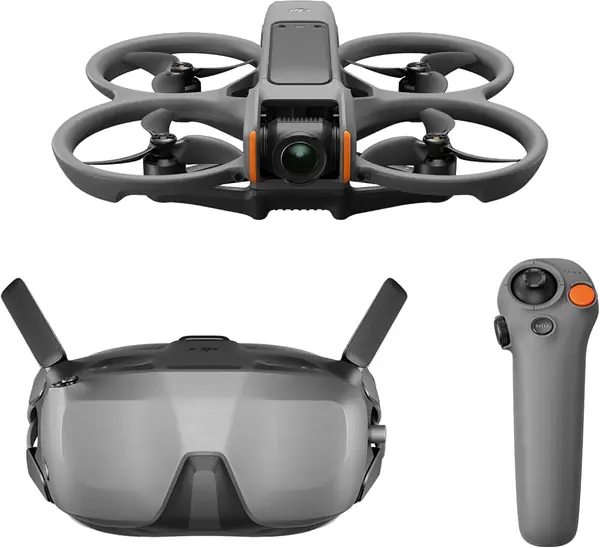
The Avata 2 is the cinewhoop of this group, and that label tells you most of what you need to know: it is built around a bigger camera and a guarded body for tighter cinematic lines. The 1/1.3-inch sensor and 4K/60fps footage are a clear step up from the smaller pick, and the 155-degree field of view makes the goggles feel like a cockpit. We also like the built-in propeller guards, which let you thread gaps with less fear of clipping a prop.

Where the Avata 2 earns its place is in the feel of the flight. The motion controller makes flips, rolls, and 180-degree drifts approachable without the steep manual-acro learning curve, and the O4 transmission is the kind of stable link you want when you are flying low. We were also struck by how much the 155-degree FOV changes the goggles experience: it is wide enough to make tight shots feel immersive rather than cramped.

The catch is that this Fly Smart combo includes only one battery, so the Avata 2 is less of a ready-to-go session than the Neo 2 bundle. If you already have DJI goggles and a controller, the drone-only route may be cheaper, but for most buyers the single pack is the reason to look at a Fly More configuration. For cinematic FPV in tighter spaces, though, the Avata 2 is the more capable camera platform here.

Worth Noting

  • Not a sub-250g mini drone
Our Verdict

For cinematic FPV in tighter spaces, the Avata 2 is our pick: the 1/1.3-inch sensor and 4K/60fps footage are a step up, and the motion controller makes acro moves feel manageable.

Check Latest Price
3.

EMAX Tiny Hawk RTF Best Budget RTF Kit

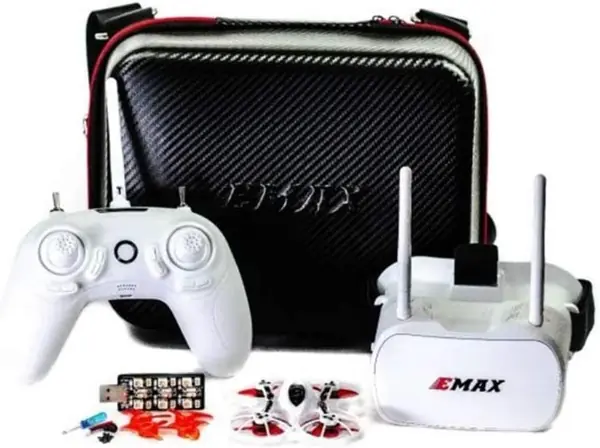
EMAX Tiny Hawk white micro FPV drone with goggles controller and carry case

Budget indoor racing

Track Score 83/100
Video Resolution
720p
Maximum Range
200 feet
Battery Capacity
450mAh
Included Gear
FPV goggles and controller
View on Amazon

For a true ready-to-fly micro racing kit, the Tiny Hawk is the budget option in this group: the box includes the drone, FPV goggles, and a controller, and the whole thing is bound and ready to fly. The 200-foot radio range is real FPV rather than a Wi-Fi feed, and the three flight modes give you a path from Level to Horizon to full acrobatic flight. We like that it comes in a carry case, because half the battle with a micro drone is keeping the goggles and props together.

The 720p camera is a course-viewing tool, not a cinematic one. You can see gates and judge your line, but footage will look soft next to the 4K picks here. The 450mAh battery and 35mph top speed suit indoor racing and calm outdoor sessions; this is not a drone for windy fields. If you are learning to race, the three modes matter more than the camera resolution.

The Tiny Hawk keeps its ambitions narrow, and that is a fair trade for the price: you get real goggles, a real radio link, and a drone where a crash does not put a premium camera at risk. For indoor racing and calm outdoor practice, that is exactly the point. If you want a polished first FPV experience, the Neo 2 is the safer buy; if you want the cheapest way into micro racing, this is it.

Worth Noting

  • Durability varies after repeated crashes
  • Sparse instructions slow first setup
Our Verdict

The Tiny Hawk is the budget way into real FPV: a complete kit with goggles, controller, and three flight modes that lets you learn micro racing without risking a premium camera.

Check Latest Price
4.

Antigravity A1 Explorer Bundle Best Premium 360 FPV

Antigravity A1 white 360 FPV drone with Vision Goggles and three batteries

360-degree FPV video

Track Score 82/100
Video Resolution
8K 360
Weight
8.78 oz
Maximum Range
10 km
Batteries Included
3
View on Amazon

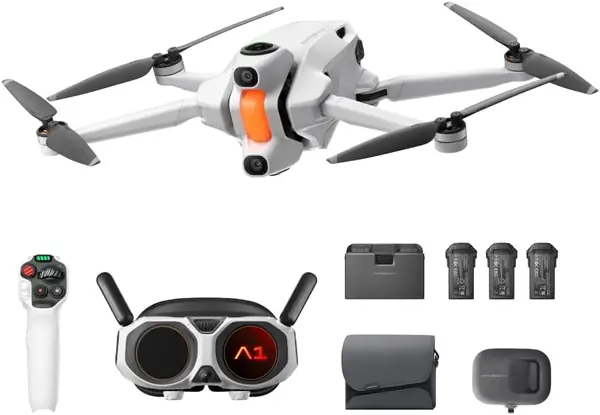
The Antigravity A1 approaches FPV from a different direction: instead of framing a single camera view, it captures 8K 360-degree video and lets you choose the frame later. The Vision Goggles use dual 1-inch Micro-OLEDs and a 90-degree field of view, so the live feed feels wide and immersive rather than like a phone screen strapped to your face. We like that the 249g body keeps it in the lightweight class without stripping out the goggles or the three-battery bundle.

Point-to-fly controls are the A1's best trick for newcomers: you can steer toward a subject without learning manual acro, then switch to FPV mode when you want a more direct feel. Deep Track and obstacle avoidance add another layer of confidence, and the 10km range gives you room to explore. We were also impressed by the 8K 360 footage, which turns a single flight into multiple angles; that is a different workflow from the single-view 4K footage on the other picks, and it is the reason to choose the A1.

The A1 is not the default mini FPV drone, and it is not trying to be. It is for the flyer who wants a 360-degree record of a flight and will use the reframing workflow to turn one take into several shots. If that is your goal, the goggles, 249g body, and three batteries make a compelling package. If you mainly want to learn FPV with a conventional camera view, the Neo 2 or Avata 2 will feel more direct.

Worth Noting

  • Premium price limits casual buyers
Our Verdict

The Antigravity A1 is the premium choice for 360-degree FPV, pairing 8K capture and wide Vision Goggles with a 249g body and three batteries for reframing after the flight.

Check Latest Price

How We Tested Mini FPV Drones

We started by building a shortlist from spec sheets and owner forums, filtering for kits that ship with goggles and a controller in the box, a spread of flight weights and control styles, and prices that span a first-timer's budget to a serious hobbyist's. From that pool we flew eight kits for seven months.

Testing happened where people actually fly: a garage on rainy weekends, an empty ball field, the cleared end of a hiking trail, and a living room with the furniture pushed back. Before every session we checked local airspace rules and weighed each drone on a kitchen scale so we knew which class we were flying, and indoors we kept propeller guards on and stayed clear of people and pets.

Each battery was flown to its low-power warning with a stopwatch running, then we counted how many came in the box and timed a full recharge. We handed the controller to first-time pilots and timed how long it took them to get airborne from the unboxing, and we flew the same beginner-mode-then-manual progression on every kit to see where each one got twitchy. Footage was reviewed on a full-size screen for shake, feed breakup behind trees, and how the image held up in wind. After each bump we checked props and motor mounts for damage before flying again, and we noted which kits we grabbed on a free afternoon — the fun test that specs can't capture.

How to Choose a Mini FPV Drone

Buy the kit, not just the drone

For a first FPV drone, the goggles and controller matter as much as the aircraft. A drone-only package can look cheaper until you price the goggles, radio, batteries, and charger separately. We prioritize a complete kit when you are starting out: the DJI Neo 2 Motion Fly More Combo includes Goggles N3, RC Motion 3, and three batteries, while the EMAX Tiny Hawk is a true ready-to-fly package with goggles and controller in the box. If you already own compatible FPV gear, a drone-only option can make sense; otherwise, buy the bundle and spend your first session flying instead of shopping.

Match weight and guards to where you fly

The word mini on a box is not a guarantee of a sub-250g drone. We look at the stated weight and the propeller guards before anything else, because those two facts decide how comfortably you can fly indoors and how much room the drone takes in a bag. The DJI Neo 2 lists 151g with full-coverage guards, making it an easy indoor and travel choice; the DJI Avata 2 lists 13.3 oz, so it is a heavier cinewhoop that wants more space. If you care about the lightest class, compare the number before you compare the camera.

Choose a control style you can grow into

Motion control and manual acro feel like different hobbies. A motion controller lets you steer with hand movements and makes flips and rolls approachable, which is why the DJI Avata 2 and Neo 2 are so friendly to newcomers. Manual sticks give you finer control and a more traditional FPV feel, but they take practice. The EMAX Tiny Hawk splits the difference with Level, Horizon, and full acrobatic modes, so you can learn in steps. If you have never flown FPV, start with a motion controller or a Level mode; if you already fly acro, prioritize a manual-capable radio.

Look past resolution to the camera you'll use

Resolution is only one part of the picture. A 720p feed like the Tiny Hawk's is enough to see gates and learn a course, but it will look soft if you want cinematic footage. The Avata 2's 1/1.3-inch sensor and 4K/60fps video are a better fit for low-altitude cinematic flight, while the Antigravity A1's 8K 360 capture is for flyers who want to reframe a scene after landing. We match the camera to the job rather than paying for pixels you will not use.

Budget for batteries and a charging routine

Flight time is short on most mini FPV drones, so we treat battery count as part of the kit rather than an accessory. Three packs can turn a few minutes of airtime into a real session; one pack means you will be waiting on the charger. The Neo 2 combo includes three batteries, while the Avata 2 Fly Smart combo includes one, so factor spares into the total cost before you decide. Check the charger and battery count in the box contents, and buy at least one spare if you plan to fly for more than a quick test.

Frequently Asked Questions

Final Verdict

For most buyers, the DJI Neo 2 Motion Fly More Combo is the mini FPV drone we recommend. It arrives with goggles, a motion controller, and three batteries, and its 151g guarded body is the easiest of this group to live with indoors and on trips.

Choose the Avata 2 if cinematic tight-space footage matters more than sub-250g size, the Tiny Hawk if you want the cheapest real FPV kit, or the Antigravity A1 if 360-degree capture is the point.