Best Soldering Stations of 2026

A soldering station proves itself in the second after the tip touches the joint. Wattage is printed largest on the box, but recovery decides whether a heavy ground plane drains the heat from the iron or the station pushes it right back. Get that right and a repair becomes a rhythm of heat, feed, pull back and move on; get it wrong and one cold joint eats twenty minutes.

Presets and a sleep mode look like filler until you've left an iron idling while hunting for a component, and ESD-safe grounding matters more the pricier the board under your hands. After eight months of bench work with 11 stations, the seven picks include a single iron for a small bench, 2-in-1 units with hot air for surface-mount rework and a full starter kit, and every one holds temperature when the work gets heavy.

Our Top Picks

The Best Soldering Stations

1.

Weller WE1010NA Digital Soldering Station Best Overall
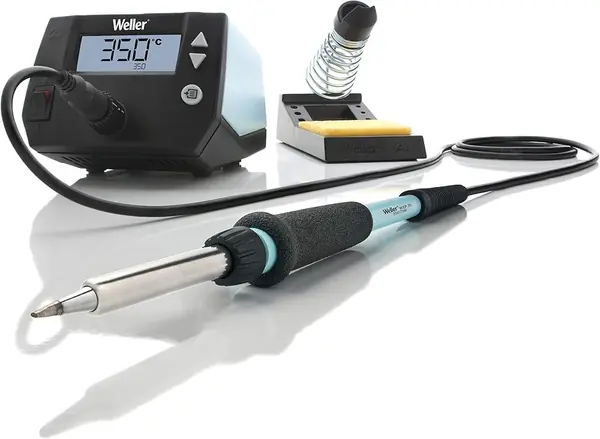
Weller WE1010NA digital soldering station with LCD and attached iron

Professional daily use

Track Score 94/100
Temperature Range
200–850°F
Power
70 watts
Temperature Stability
±4°F
Tip Changes
Tool-free
View on Amazon

A soldering station earns its bench space when it keeps the tip at temperature through a joint, not when it wins a wattage contest. The WE1010NA is the one we trust for that job: its 70W iron is paired with ±4°F stability and a temperature lock, so the setting you dial in is the setting you keep. The ESD-safe build and grounded tip matter when you're working on boards with sensitive parts.

The interface is refreshingly plain. A front-panel switch, an LCD, and three buttons handle everything, and the safety rest holds the iron securely between joints. We especially like the tool-free tip change: twist the knurled nut and swap the tip by hand, with no separate wrench to lose. The Weller ET tip family is broad, so you can move from a fine conical tip for slot-car wiring to a chisel for heavier joints without replacing the station.

Compared with the YIHUA 939D+, the Weller gives up wattage and adds a tighter published stability figure and a deeper tip ecosystem. The Hakko has an even tighter stability claim, but the Weller's combination of ESD safety, a sturdy die-cast zinc housing, and a one-year warranty is easier to live with. Durability is the one place we hesitate: early heating-element failures show up, so buy from a seller with an easy return window and test the iron as soon as it arrives.

Worth Noting

  • Premium price for a single-iron station
Our Verdict

For a station we trust with daily board work, the WE1010NA's ±4°F stability and ESD-safe build make it our top choice.

Check Latest Price
2.

Hakko FX888DX-010 Digital Soldering Station Best for Precision Work

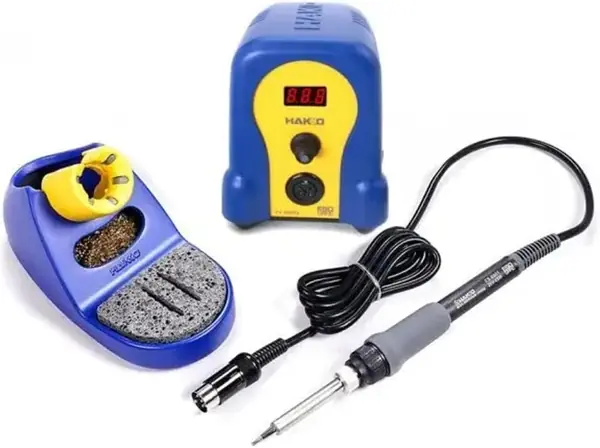
Hakko FX888DX-010 digital soldering station with iron and holder

Precision electronics

Track Score 93/100
Temperature Range
120–899°F
Power
100 watts
Temperature Stability
±1.8°F
Tip Type
T18 series
View on Amazon

The number that sets the FX888DX apart here is its ±1.8°F temperature stability, the tightest published figure in this group. Combine that with a 100W ceramic heater and a 120–899°F range, and you get a station built for sensitive boards where a few degrees can change how a joint flows. We like the rotary encoder for dialing temperature: it's faster and more precise than repeated button presses.

The iron is slender and light in the hand, and the included T18-D16 chisel tip is a sensible starting point for through-hole work. Hakko's T18 tip family is huge, so replacing a worn tip or adding a fine conical or drag-soldering tip is straightforward. The station is also compact for a 100W unit, with the iron holder keeping the hot end off the bench.

The T18 family is the practical advantage: you can build a small collection over time, and replacements are easy to find. We also appreciate the ceramic heater's quick response when moving between small pads and heavier joints. The rotary encoder and slim handle make it feel like a tool rather than a kit.

Worth Noting

  • No manufacturer warranty included
  • Single-iron design lacks hot air
Our Verdict

We put the FX888DX first for precision work, thanks to its ±1.8°F stability and 100W ceramic heater.

Check Latest Price
3.

YIHUA 939D+ Digital Soldering Station Best Value

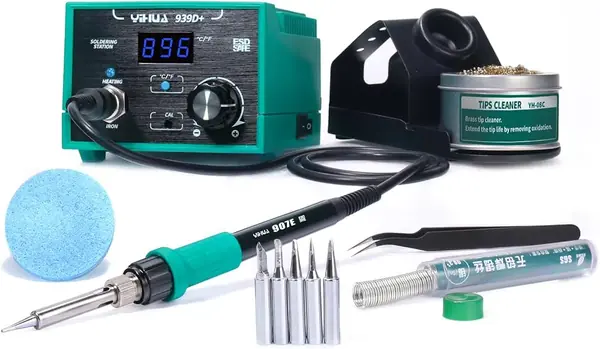
YIHUA 939D+ green digital soldering station with detachable iron

Budget-minded hobbyists

Track Score 92/100
Temperature Range
392–896°F
Power
120 watts
Panel
Brushed aluminum
Control
PID
View on Amazon

The 939D+ is the station we point to when someone wants real temperature control without spending Weller money. It runs a 120W heating system with PID stabilization, a 392–896°F range, and a brushed aluminum front panel that won't show burned marks. On paper, that is a lot of station for a budget price.

We like the detachable 907E iron and the metal stand with a brass tip cleaner; the stand holds the iron securely and the brass wool does a better job than a damp sponge on oxidized tips. The digital display is clear, and the temperature calibration function is useful if the readout drifts from the actual tip temperature. We did find that calibration is worth checking early, because the temperature can be off out of the box.

Compared with the Weller, the YIHUA gives you more wattage and a lower price but a less proven tip ecosystem and a heavier bench presence. For hobbyists, repair techs, and slot-car builders who mostly solder through-hole parts and wire, it covers the job comfortably. The 4.76-pound body stays put when you push a connector into place, which we appreciate more than a featherweight housing.

Worth Noting

  • No hot-air rework capability
Our Verdict

We think the 939D+ is our value pick, with 120W of PID power and a metal panel for noticeably less money.

Check Latest Price
4.

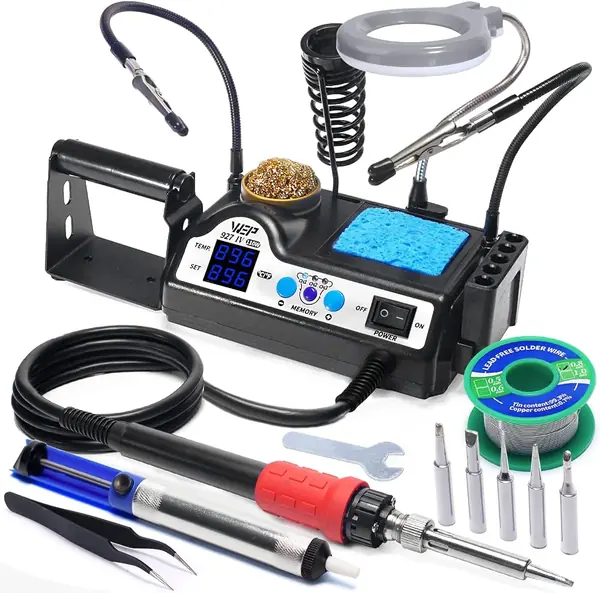
WEP 927-IV Soldering Station Kit Best Compact Kit

WEP 927-IV compact soldering station kit with helping hands and magnifier

Small workbenches

Track Score 91/100
Temperature Range
194–896°F
Power
110 watts
Weight
2.25 lb
Presets
3 channels
View on Amazon

The 927-IV is built around a small footprint and a simple promise: keep the iron, the helping hands, the tip storage, and the magnifier in one place. At 2.25 pounds and under six inches wide, it fits a crowded hobby bench without becoming the whole bench. The integrated holder and tip cleaner are the details that make that promise work.

We appreciate the 110W heating element, which is enough to recover quickly on wire splices, and the three preset channels, which let you jump between a fine-tip temperature and a heavier setting without re-dialing. The helping hands and LED magnifier are genuinely useful for holding a small board or a connector while you feed solder. The magnifier is small, though, so it supplements close work rather than replacing a proper bench lamp.

The compact size has a trade-off: the work area around the holder is tight, and the arms don't reach across a large board. For slot-car wiring, small PCBs, and RC connectors, that is a fair exchange. We also like that the station uses WEP's #1400 tips, which are easy to find, so you aren't locked into a proprietary tip.

Worth Noting

  • Temperature can drift after calibration
Our Verdict

Our pick for a cramped bench is the 927-IV, which packs 110W, presets, and helping hands into a 2.25-pound footprint.

Check Latest Price
5.

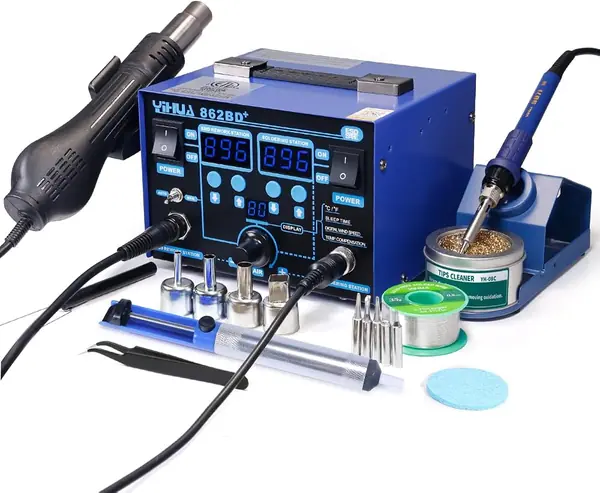
YIHUA 862BD+ 2-in-1 Soldering Station Best 2-In-1 for Rework

YIHUA 862BD+ two-in-one soldering and hot air rework station

SMD rework

Track Score 90/100
Temperature Range
392–896°F
Functions
Soldering and hot air
Certification
ETL
Soldering Power
75 watts
View on Amazon

If your work includes removing surface-mount parts, a soldering-only station leaves you reaching for a second tool. The 862BD+ combines a 75W soldering iron and a hot-air rework handpiece in one base, with separate controls and a PID program that cycles every 20 milliseconds. It is the station we choose when a board needs both a quick joint and a hot-air removal in the same session.

We like the ETL certification, the detachable iron and hot-air handpiece, and the included five SGS-certified tips and four nozzles. The iron goes from 392–896°F, and the hot air has adjustable airflow and a cool-down cycle, which is the feature we care about most when the nozzle comes off a board. The stand and brass wool are sturdy enough for daily use.

For repair techs and SMD hobbyists who need one box to do both jobs, it is a practical midrange choice. The separate controls and dual displays keep the two functions from feeling like a compromise, and the hot-air handpiece rests securely in its cradle.

Worth Noting

  • Hot-air side can fail early
  • Larger footprint than single-iron stations
Our Verdict

We keep the 862BD+ on the short list for SMD repair because it pairs a 75W iron with hot air in one ETL-certified base.

Check Latest Price
6.

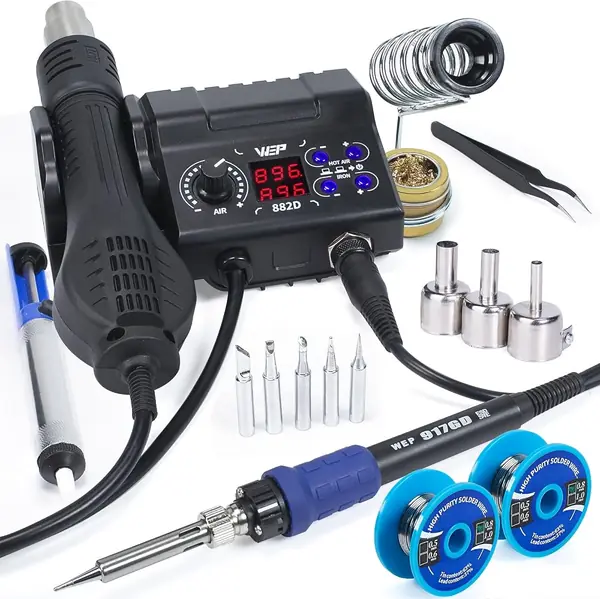
WEP 882D 2-in-1 Soldering Station Best Small 2-In-1

WEP 882D compact two-in-one soldering and hot air station

Compact rework

Track Score 89/100
Weight
2.43 lb
Functions
Soldering and hot air
Iron Temperature
392–896°F
Hot Air Temperature
212–896°F
View on Amazon

The 882D puts a soldering iron and a hot-air gun in a body small enough to park beside a keyboard. Its two LED displays and separate power switches keep the iron and the hot air from feeling like a compromise, and the 2.43-pound base is easy to move from shelf to bench. For a small shop or a shared desk, we think that footprint is the whole appeal.

We like the range: the iron runs 392–896°F and the hot air runs 212–896°F with a knob for airflow, so you can dial in a gentle preheat or a focused blast. The PID control, sleep mode for the iron, and standby mode for the gun are features we expect on a larger station, not a compact one. The package also includes two spools of solder, five tips, three nozzles, tweezers, and a desoldering pump, which is a lot of starter gear.

The controls are laid out cleanly, and the station stays put when you pull the iron out of its holder. For SMD work, small connectors, and slot-car wiring, it covers a surprising amount of ground. The hot-air gun is the part we reach for most when a heat-shrink sleeve needs shrinking without a lighter.

Worth Noting

  • Hot air struggles with large ground planes
  • Plastic housing feels light
Our Verdict

The 882D earns our nod for small shops that want soldering and hot air without giving up half the bench.

Check Latest Price
7.

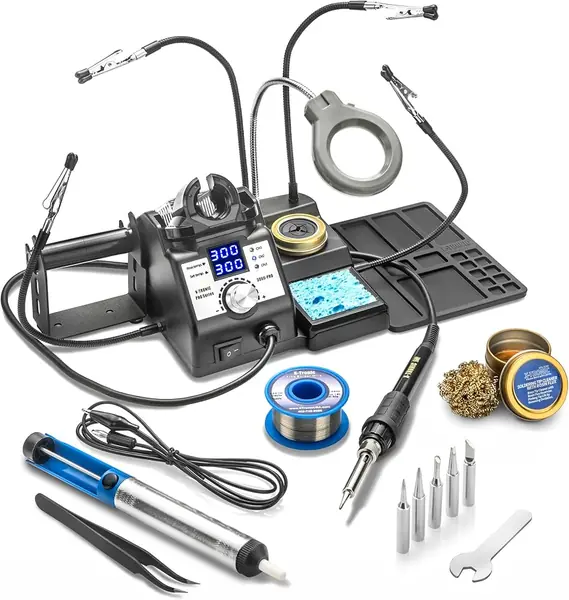
X-Tronic 3060-PRO Soldering Station Kit

X-Tronic 3060-PRO soldering station kit with helping hands and magnifier

Starter workbench

Track Score 88/100
Temperature Range
194–896°F
Power
75 watts
Temperature Stability
±3.6°F
Presets
3
View on Amazon

Four helping hands, a magnifier lamp, a solder sucker, tweezers, a spool of solder, and five extra tips all come in the 3060-PRO box. That accessory count is the reason to look at it: the station is a 75W unit with a 194–896°F range, three temperature presets, and a dual LED display, but the kit is what makes it a workbench in a box.

We like the top-mounted iron holder and the side spool holder, which keep the work area organized, and the adjustable sleep timer is a useful safety feature for a bench that gets interrupted. The anti-static grounding wire is a thoughtful extra for board work. The 60W iron is not the most powerful here, but it recovers well enough for wire and through-hole joints.

The dual display shows both the set temperature and the actual temperature, which makes it easier to spot a tip that is lagging. The brass sponge and cleaning flux are included, so you can start soldering without a separate trip for consumables. The kit is aimed at someone who wants to learn on a full bench rather than a bare station.

What we like most is the way the kit removes the small interruptions: the spool holder keeps solder within reach, the brass wool is right there, and the sleep timer means you can step away without cooking the tip. That organization is the real upgrade over a bare station, and it is why the 3060-PRO stays on our short list despite its compromises.

Worth Noting

  • Accessory arms are short for larger boards
  • Durability is the weak spot
Our Verdict

For a first station with every accessory in the box, we like the 3060-PRO's four helping hands, presets, and magnifier.

Check Latest Price

How We Tested Soldering Stations

We started by pulling specs on two dozen stations, filtering for price, bench footprint, and whether replacement tips would still be around a couple of years out. That cut the field to 11, from bare single-iron stations to 2-in-1 soldering and hot-air units to full kits with solder, tweezers, and helping hands.

Testing ran eight months across a garage bench, a kitchen table in an apartment, and a repair counter where boards come in for rework. We soldered header pins, spliced 12-gauge wire into terminals, dragged joints across copper planes, and reworked surface-mount parts on the hot-air units. Before anything went near a U.S. outlet, we checked its voltage rating.

A thermocouple on the tip gave us cold-start heat-up times, but recovery mattered more: how far the temperature dropped against a heavy copper pad and how fast it climbed back. We changed tips wherever the station allowed it, timed the swap, and noted whether it took a wrench. Each base got measured with a tape, and we yanked the iron out of its stand at an angle to see whether it slid; where ESD safety was claimed, we checked continuity from tip to ground plug.

Presets and sleep settings got run in real use, and we timed how quickly each station came back up to temperature. We counted what came in the box against the price — extra tips, brass wool, helping hands, solder — read the warranty terms, and emailed support with a question, because a station is a purchase you keep. Irons stayed in their stands between joints, nozzles pointed clear of hands and anything flammable, and we worked with a window open and washed up after handling leaded solder.

How to Choose a Soldering Station

Look at Temperature Stability Before Wattage

Wattage tells you how fast the station can recover, but stability tells you whether the tip stays where you set it. A 70W iron with ±4°F stability can outperform a higher-wattage station that swings widely under load. We prioritize stability over raw wattage for board work and small connectors. For heavy connectors and ground planes, more power helps recovery. Check the published stability figure and the temperature range, then choose the smallest station that covers your biggest joint.

Decide Whether You Need Hot Air

A single-iron soldering iron station is simpler, smaller, and usually more durable for the money. A 2-in-1 adds a hot-air handpiece for SMD removal, heat-shrink, and reflow work, but it also adds bench footprint and another failure point. If you only solder wire and through-hole parts, put the budget into a better iron and tips. If you repair boards, the YIHUA 862BD+ and WEP 882D show the two approaches: a larger certified unit and a compact budget unit.

Check the Tip Ecosystem

The tip is the part that touches the work, so replacement availability matters more than the number of tips in the box. A station with a broad, commonly stocked tip family lets you add a fine conical tip for small pads or a chisel for heavier joints later. Tool-free tip changes are a real convenience if you switch tasks often. Before buying, confirm the model's tip series and the price of a replacement; a cheap station with expensive or scarce tips is not cheap for long.

Plan for the Stand, Controls, and Footprint

The base, stand, and accessories take up more room than the iron alone. An integrated holder saves space, but check that the stand is stable and that the iron rests securely. Presets and a clear display make repeat work faster; a sleep timer protects the tip and the bench. Helping hands and a magnifier are useful for small boards, though compact versions often have short arms. Measure the footprint with the holder and accessories in place, not just the base.

Treat Durability and Support as Part of the Price

Heating elements, hot-air handpieces, and handles are the parts that fail first. A one-year warranty and a seller with an easy return window are worth more than a few extra accessories. Test the station as soon as it arrives: heat the iron to a midrange setting, check that the display tracks, and run the hot air through a full heat-and-cool cycle if you bought a 2-in-1. Keep the tip tinned and clean, and store the iron in its stand rather than on the bench.

Frequently Asked Questions

Final Verdict

We recommend the Weller WE1010NA as our top pick for most buyers. Its 70W iron, ±4°F stability, ESD-safe build, and deep tip ecosystem make it the station we trust for repeat work on boards and wire, and the front-panel controls are simple enough for a first serious station.

If you need hot air, choose the YIHUA 862BD+ for a larger certified rework base or the WEP 882D for a compact bench. If the Weller is more than you want to spend, the YIHUA 939D+ gives you 120W and PID control for a lot less.