Best RC Drift Servos of 2026

A drift car spends most of its run sideways while your thumb corrects the steering several times a second. The servo turns those corrections into countersteer, and a slow or vague one shows immediately: the car wobbles through the transition instead of settling into an angle, and a cheap servo hunts for center once a gyro is involved.

The spec sheet is a rough guide at best. Torque is quoted at a voltage your BEC may never supply, and a servo can be quicker than the gyro setting it's paired with. Programmability is the fix most people skip, since dialing in speed, travel, neutral and direction is what makes a gyro behave. After eight months in drift chassis on polished concrete and a painted lot course, the five picks held center and held their gears.

Our Top Picks

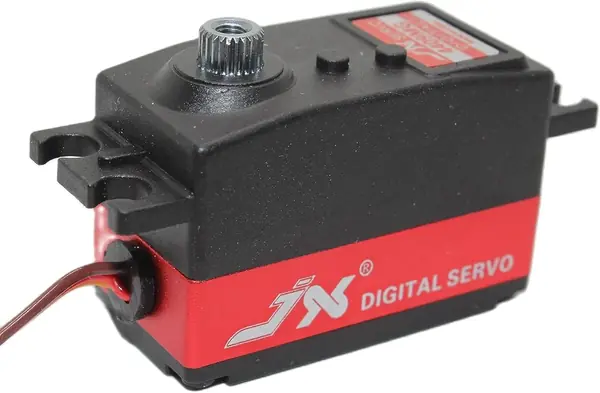
The Best RC Drift Servos

1.

AGFRC A50BHL Low-Profile Servo Best Overall
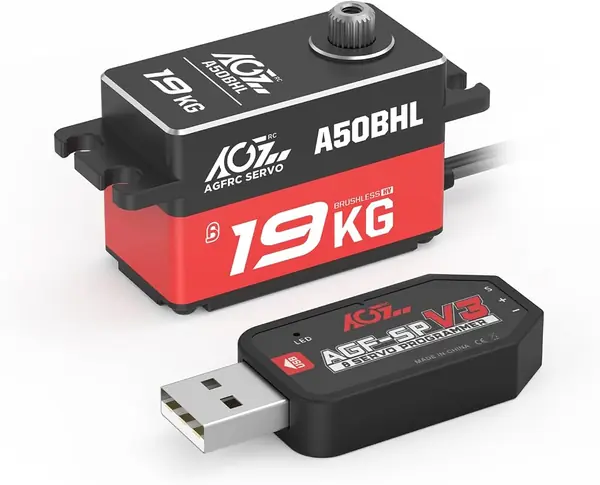
AGFRC A50BHL low-profile brushless servo with aluminum case and AGF-SPV3 programmer

Serious drift builds

Track Score 88/100
Speed
0.073 sec/60° at 8.4V
Torque
19 kg-cm at 8.4V
Case Size
1.61 x 0.8 x 1.04 inches
Programmer
AGF-SPV3 included
View on Amazon

The A50BHL arrives with the AGF-SPV3 programmer, and that programmer is what makes a drift build tunable. Being able to change torque, speed, angle, and direction at the servo makes it much easier to match a gyro and radio without rebuilding the linkage. The brushless motor and steel gears give it a smooth, quiet action, and the 0.073-second speed at 8.4V is quick enough to catch a slide; 19 kg-cm also leaves margin for wide drift tires.

At 1.61 x 0.8 x 1.04 inches, the aluminum case is genuinely low-profile, and the top and middle metal sections help it shed heat during long indoor runs. We like that the metal case gives the mounting tabs a solid feel, and the dual ball bearings keep the steering crisp when the gyro is making rapid corrections. For a first drift servo, the tuning range is a real advantage: you can slow the steering for a low-grip car instead of fighting it with radio expo.

One behavior to watch is gyro gain. High settings can bring on wobble, while a well-tuned car can run clean at 80%; the included programmer is the tool that lets you find that window.

A steering snag after a few months of regular carpet use is the other long-term risk, so keep the linkage free and check the horn before a race day. That is a maintenance point rather than a reason to avoid the servo for a well-kept club car.

Worth Noting

  • Premium price among these drift servos
Our Verdict

We recommend the A50BHL as the default drift servo because its brushless speed, 19 kg-cm torque, and included programmer let you tune a gyro car properly.

Check Latest Price
2.

AGFRC B44BLS V2 Low-Profile Servo

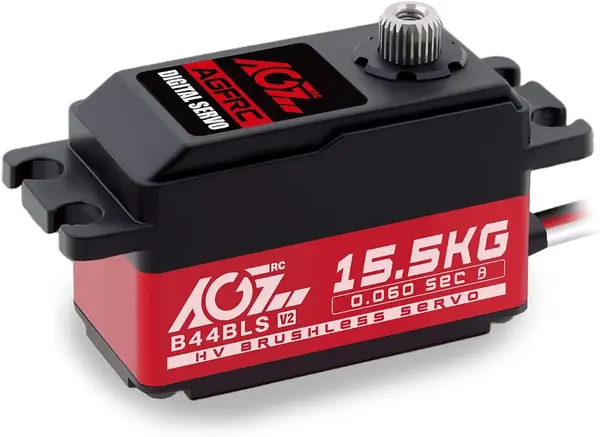
AGFRC B44BLS V2 low-profile brushless servo with titanium gears and aluminum case

Maximum steering speed

Track Score 87/100
Speed
0.060 sec/60° at 8.4V
Torque
15.5 kg-cm at 8.4V
Case Size
1.61 x 0.80 x 1.03 inches
Gear Material
Titanium
View on Amazon

At 0.060 seconds per 60 degrees at 8.4V, the B44BLS V2 is the quickest servo in this group, and we noticed how immediately the front wheels answer a correction. The brushless motor and titanium gearset give it a smooth, light action, and 15.5 kg-cm is plenty for a 1/10 drift car with normal tires.

The low-profile case measures 1.61 x 0.80 x 1.03 inches, so it slots into the same tight spaces as the A50BHL. We think it is the better value for a speed-first build: you get more steering speed for less money, and the aluminum middle case adds stiffness without much weight. The titanium gearset is a step up from the plastic gears in budget servos, and the dual ball bearings keep the output shaft supported under load. It also runs quietly, which is a small pleasure on an indoor carpet track.

For a drift car, the payoff is in transitions. The faster servo lets the gyro make smaller, quicker corrections, and the car feels more direct without a huge torque penalty. We see it as the choice for a club racer who wants maximum steering speed and is comfortable setting the servo up on a programmer. The low-profile case also leaves room for a low battery tray, which helps keep the center of gravity down.

Worth Noting

  • USB programmer sold separately
  • Gear wear can shorten service life
Our Verdict

We like the B44BLS V2 for a club car where maximum steering speed and brushless response matter most.

Check Latest Price
3.

PDI-4409MG Low-Profile Drift Servo Best Budget Drift Build

PDI-4409MG short-case servo with aluminum gears for drift cars

Budget drift builds

Track Score 86/100
Speed
0.11 sec/60° at 6V
Torque
9.2 kg-cm at 6V
Case Size
40.5 x 20.3 x 28 mm
Gears
Taiwan-made aluminum
View on Amazon

The PDI-4409MG is one of the few servos here made specifically for the Sakura D4 and Yokomo YD2S, and the short low-profile case is the reason. At 9.2 kg-cm and 0.11 sec/60° at 6V, it is sized for the shallow mounts and tight chassis of a 1/10 drift car.

What sold us is the centering. Drift steering is a constant series of small corrections, and a servo that returns to center differently each time makes the car feel nervous; this one holds a straight line and comes back to center predictably. The aluminum gears and dual ball bearings give it a precise, quiet action, and it has the sort of long-term record that comes from surviving normal club use. That repeatability matters more to us than a flashy spec number, because a gyro can only correct against a steering angle it can trust.

It suits a tight budget and a light chassis; it is happiest in a basic drift build rather than a high-grip touring car. The appeal is the combination of drift-specific fit, reliable centering, and a price that lets you keep a spare. The short case also leaves more room around the servo for a gyro or a low battery tray, which is welcome in a crowded touring-car chassis. It is a known quantity in drift builds, and that counts for a lot when you are learning to hold an angle.

Worth Noting

  • 9.2 kg-cm torque is modest
  • 0.11-second speed trails the leaders
Our Verdict

Our pick for a budget drift car is this short-case servo, which centers consistently and fits tight chassis without a premium price.

Check Latest Price
4.

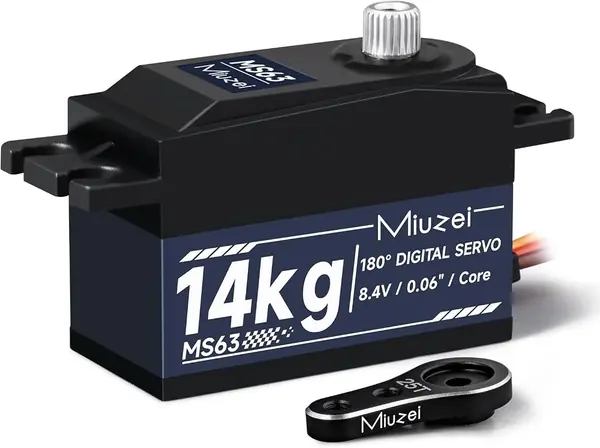
Miuzei 14KG Low-Profile Servo Best Budget High-Speed

Miuzei 14 kg low-profile digital servo with metal gears and servo horn

Budget high-speed builds

Track Score 85/100
Speed
0.06 sec/60° at 8.4V
Torque
16.5 kg-cm at 8.4V
Waterproof
IP66
Case Height
28.5 mm
View on Amazon

The Miuzei 14 kg is the budget speed play: it is rated at 0.06 seconds per 60 degrees at 8.4V, which is as quick as the B44BLS V2 on paper, for a fraction of the cost. The 16.5 kg-cm rating at 8.4V is more than enough for a 1/10 drift car, and the 28.5 mm case height slots into the same tight spaces as the premium picks.

The metal gears and dual bearings give it a substantial feel, and the IP66 rating is a bonus if you run outdoors or on a damp track. We like that it comes with a servo horn, so you can bolt it into a budget build without hunting for extra parts. The case feels solid in the hand, and the low-profile shape leaves room for a gyro.

The one spec we do not take at face value is the speed. A servo can be fast on a bench and still feel delayed when the radio makes a big correction, and this one is not as consistent as the AGFRC units. For a budget drift car, though, the responsiveness is still in a different class from a stock plastic-gear servo, and the low price makes it easy to keep a spare. For a first build or a backup servo, that trade is easy to live with.

Worth Noting

  • Gear play can develop early
Our Verdict

We see the Miuzei as a cheap way into a fast low-profile servo for a first drift build or a spare.

Check Latest Price
5.

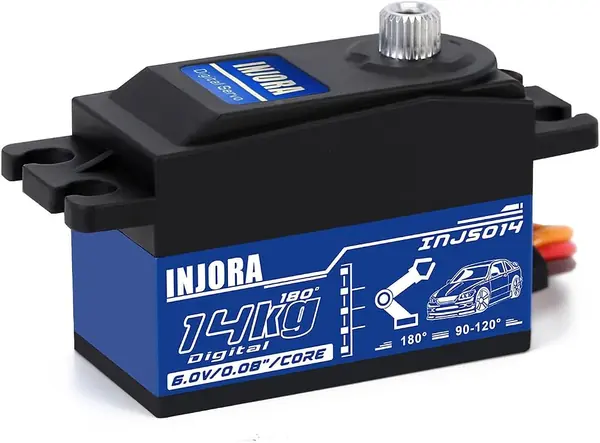
INJORA INJS014 14KG Servo Best for Casual Drift Builds

INJORA INJS014 low-profile aluminum servo with full metal gears

Casual drift builds

Track Score 84/100
Speed
0.10 sec/60° at 4.8V
Torque
14 kg-cm
Gears
Full metal
Case
Aluminum low-profile
View on Amazon

The full-aluminum low-profile case is the reason to look at the INJORA INJS014: it saves height in a cramped 1/10 chassis and gives the servo a more substantial feel than the price suggests. The 14 kg rating and 0.10-second speed at 4.8V are respectable for a budget unit, and the full metal gears and dual bearings are the right hardware for a car that sees regular use. It fits popular Tamiya builds such as the TT-02 and MB-01, where the low case clears the chassis and the aluminum body looks purposeful.

We like it as a first upgrade for a casual drift car or a basher that needs more steering authority without a big spend. Centering is the catch. For drift, a servo has to return to the same point every time; this one can struggle with that, and it is not the servo we choose for a gyro car that needs repeatable countersteer. For a shelf display, light bashing, or a first drift car, the price and fit still make sense. We also appreciate that it is a direct fit in several Tamiya touring cars, so you do not need an adapter just to get a low-profile servo into the chassis.

Our Verdict

We consider the INJORA 14 kg a space-saving budget servo for light drift and bashing, not a competition steering unit.

Check Latest Price

How We Tested the Best RC Drift Servos

We started with a shortlist built from spec sheets and forum threads, then filtered hard: the case had to clear the mounts and braces on a 1/10 drift chassis, the gears had to be metal, and the price had to keep it in the same conversation as everything else in the group. That left 14 low-profile servos, which we ran for eight months.

Each one went on the bench first. We measured case height with calipers, tab included, and weighed it; then we ran it on a programmable supply from 4.8V up to whatever it was rated for, timing the sweep at 60 degrees and noting how much the gears buzzed at center. Programmability got its own pass: we hooked each servo to its programmer, changed speed, travel, neutral, and direction, then checked that the changes actually took.

From there they went into a rear-drive drift chassis with a gyro, on polished concrete in a garage and a painted lot course. Before the first run we set steering endpoints so nothing bound at full lock, confirmed the BEC could supply the current each servo drew under load, and disconnected the battery before touching the linkage. What we watched for was steering the car could actually use: whether it caught a slide in one clean correction or sawed at the angle, whether it hunted around center under gyro correction, and how it held up over a full pack rather than a single lap.

After long practice sessions we pulled the cases and looked at gear wear and backlash. We also kept a running note on price against the group, so a fast servo that needed a new BEC or a set of mounts didn't get credit it hadn't earned. The ones that came back tight after a season of practice nights are the ones in this guide.

How to Choose an RC Drift Servo

Speed and torque: buy the quickest servo you can justify

Speed is the number that changes how a drift car feels. A 0.06- to 0.07-second servo reacts almost instantly to a correction, while a 0.11- to 0.14-second unit feels softer and asks more of the driver. Torque still matters, but a 1/10 drift car with normal tires does not need a 35 kg crawler servo; 9 to 19 kg-cm is the useful range here. We prefer a 9 kg servo that centers perfectly to a 35 kg unit that is slow and vague.

The PDI-4409MG is proof that a light drift car can run on 9 kg, while the AGFRC A50BHL gives more margin for wide tires and heavier bodies. If you are shopping by feel, pick the fastest servo your budget allows and let the gyro do the rest.

Low-profile fit is a chassis decision

Low-profile matters because drift cars sit low and often crowd the servo with a gyro, battery, or steering rack. A 26-29 mm case clears those layers; a standard 40 mm-tall servo can force you to raise the body or relocate electronics. Measure the height at the mounting tabs, not just the case, and check that the horn clears the chassis brace.

All five picks here are low-profile, but the AGFRC cases are the shortest at about 26 mm, while the PDI and Miuzei sit around 28 mm. That difference is small until you are fitting a low body or a tall gyro mount, so dry-fit the servo before you commit.

Programmability is what makes a gyro behave

Digital servos can be tuned for speed, torque, angle, neutral, and direction, but only if you have the programmer. Some servos include it, as the A50BHL does; others, including the B44BLS V2, sell it separately. Programming lets you shorten travel before the servo binds and soften the response for a low-grip drift car.

If you are building around a gyro, budget for the programmer and learn the endpoint and gain controls before you judge the servo. A fast servo with the wrong travel can make a drift car feel twitchy; the same servo with clean endpoints can feel planted.

Centering and gear wear decide whether it stays in the car

Drift steering is a series of small corrections, so a servo that returns to center slightly differently each time will make the car unpredictable. We prioritize a quiet geartrain, tight linkage, and a repeatable center over a flashy torque number. Metal gears help, but they are not indestructible; keep the steering linkage free of binding and set endpoints so the servo is not buzzing at full lock.

If you race indoors several times a week, choose a servo with a good long-term record and keep a spare. A budget servo that centers well is more useful than a high-torque unit that wanders, especially once a gyro is correcting for you.

Frequently Asked Questions

Final Verdict

For most 1/10 drift builds, we recommend the AGFRC A50BHL. It pairs a genuinely fast brushless servo with the programmer you need to tune steering angle and speed around a gyro, and the 19 kg-cm rating leaves margin for wide drift tires.

If raw steering speed is the priority, the B44BLS V2 is quicker; if you are building on a tight budget, the PDI-4409MG is the servo we trust to center and last.