Best RC Car Motors of 2026

A motor swap is the best dollar-per-smile upgrade in RC and an easy one to get wrong. The can has to fit your mount, the shaft has to match your pinion and the voltage has to suit the pack you own; miss any of those and the fastest motor on the spec sheet is a paperweight with wires. What you want is usable power, enough torque to pull off a rock or out of a corner and enough speed to make a straightaway worth driving.

Noise matters more than you'd expect, because a motor that shrieks drains the fun from an afternoon faster than a slow one does. We ran 14 bare motors and motor-and-ESC combos in 1/10 buggies and crawlers on gravel, wet grass, carpet and a parking lot, plus a small crawler on a living-room course. The eight picks suit very different cars, and each still felt tight after a season.

Our Top Picks

The Best RC Car Motors

1.

Hobbywing Quicrun 10BL120 G2 Combo Best Overall
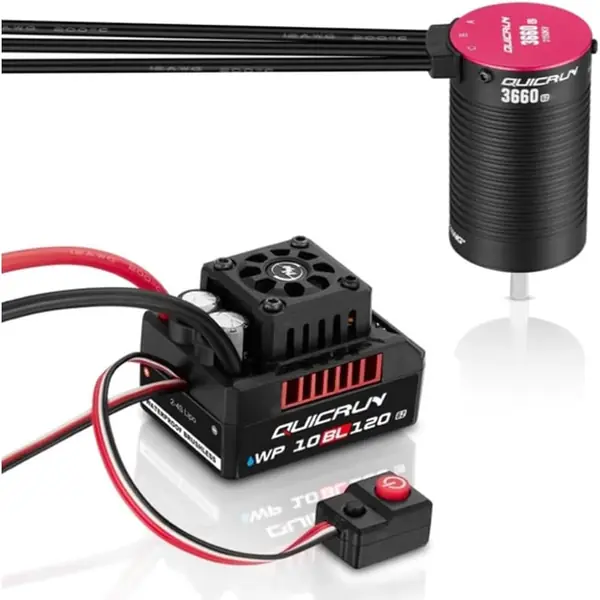
Hobbywing Quicrun 10BL120 G2 speed control with 3652SL brushless motor

1/10 brushless upgrades

Track Score 92/100
Waterproof
ESC rated waterproof and dustproof
ESC
Quicrun 10BL120 G2, 120A
Motor
3652SL G2, 4000Kv
BEC Output
5A continuous, 6V/7.4V switchable
View on Amazon

Going brushless normally means buying a speed control and a motor separately and hoping they get along. This combo takes the guesswork out of it: the Quicrun 10BL120 G2 ESC and the 3652SL 4000Kv motor arrive together, matched to each other, with manuals for both.

The ESC is the half that earns the price. It's waterproof and dustproof, so a wet parking lot doesn't end the session; the switch-mode BEC holds 5 amps continuously and peaks at 10, switchable between 6V and 7.4V, which is enough for a fast steering servo. Hobbywing builds in low-voltage cutoff, overheat protection, throttle-signal loss protection, current protection, and capacitor thermal protection, and there's an independent programming port for changing settings.

The 4000Kv motor is the version we recommend. It sits between the 3250Kv wind, which is the better choice for a heavy crawler or a truck run on 3S, and the 5400Kv, which is a lot of rpm for anything with big tires. On 2S it turns a Slash or a Stampede into a noticeably different truck without asking you to rethink the whole build, and on 3S it is genuinely quick, quick enough that gearing and temperature become your problem.

Installation is an afternoon rather than five minutes: you mount the ESC with tape, fit your battery connector, and set the throttle endpoints. Against the Spektrum sets here you give up Smart telemetry and gain 35 amps of headroom, which we think is the better trade for anyone who isn't already invested in Spektrum batteries and chargers.

Worth Noting

  • Battery connector must be soldered or adapted
Our Verdict

We think this is the brushless combo most 1/10 owners should buy: waterproof, cool-running, and complete enough to install in an afternoon.

Check Latest Price
2.

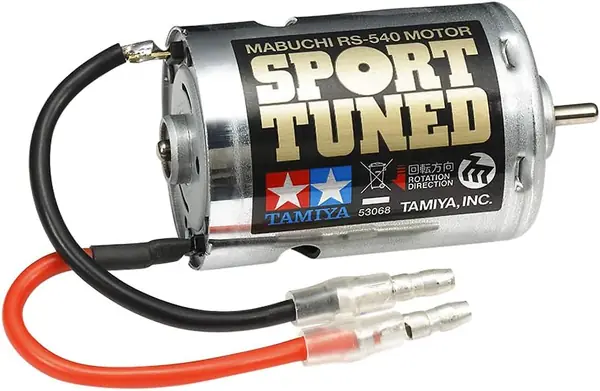
Tamiya Sport Tuned 540 Best Budget Brushed Upgrade

Tamiya Sport Tuned 540 brushed motor for 1/10 RC car kits

Budget buggy upgrades

Track Score 91/100
Weight
6.7 oz
Torque
350 g/cm at max efficiency
RPM At 7.2V
18,300
Voltage Range
6 – 8.4V
View on Amazon

Eighteen thousand three hundred rpm at 7.2 volts and 350 g/cm of torque reads like nothing next to a 4000Kv brushless, and it is — but set against the silver can in most Tamiya kits it makes a different car. We reach for the Sport Tuned whenever someone wants a Grasshopper or a DT02 to feel alive without rebuilding the electronics around the motor.

The listed range of 6 to 8.4 volts covers a 7.2V NiMH pack and the 2S LiPo most of us end up running, and the standard 540 can drops into the same mount as the motor it replaces. At 6.7 ounces it won't upset the balance of a light buggy, and it is the sort of electric motor you can keep a spare of without thinking about it.

What it doesn't have is a fan or a heat sink, so it leans on a sensible pinion and the car's own airflow. Gear it tall on a hot afternoon and it can cook itself, which is the honest limit of a brushed motor at this end of the market; drop a tooth or two on the pinion and watch the temperature for the first few packs. When you want more than that, a brushless combo is the next step, not a hotter brushed motor.

Our Verdict

We recommend this as the cheapest real upgrade for a stock Tamiya buggy: more torque and top speed from a motor that bolts straight in.

Check Latest Price
3.

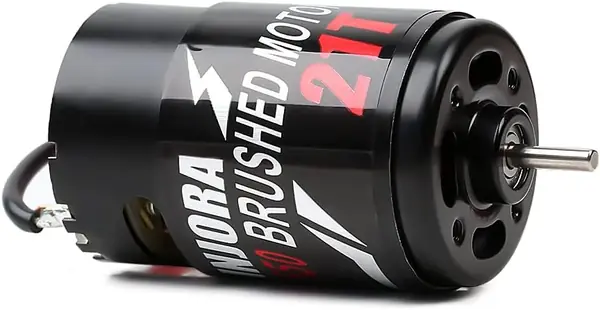
INJORA 550 21T Best Value for 1/10 Crawlers

INJORA 550 21T brushed waterproof motor for 1/10 RC crawlers

1/10 crawler torque

Track Score 90/100
Turns
21T
Waterproof
Yes
Shaft Diameter
3.18 mm (1/8 inch)
Size
550
View on Amazon

A 550 can hides its advantage inside. The armature is roughly 30 percent longer than a standard 540's, and that extra length is where the torque comes from, which in a crawler means pulling steadily at part throttle instead of stalling out on a ledge.

The INJORA 550 21T sits in the middle of the brand's range, which runs from 12T to 55T. Fewer turns buys speed at the expense of torque and more turns does the reverse, so 21T suits a truck that spends equal time on the trail and on technical lines. We also like the details that usually cost more elsewhere: a waterproof can, a bearing on the output side, and a built-in cooling fan.

Fit is the other reason it earns a spot. The 1/8-inch shaft and standard mounting holes line up with Axial SCX10 and TRX4 or TRX6 trucks, and the bullet plugs are already on, so installation is plug-and-drive rather than an evening with a soldering iron. Check rotation direction before you button it up: this one doesn't spin the reverse way some stock Traxxas motors do, and swapping two leads is the whole fix.

Our Verdict

For a 1/10 crawler on a tight budget, this is the motor we point to: 550 torque, sealed against water, and plugs already fitted.

Check Latest Price
4.

Spektrum Firma 85A Brushless Combo Best for Spektrum Smart Setups

Spektrum Firma 85A Smart ESC and 3300Kv sensorless brushless motor combo

Spektrum Smart trucks

Track Score 89/100
Weight
1 lb
ESC
Firma 85A Smart
Motor
3300Kv sensorless
View on Amazon

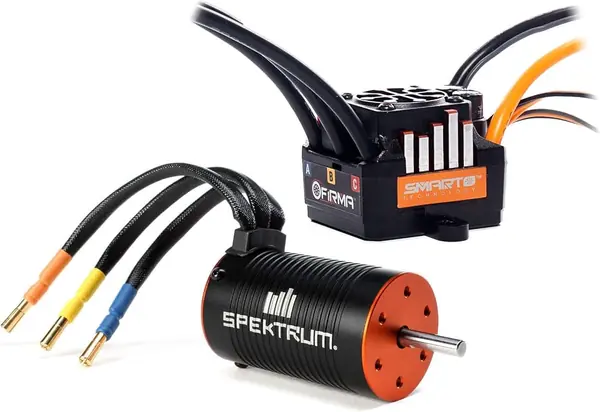
Spektrum's Smart line is the reason to look at this combo instead of a cheaper one. The Firma 85A is built to work with Smart batteries, chargers, and programming tools, so if the rest of your fleet already lives in that ecosystem, this is the piece that keeps it consistent.

Underneath the branding it's a sensorless 3300Kv motor and an 85A speed control, a middle-of-the-road wind that suits 1/10 short course trucks, buggies, and monster trucks on 2S or 3S. It's the size that drops into Slash and Senton class chassis, and at about a pound for the pair it doesn't change how the truck balances.

Sensorless means no sensor lead to route, which keeps the install tidy, and the swap is a drop-in on most 1/10 chassis rather than a fabrication job. The cost of skipping the sensor is a slightly coarser pull away from a standstill, something you notice most in tight, technical driving.

We rank it behind the Hobbywing for most buyers, and Smart compatibility is the only thing that changes the answer. Heat is the part to respect here: run this motor hard on 3S with tall gearing and it can twist an output shaft or take out a bearing, so gear conservatively and check the motor after the first pack. Kept on 2S with sane gearing, it's a tidy, quick, well-behaved system.

Worth Noting

  • Premium price next to the Hobbywing combo
Our Verdict

The combo we recommend to anyone already running Spektrum Smart batteries and chargers, where the telemetry is worth the extra money.

Check Latest Price
5.

ARRAROWN 3650 5900KV Best Budget Brushless Speed

ARRAROWN 3650 5900Kv red brushless motor for 1/10 on-road cars

On-road speed builds

Track Score 88/100
Waterproof
Yes
Kv
5900Kv
Shaft Diameter
3.175 mm
Rotor
4 pole, 12 slot
View on Amazon

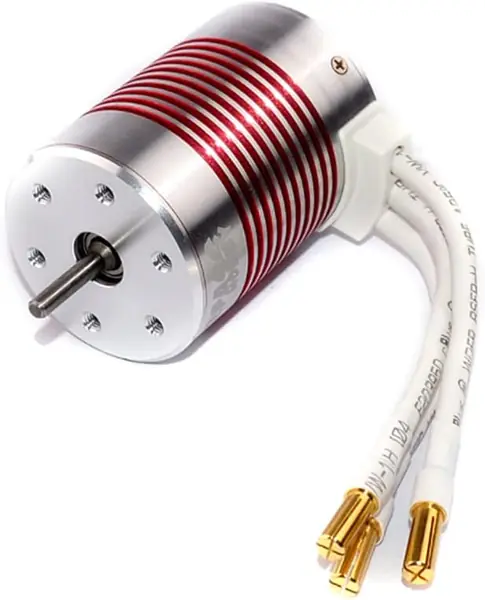
Five thousand nine hundred Kv is a lot of rpm per volt, and that's the whole pitch: this is a motor for parking lots, drag nights, and touring cars, not for a crawler or a heavy monster truck. Put it in something light and geared for top end and it delivers a rush that doesn't feel like a budget part.

ARRAROWN's 3650 uses a CNC-machined 6061-T6 aluminum can with a 4-pole, 12-slot rotor, a 3.175 mm shaft, and sealed bearings, and it's listed as waterproof for wet parking-lot duty. The 5900Kv wind is the hotter of the two sold; the 4300Kv is the one for anyone planning to run 3S regularly. Mounting is standard 540, and the screw holes are where to be careful — keep thread engagement under 6 mm or the screws will reach the windings.

Where it gives ground is the shaft. A 3.175 mm shaft spinning this fast can snap under a hard landing or in a heavy car, so keep the build light, set your pinion mesh properly, and don't ask it to push a 4x4 monster truck around. Treated as a cheap, fast, light-car motor, we think it's a steal.

Worth Noting

  • Sold as a motor only, no ESC
Our Verdict

We point on-road and drag builders here when they want maximum rpm for minimum money and already own an ESC that can feed it.

Check Latest Price
6.

INJORA 180 Pro 48T Best Drop-In for the TRX4M

INJORA 180 Pro 48T purple brushed motor with steel 11T pinion fitted

TRX4M crawler upgrades

Track Score 87/100
Turns
48T
Pinion
11T 0.4 mod, stainless steel
No-load Speed
20,500 rpm
Rated Voltage
7.4V
View on Amazon

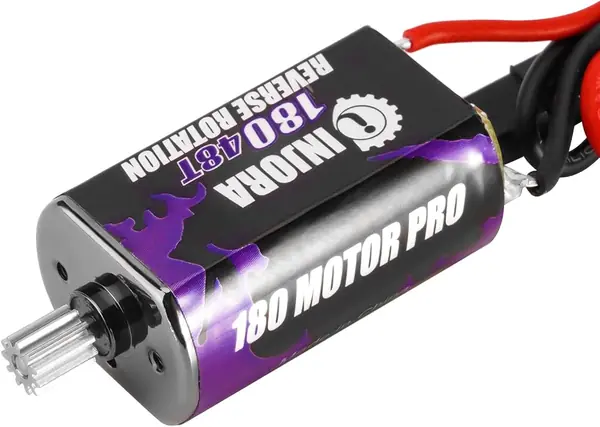
Nothing about the INJORA 180 Pro needs adapting. The 11T 0.4-modulus steel pinion is already on, the wiring is attached, and the mounting holes line up with the stock TRX4M mount — on a truck this small, that's the difference between an upgrade you finish in ten minutes and one that waits in a drawer.

We fitted it expecting a modest bump and got more than that. The neodymium magnets and 48-turn wind give it clearly more low-end torque than the stock motor and a stronger drag brake, which is exactly what a 1/18 crawler needs on a loose climb. Top speed goes up a little as well, so it isn't purely a slow-speed part.

INJORA includes an anti-interference board, a sensible touch on a truck whose receiver sits inches from the motor. Expect a little more gear noise at crawl speeds than stock, the price of the stronger magnets rather than a fault. It's listed at 7.4V with a 20,500 rpm no-load speed, and the high-strength magnets are what you feel in the first inch of throttle.

Worth Noting

  • Stock ESC is near its limit with this motor
Our Verdict

The upgrade we recommend first for a stock TRX4M: it bolts straight in with the pinion fitted and turns the little crawler into a proper climber.

Check Latest Price
7.

SEQURE 3625 1800KV Best for 1/10 Crawler Builds

SEQURE 3625 1800Kv outrunner brushless motor for 1/10 crawler cars

1/10 crawler builds

Track Score 86/100
Weight
90 g with wires
Kv
1800Kv
Voltage
2-4S LiPo
Recommended ESC
70A or above
View on Amazon

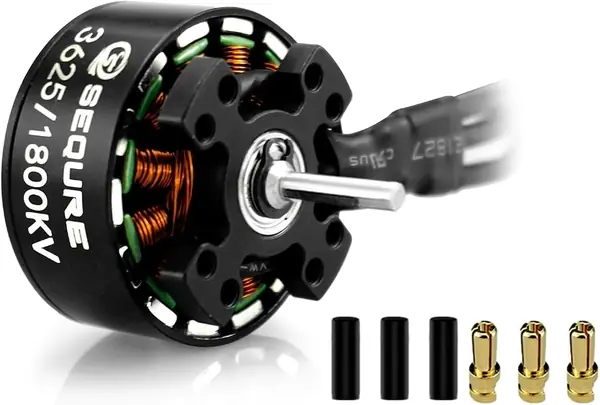
An outrunner puts the magnets outside the stator instead of around it, and the result is a motor that turns slowly with a lot of torque rather than spinning fast and gearing it back down. In a scaler that reads as controllable low-speed pull, with no brushes to wear out.

The SEQURE's numbers are crawler-specific: a 14-pole, 12-slot rotor, a 3.175 mm stainless shaft, a 36 by 25 mm can, and 90 g including the 200 mm motor wires. Eight-angle mounting holes let you clock it around a chassis brace, and the 24.5 mm mounting space is the figure to measure against your skid plate before ordering.

It arrives with 3.5 mm male bullets, so check that your ESC takes the matching female side before it goes in the cart. Plan on tuning the drag brake once it's running: this motor holds a line well, but only if the speed control is set up to hold it.

We see this as the specialist of the group rather than the default. It's quiet, it's light, and it's the only outrunner here, which makes it the obvious pick for a purpose-built scaler where smooth torque beats top speed. On a basher or a trail truck that sees full-throttle runs, a sensored inrunner is the easier answer.

Worth Noting

  • No ESC included; 70A or better required
Our Verdict

We like this for crawler builds that want smooth, quiet torque and already have a 70A speed control on hand.

Check Latest Price
8.

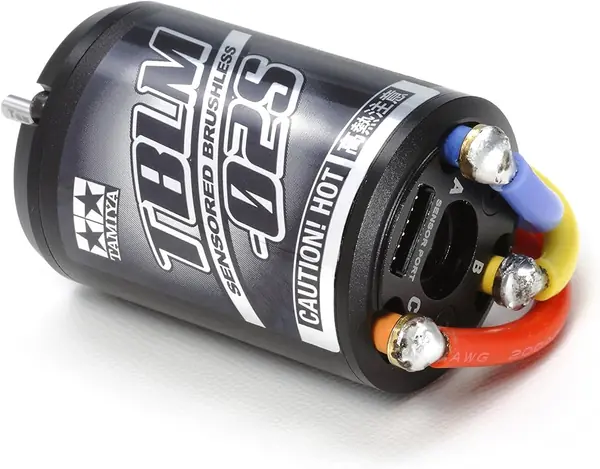
Tamiya TBLM-02S 155T Best for Tamiya Brushless Swaps

Tamiya TBLM-02S sensored brushless motor, 15.5 turns, 540 size

Tamiya brushless swaps

Track Score 85/100
Weight
6.28 oz
Turns
15.5T
Type
Sensored brushless
Input Voltage
6.6 – 7.2V
View on Amazon

Sensored motors report rotor position back to the ESC, which is why they pull away from a standstill cleanly instead of stuttering. That's the case for this one: at 15.5 turns and 6.6 to 7.2 volts, the TBLM-02S is a mild motor by modern brushless standards, and it is built for smoothness rather than a big number on a box.

Physically it's a standard 540-size can at 178 g, so it fits the same mount as the kit motor it replaces, and the sensor lead routes alongside the motor wires like any other sensored install.

We rate it as the sensible brushless step for a Tamiya buggy or touring car that mostly sees parking lots and backyard laps, where a 4000Kv combo is just expensive wheelspin. It's a low-drama way to add brushless without changing the character of the car: the throttle stays progressive, the brakes stay predictable, and you aren't re-gearing to tame it.

Worth Noting

  • Needs a sensored-capable ESC to run
Our Verdict

A sensored brushless motor we recommend for Tamiya builds where clean low-speed control matters more than outright Kv.

Check Latest Price

How We Tested RC Car Motors

We started with spec sheets rather than marketing copy: can size, shaft diameter, mounting pattern, overall length, voltage range, and whether an ESC came in the box. Anything that couldn't clear a common 1/10 mount without an adapter got cut before we ordered it. That left 14 motors, brushed and brushless, combos and bare cans, all bought at retail like yours would be.

Those 14 ran for eight months — parking-lot speed runs on weekend mornings, wet grass and hose spray, gravel, carpet, and a small-scale crawler course set up in a living room. We did the bench work ourselves, measuring shaft diameters with calipers, timing each install from box to first run, and noting whether the bullet plugs came pre-soldered or the iron had to come out.

Heat and gearing got the most attention. Each motor ran back-to-back packs on stock and then taller gearing while a temp gun tracked the can and the ESC, and we checked the ESC's current rating before every gearing change. Nothing saw more voltage than its listed range. Noise went on a decibel app at a fixed distance, and low-speed control was judged by inching up a ramp and holding a line on a hill with the drag brake set.

After the season we opened each one to look at brushes, bearings, and shaft play, which is where value for money sorted itself out. These are 14-and-up parts, and they get hot enough to burn a finger, so we handled them that way.

How to Choose an RC Car Motor

Start With Fit, Not Power

Motor sizes are not interchangeable. A 1/18 truck like the TRX4M takes a small 180-size can, most 1/10 buggies and trucks take a 540 or a longer 550, and brushless equivalents are named by can size — a 3650 is a 540 with a brushless rotor inside. Check three things before ordering: the can diameter and length your mount allows, the shaft diameter (3.175 mm is the 1/10 standard), and the mounting screw pattern.

The trap is length. A 550 fits a 540 mount but can foul a battery tray or chassis brace that the shorter can cleared, so measure the space in front of the motor, not just the bolt holes.

Combo or Motor Only

The most expensive mistake here is buying a brushless motor for a brushed speed control. If you want brushless, you need a brushless ESC, and if you want sensored smoothness you need a sensored ESC to go with it — budget for both or buy a matched combo. The Hobbywing Quicrun and both Spektrum sets come with an ESC sized to the motor.

If your car already runs a brushed ESC, a brushed electric motor is the drop-in path: the Tamiya Sport Tuned and the INJORA 550 both swap into place without touching anything else.

Turns and Kv: Buy the Speed You'll Use

Brushed motors are rated in turns and brushless in Kv, and both describe the same trade. Fewer turns means more rpm and less torque; higher Kv means more rpm per volt. In brushed numbers a 12T is a hot motor for a light car and a 55T is a crawler wind. In Kv, 1800 suits a scaler, 3300 to 4000 suits a general 1/10 basher, and 5900 is on-road and drag territory.

Pick for the surface you actually drive. A high-strung motor in a heavy truck is slower everywhere except flat pavement.

Heat Is What Ends a Motor's Life

Gearing decides how much heat a motor makes. A taller pinion raises top speed and current draw at the same time, so a motor that runs warm on the bench can cook itself in a heavy car on grass. Run one pack, then feel the can — if you can't hold your fingers on it comfortably, gear down a tooth and check again.

Crawler motors with built-in fans and waterproof cans, like the INJORA 550, tolerate long slow runs better than a sealed can with no cooling at all.

Waterproofing, Drag Brake, and the Small Costs

Waterproofing matters more than most spec sheets suggest: a wet motor doesn't just stop, it corrodes. If you run in damp grass or snow, buy a sealed can and check that the ESC is rated the same way — a waterproof motor in front of an unsealed speed control just moves the failure point.

Crawler drivers should also look at drag brake and low-speed control, which is where the INJORA 180 Pro and the SEQURE outrunner earn their places. Then count the extras: a pinion, a battery connector, and possibly a programming card, none of which are always in the box.

Frequently Asked Questions

Final Verdict

Most people upgrading a 1/10 car should buy the Hobbywing Quicrun combo. It costs less than the Spektrum sets, carries a higher-current ESC, and doesn't ask you to join an ecosystem to get the most out of it, while the waterproofing and cooling mean it survives the way most of us actually drive.

If a brushless swap is more than you need right now, the Tamiya Sport Tuned is the cheapest genuine improvement for a stock buggy, and crawler owners who want torque over top speed should look at the INJORA 550 first. The one case for spending more is a fleet already built around Spektrum Smart batteries and chargers.