Best Grease for RC Car Gears of 2026

A fresh rebuild can feel perfect when you spin the diff by hand, and two battery packs later there's a crunch from the transmission and gray paste where the grease used to be. Grease is the cheapest thing you'll put in an RC car and the part that decides whether a gear set survives a season.

Thicker doesn't mean better protected. The tack that pins grease to the teeth is the same tack that glues sand to them, so where you drive should decide what you buy, and a grease that stays on the gears instead of slinging onto the case walls outlasts a bigger tube. We packed 14 greases into plastic transmissions and metal diffs on trucks run through wet grass, mud and dusty hardpack, and the six picks are matched to what's inside your gearbox: plastic, metal or rubber seals.

Our Top Picks

The Best Grease for RC Car Gears

1.

Tamiya 87099 Cera Grease HG Best Overall
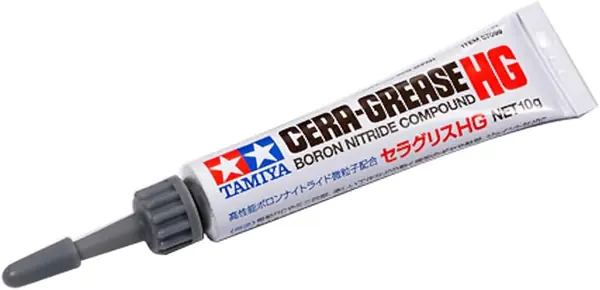
Tamiya Cera Grease HG in a small can for RC model gears

Plastic transmission gears

Track Score 97/100
Container
Can
Item Weight
0.32 oz
Item Form
Paste
Intended Use
RC and model products
View on Amazon

Most RC transmissions are plastic, and the wrong grease is an expensive way to learn that. A heavy extreme-pressure grease built for wheel bearings sits in the tooth valleys like paste and holds onto every grain of grit that sneaks past the spur cover. Tamiya's Cera Grease HG is the tube we hand someone who just wants to pack a gearbox and drive.

What we like is how little of it you need. It's a light paste that works into the tooth faces instead of clumping in the corners of the case, so a dab spread across the spur and pinion covers a whole transmission. Tamiya makes it for RC and model products rather than for chassis fittings, which is why it's the one here we're comfortable putting against plastic without checking a materials chart first. It also stays slick without turning into a dust magnet, and a gearbox packed with it comes apart clean at the next rebuild.

There's a ceiling to it. This isn't the grease for a metal ring-and-pinion diff shock-loading under brushless power — the Losi tube covers that duty. For the plastic gearbox in a kit build or a basher, it's the least fussy correct answer here: dab it on, button the case up, and forget about it until the next rebuild.

Worth Noting

  • Not built for high-pressure metal differentials
Our Verdict

For plastic transmission gears we hand people this tube first: it's a light paste made for RC models that works into the teeth and stays clean.

Check Latest Price
2.

Team Losi Racing High-Pressure Black Grease Best for Differentials

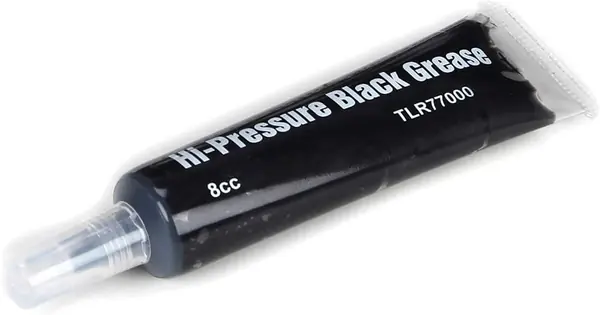
Team Losi Racing High-Pressure Black Grease in an 8cc screw-cap tube

Metal differential gears

Track Score 96/100
Container
8cc tube with screw cap
Item Weight
0.32 oz
Viscosity
High
Vehicle Fit
1/8 and 1/10 on- and off-road
View on Amazon

A differential puts load on a grease film that a spur gear never will. The ring and pinion press the lubricant until anything thin is squeezed out of the contact patch, which is why a light paste that's perfect in a transmission can leave a diff sounding like gravel. Losi builds the High-Pressure Black Grease for exactly that, listing it for 1/8 and 1/10 on- and off-road cars, thrust bearings and ring-and-pinion gears.

It's thick and genuinely sticky, which is what you want in a diff and what keeps it from being flung onto the case walls. The same tack lets it double as a seal where a gearbox mates to the chassis, and it's what we pack into a whining diff before we start pricing replacement gears.

The 8cc tube is a toolbox item rather than a workshop supply — enough for a couple of diffs, not a fleet — and you pay for the convenience of a screw-on cap that keeps the mess out of your tool roll. We still keep one in the pit box, because when a diff is the part that fails, the grease is the cheapest insurance in the car.

Worth Noting

  • Heavy for small plastic gear trains
Our Verdict

If you're packing a differential, this is the tube: it holds pressure, stays on the teeth, and quiets a noisy gearbox.

Check Latest Price
3.

Super Lube 92003 Silicone Grease with PTFE Best Silicone Option

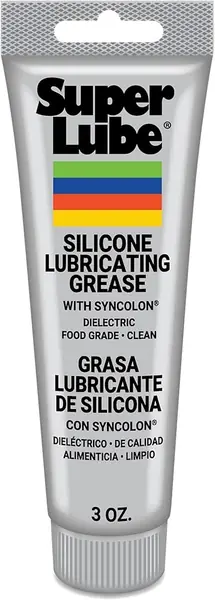
Super Lube silicone lubricating grease with PTFE in a 3-ounce translucent tube

Seals and plastic parts

Track Score 95/100
Volume
3 fl oz
NLGI Grade
2
Temperature Range
-40 to 500 °F
Compatible Materials
Rubber, metal, plastic
View on Amazon

Three words on the label do most of the selling: rubber, metal, plastic. Super Lube's silicone grease with PTFE lists all three as compatible, which is rarer than it should be in this group, and it's the right tube when a gearbox shares space with O-rings, seals or rubber boots.

What we like is that it doesn't set up. The silicone base stays workable from -40 to 500 °F, it doesn't gum into a varnish the way tacky greases can, and being translucent it shows you exactly how much you've put on a gear. It's waterproof and rated for food-contact use as well — irrelevant until you're greasing a sealed diff on a truck that runs through puddles, and then it's the reason you picked it.

It is thinner than the extreme-pressure greases here and doesn't have the tack to stay on a fast ring gear under load, so we use it for plastic gears, bearings and seals rather than for a diff that's shock-loading. The 3 oz tube lasts because a film is all you want anyway.

Worth Noting

  • Not an extreme-pressure grease for loaded diffs
Our Verdict

Silicone is the safe bet around rubber seals and plastic parts, and this is the tube we trust for it: compatible with all three, and it won't gum up.

Check Latest Price
4.

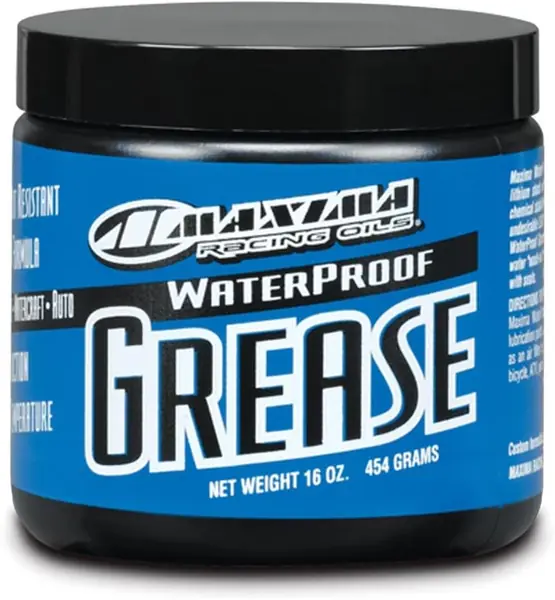
Maxima 80916 Waterproof Grease Best for Wet Conditions

Maxima waterproof grease in a 16-ounce dark blue tub

Wet and muddy running

Track Score 94/100
Volume
16 fl oz
NLGI Grade
2
Temperature Range
-20 to 560 °F
Water Resistance
Resists washout
View on Amazon

Wet running is what this one is for. Maxima's waterproof grease is a dark blue lithium-complex extreme-pressure grease built to cling to metal and resist washout, and it suits a truck that will see puddles, wet grass or snow. Sixteen ounces also means you stop rationing it.

The temperature range is wider than most here, -20 to 560 °F, so a hot motor plate or a cold morning doesn't change how it behaves, and the extreme-pressure additives are there for shock loading — the hit a diff takes when a wheel hooks up mid-corner. It's thick, dark and obvious on a gear, which makes it easy to see whether you've actually covered the contact patch.

Metal is the only material Maxima lists, so we keep it on ring-and-pinion gears and bearings and out of plastic transmissions. On a cost-per-ounce basis it's the best value in this group, and for anyone who runs in the wet it's the obvious tub to buy.

Worth Noting

  • Metal only and not for plastic gears
Our Verdict

When the truck is going to get wet, use this tub: it clings to metal, resists washout, and covers a season of rebuilds.

Check Latest Price
5.

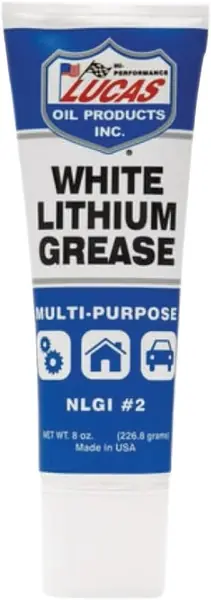
Lucas Oil 10533 White Lithium Grease

Lucas Oil white lithium grease in an 8-ounce squeeze tube

Metal gearboxes only

Track Score 93/100
Volume
8 fl oz
NLGI Grade
NLGI #2
Container
Squeeze tube
Specified For
Metal-to-metal parts
View on Amazon

The squeeze tube is the whole appeal at RC scale: point it at a tooth, squeeze, and you're done without a spatula or a syringe. Lucas's white lithium is an NLGI #2 multi-purpose grease that the maker specifies for metal-to-metal parts — hinges, latches, tracks, cables — and that specification is the honest limit of what we recommend it for.

On metal diff gears and bearings it does what it says. It resists water, protects against rust, and the 8 oz tube is big enough that you'll be reaching for it in the garage for years. It's also one of the easier greases here to lay exactly where the teeth mesh, which counts for something when the gearbox is the size of a matchbox.

What we don't do is pack it into a plastic transmission. The maker's list stops at metal-to-metal, and there are greases on this page built specifically for plastic gears, so this stays on the metal shelf. As a tube that happens to work on diff gears and will still be useful for everything else in the garage, it earns a place; as a first choice for a plastic gearbox, it doesn't.

Worth Noting

  • Specified for metal-to-metal use only
Our Verdict

We keep this squeeze tube for metal diff gears and general garage work; it applies cleanly and lasts, but it isn't a plastic-gear grease.

Check Latest Price
6.

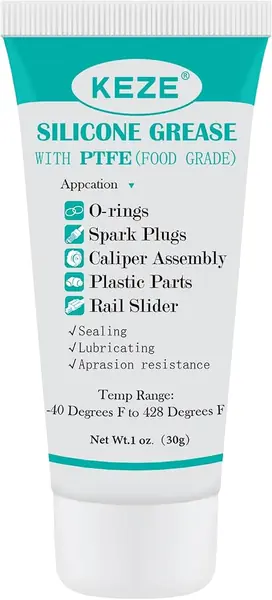
KEZE 92003 Silicone Grease with PTFE Best for Small Plastic Gearboxes

KEZE silicone grease with PTFE in a one-ounce tube

Small plastic gearboxes

Track Score 92/100
Volume
1 fl oz
NLGI Grade
2
Temperature Range
-40 to 428 °F
Compatible Materials
Plastic, metal, rubber, vinyl, leather, polymer
View on Amazon

A one-ounce tube is a sensible place to start if you've never packed a gearbox and don't want a lifetime supply on the shelf. KEZE's silicone grease carries PTFE and lists plastic, metal, rubber, vinyl and polymer as compatible, so it's safe to work into the plastic gears of a typical kit car without checking anything else first.

The catch is tack. It's noticeably stickier than the Super Lube tube, which is harmless inside a sealed gearbox but a real problem anywhere near a belt — a smear of something this sticky can have a belt drive slipping instead of driving. Keep it on gears, bearings and sliding plastic, and wipe off the excess before you close the case.

The numbers are reasonable: NLGI grade 2, rated from -40 to 428 °F, and NSF H1 food-grade for anyone greasing fittings around a water system. Nothing here is built for a shock-loaded metal diff, so we treat it as the spare that lives in the pit box for plastic gears and linkages rather than as the tube that rebuilds a race diff.

Worth Noting

  • Sticky enough to make belts slip
Our Verdict

A plastic-safe tube we like as a pit-box spare: small enough to use up, rated for plastic, metal, and rubber seals.

Check Latest Price

How We Tested RC Gear Grease

We started with every grease we could get our hands on: hobby shop shelves, the lubricant aisle at the auto parts store, and the small tubes that come up again and again on RC forums. From there we narrowed by three things a label can actually tell you — which materials it's listed for, how big the container is, and roughly how far that container goes. Fourteen greases made the cut.

Each one went into a plastic transmission and a metal differential on trucks we ran for six months through wet grass, mud, and dusty hardpack. After every session we pulled the gearbox apart and looked for where the grease ended up: still coating the teeth, pushed into the corners of the case, or slung onto the walls. We also noted whether grit had worked its way in and stayed there.

Between runs we rolled each grease between our fingers and pulled it apart to see how stringy it was, then pressed a pinch of sand into the film and wiped it off. We turned freshly packed gears by hand to feel for drag and listened for a change in pitch, and we misted water over a coated gear to see whether the grease held its shape or turned milky. The silicone and PTFE formulas got a separate look around rubber seals and plastic gears, where we checked for swelling and for a film that had dried out.

Applicators got their own round of checks: how much we had to squeeze or scoop out to fill a diff, whether the tip reached a pinion without a syringe, and how much ended up wasted on the bench. We never packed a grease listed for metal-to-metal use into a plastic transmission, and we counted how many rebuilds each container covered before it ran dry.

How to Choose Grease for RC Car Gears

Start With What the Gears Are Made Of

Most kit and basher transmissions run plastic spur and pinion gears; most 1/8-scale diffs run steel. Find the maker's compatible-material list and treat it as the boundary. Super Lube's silicone grease names rubber, metal and plastic, which is why it's the one we suggest for a gearbox that shares space with seals, while Lucas's white lithium stops at metal-to-metal and stays out of a plastic case.

The trap is the word multi-purpose. Plenty of general greases are specified for hinges, bearings and chassis fittings and say nothing about plastic at all, so a tube that works beautifully on a trailer hub can be a poor bet on a spur gear. If the label doesn't name plastic, don't assume it.

Pressure Ratings and When They Matter

Extreme-pressure additives keep a film between gear teeth that are being pressed together hard — the situation in a differential, not in a lightly loaded spur gear. If you're servicing a diff on a brushless truck, an EP grease such as Maxima's waterproof tub or Losi's high-pressure black grease is money well spent.

If you're packing a plastic gearbox in a kit car, EP performance isn't what you're paying for; cleanliness and compatibility are. Buying a high-pressure grease for a plastic spur gear gets you a stickier mess to clean out next time.

Tack, Consistency, and Grit

Tack is a trade. A sticky grease stays on the teeth and quiets a noisy gearbox, but it also holds onto the dust and grit that get pulled in through a vent or a worn seal. A light paste spreads into the contact patch and lets debris pass through instead of trapping it against the gear.

We keep tacky grease for sealed diffs and light paste for anything exposed, and we use less than instinct suggests. A thick film doesn't lubricate better than a coating — it just gets flung onto the case walls and collects dirt on the way.

Tubes, Tubs, and How Much You Need

At RC scale the container matters as much as the contents. A squeeze tube or a small screw-cap tube lets you put grease exactly on a tooth; a tub means a finger or a syringe; a grease-gun cartridge is built for chassis fittings and is clumsy on a matchbox gearbox.

A one-ounce tube covers several rebuilds, so buy small unless you keep a fleet or run in the wet, where a larger tub earns its shelf space. The grease itself has a long storage life as long as the cap goes back on.

Frequently Asked Questions

Final Verdict

Buy the Tamiya Cera Grease HG if your gears are plastic, which most RC transmissions are. It's the tube we hand people first because it goes on light, works into the tooth faces, and doesn't need a materials chart to justify putting it against a spur gear.

If you're packing metal diffs instead, the Losi High-Pressure Black Grease is the better tool, and Maxima's waterproof tub is the pick for anyone running in mud and snow. For a gearbox that shares space with rubber seals and boots, go with the Super Lube silicone tube.