Best WW2 Airplane Model Kits of 2026

Box art promises a museum piece, but the sprues inside decide whether you get one. A fuselage seam that won't close is enough to park a half-built fighter on a shelf for a year. The question with a WWII airplane kit isn't which aircraft is cooler; it is whether the parts line up and whether the detail lands where you'll see it.

Two things surprise returning builders: a 1:72 bomber takes more shelf than a 1:48 fighter, and paint and glue almost never come in the box, so price them in. We built 14 kits, from 1:48 fighters to 1:72 bombers and weekend builds to long-haul projects, at dining tables with paint drying in the garage, and the five picks are detailed where it counts and honest about fit.

Our Top Picks

The Best WW2 Airplane Model Kits

1.

Tamiya 1/48 Vought F4U-1A Corsair Best Overall
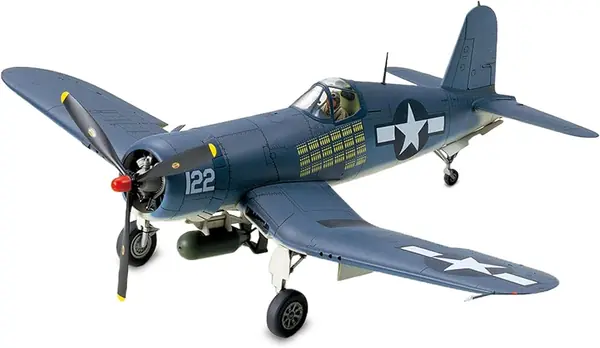
Tamiya 1:48 Vought F4U-1A Corsair plastic model kit in blue Navy finish

Detail-minded builders

Track Score 90/100
Scale
1:48
Markings
Three marking and painting options
Armament
Drop tank and 500 lb bomb
Crew Figures
Two figures, seated or standing
View on Amazon

Parts fit is the first thing we judge on a 1:48 fighter, and this Corsair became the measure we held the rest of the group against. The fuselage halves meet without a step, the wing roots close up cleanly, and the boxed-in wheel wells drop into place without shaving or filler. That makes the build something to enjoy rather than endure.

The box is generous for the money. There is a detailed cockpit with ribbed sidewalls, a full engine, and clear cowling panels so the engine stays visible after the fuselage closes. You also get a drop tank and a 500 lb bomb for under the wings, two crew figures that can sit in the cockpit or stand beside the model, and markings for three aircraft.

Building the engine and wrapping it in those clear panels is the fiddliest step, and it is the one we enjoyed most: the finished engine reads as a machine behind the cowl rather than a painted lump. Among the kits here, it needed the least sanding, and it is the one whose marking choices we keep changing our minds about.

Our Verdict

Our top pick: Tamiya's Corsair fits together with almost no filler and still gives you a detailed engine, two figures, and three marking options.

Check Latest Price
2.

Revell 1/48 SBD Dauntless Best Weekend Build

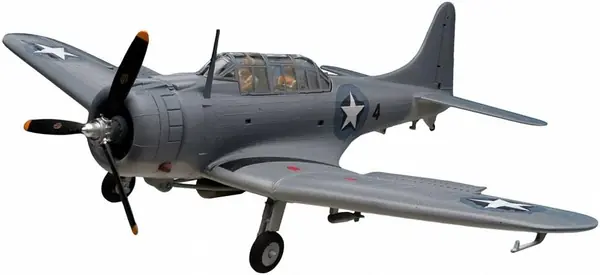
Revell 1:48 SBD Dauntless dive bomber model kit molded in gray and clear

Returning hobbyists

Track Score 89/100
Scale
1:48
Parts
53
Skill Level
4
Finished Size
7-3/4 in long, 10 in wingspan
View on Amazon

Ten inches of wingspan and seven and three-quarter inches long: the Revell Dauntless is a small model, and that is much of its appeal. At 53 parts it is the kit here that asks least of your bench, your paint rack, and your calendar, which makes it the one to start with if you are easing back into the hobby.

What we like is what the exterior gives you at a budget price: recessed panel lines, a birdcage canopy, dive brakes you can pose open, and a bomb that hangs under the fuselage. The tooling is older than the Tamiya kit's, so plan on a filler-and-sanding pass at the wing roots and along the fuselage seam, and trim the flash off each part before anything gets glued.

None of that changes what it is: a short, satisfying build that ends with a recognizable dive bomber on the shelf. We point people coming back to the hobby toward it, because at this price finding out whether you still enjoy the work costs very little.

Worth Noting

  • Sparse cockpit and interior detail
Our Verdict

For an easy, inexpensive return to the hobby, take the Dauntless: 53 parts, a small footprint, and an exterior that still looks like a dive bomber.

Check Latest Price
3.

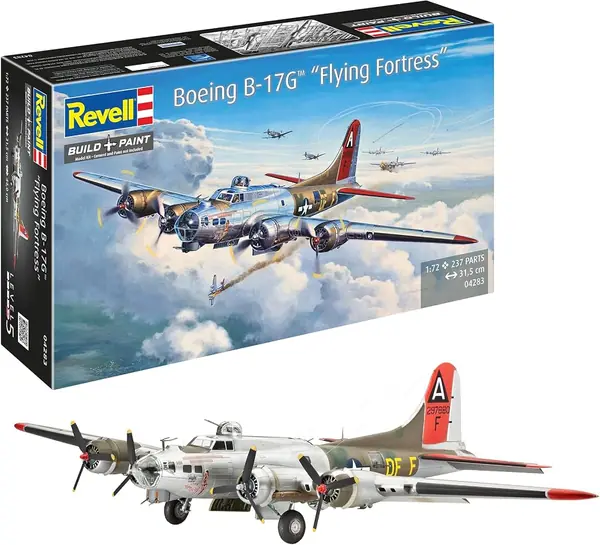
Revell 1/72 B-17G Flying Fortress Best Big Bomber

Revell 1:72 B-17G Flying Fortress four-engine bomber model kit with 152 parts

Experienced bomber fans

Track Score 88/100
Scale
1:72
Markings
Two USAAF versions
Parts
152
Working Features
Opening bomb bay, movable turrets, separate bombs
View on Amazon

Four engines, a chin turret, and 152 parts: this is the kit in the group that turns a corner of a shelf into a project. At 1:72 a four-engine bomber stays within bookcase range, which is exactly why we chose this scale for the heavy-bomber slot rather than something bigger.

The box holds the full aircraft: a detailed cockpit, an opening bomb bay with separate bombs, movable turrets, and optional clear parts so you decide how much glazing stays transparent. Decals cover two USAAF versions, and the surface detail is the kind that rewards a proper paint job instead of a quick one.

Our verdict is that it is worth the money for anyone past their first kit. The turrets and the bomb bay mean genuine subassembly work, and the finished bomber has a presence none of the single-engine kits here match. It is not the kit to learn on; it is the one to graduate to.

Worth Noting

  • Long build that is not for beginners
Our Verdict

We recommend the B-17G to builders with a kit or two behind them who want a four-engine bomber that still fits on a bookshelf.

Check Latest Price
4.

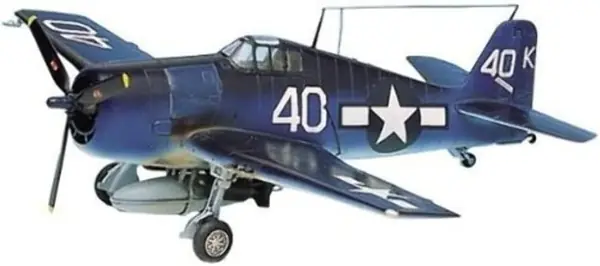
Academy 1/72 F6F-3/5 Hellcat Best First Kit

Academy 1:72 F6F-3/5 Hellcat fighter model kit with optional version parts

First-time builders

Track Score 87/100
Scale
1:72
Markings
Two versions
Detail
Cockpit interior and landing gear
Build Options
Optional parts for F6F-3 or F6F-5
View on Amazon

If the last model you finished was years ago, start here. Academy's Hellcat is the most forgiving kit in this group: the 1:72 parts are big enough to handle without tweezers, the cockpit and landing gear carry enough detail to look deliberate, and the finished model comes together without a fight.

Both versions are in the box, so you choose the F6F-3 or the F6F-5 airframe parts, and the decal sheet covers two aircraft. That is a real choice rather than a token one: build two of these and the pair will not look identical on the shelf.

One caution before you start: thin parts like the wing halves can arrive slightly out of shape. Warm them and straighten them before gluing and the model sits true, and a hairdryer on low is enough to do it. Beyond that, this is the kit we point to when someone wants to find out whether they enjoy building at all.

Worth Noting

  • Finished model is smaller than many expect
Our Verdict

If you haven't built in years, this is where we point you: big parts, two version options, and a finish that looks intentional.

Check Latest Price
5.

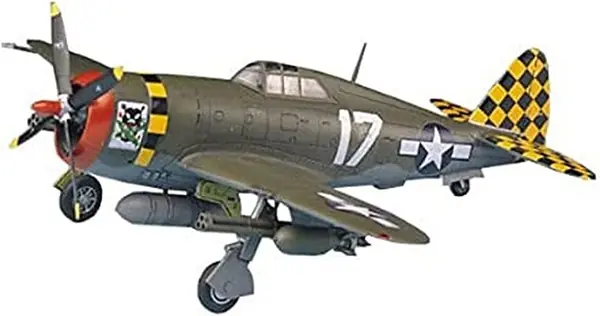
Academy P-47D Thunderbolt Best Budget Kit

Academy P-47D Thunderbolt Razorback model kit with engraved panel lines and decals

Budget builders

Track Score 86/100
Cockpit
Detailed interior
Options
Optional-position gear doors and underwing weapons
Surface Detail
Engraved panel lines and rivets
View on Amazon

Least expensive in this group does not have to mean skimpy, and Academy's Thunderbolt is the proof. For the least money here you get engraved panel lines and rivets across the airframe, a cockpit with raised detail worth painting, optional-position landing gear doors, and a choice of underwing stores.

We were surprised by how much surface detail Academy fit into a budget kit. The engraving is the kind of thing we expect to pay more for, and the gear doors and weapons give you a reason to build a second one differently rather than repeating the same model.

Think of it as the kit that gets a P-47 onto the shelf for very little, and as a place to rehearse a new paint technique before you risk it on a more expensive model. It is also the box we suggest when someone wants to give a modeler a gift without guessing at scale or variant.

Worth Noting

  • Finished model is small, and the scale is easy to misjudge
Our Verdict

When the budget is tight, this Thunderbolt delivers engraved detail and a full cockpit for the least money in this group.

Check Latest Price

How We Tested These WWII Airplane Kits

We started with research, gathering kits in the two scales most WWII aircraft come in, 1:48 and 1:72, from makers with long-running lines in the subject, then filtering for availability, a spread of part counts, a spread of prices, and a mix of aircraft types. That list became 14 kits built over six months, from short weekend projects to multi-evening bombers.

Every build began the same way: we counted the parts on the sprues, then dry-fitted the fuselage halves, wing roots and cowlings before any cement came out, noting where flash had to be trimmed and where a gap would need filler. We worked at the dining table on weeknights and in the garage on weekend afternoons with the door open, following each instruction sheet start to finish without aftermarket references and flagging steps that were vague or decal placements the sheet left unclear. Before closing up the fuselage we checked the cockpit, engine face, wheel wells and canopy fit, since those are the parts you actually see once the model is on the shelf.

Finished models got measured with a ruler — wingspan, length, tail height — and set on a standard shelf to see what the footprint looked like beside a row of books. Where a kit offered alternative markings or variant parts, we built those options and watched how the decals settled over panel lines and rivets. We opened and closed bomb bays, turned turrets, and handled the finished models for weeks, checking that landing gear still carried weight and that gear doors still swung open. Everything was built and painted in ventilated spaces away from open flames, and no kit went to a builder younger than the age rating printed on its box.

How to Choose a WWII Airplane Model Kit

Choose the scale before the airplane

Scale sets both the finished size and how much detail a kit can carry. A 1:48 single-engine fighter lands around 10 inches of wingspan, as the Revell Dauntless does, which suits a desk or a single shelf; 1:72 cuts that footprint down and is the scale we suggest for bombers and for anyone short of display space.

One trap: scale labels get repeated wrongly by sellers. Check the stated finished length and wingspan against the number before you order — the measurements are the more reliable figure, and they are what tell you whether the model fits where you plan to put it.

Match part count to the time you actually have

Part count is the honest measure of a project. Our picks run from 53 parts on the Dauntless to 152 on the B-17G; the first is a build you can pick up and put down, the second is a series of subassemblies that will hold a bench for a while.

Skill badges are the maker's own shorthand and they do not travel between brands, so read the parts count and the number of marking options instead, and be honest about the evenings you have.

Expect to work on fit with older molds

Fit is where kits separate. The engineering in our Tamiya top pick meant we finished it with almost no filler, while older Revell and Academy tooling can need a pass of filler at the wing roots and sandpaper along the fuselage seam.

That is not a defect at a budget price — it is the difference between assembling a model and building one. Decide which of those you are in the mood for, and buy accordingly.

Pay for detail where you will see it

Cockpit, wheel wells, bomb bay, and canopy are where detail earns its keep. Interior framing that disappears the moment the fuselage halves close is time you will never get back on a model that ends up on a shelf.

If interior detail matters, choose a kit with a poseable canopy or plan to leave panels open. Otherwise put the money into engines, underwing stores, and a good decal sheet, which is what people actually look at.

Budget for paint and glue

None of these plastic model kits includes paint or glue, and the instruction sheet names every color it wants. Buying all of them costs more than the kit, so start with the three or four that cover the airframe and the cockpit.

Add a liquid glue with a fine applicator and a primer that grips bare plastic, then buy colors as you need them. A first build does not require the full rack.

Frequently Asked Questions

Final Verdict

Our single answer is the Tamiya 1:48 Corsair. It is the kit here that builds without a fight and still rewards careful paintwork.

If this is your first model in years, start with the Academy Hellcat or the Revell Dauntless instead; if you want a four-engine centerpiece, the 1:72 B-17G earns its higher price and its longer build.