Best Plastic Model Kits for Beginners of 2026

A plastic model kit is made for a particular Saturday afternoon: newspaper on the kitchen table, a runner of parts and a few hours where nothing beeps. Too many first kits end with a fogged canopy, a gap at the wing root and half the parts back in the box. A good beginner kit gets out of your way so you finish.

Part count tells you more about a first session than the skill-level number on the box. Snap-fit kits ask for patience; glue kits ask for cement, an open window and a steadier hand. We built 14 kits at kitchen tables, on a folding tray and on a cramped desk, checking whether parts met without a fight, whether the instructions pointed where they claimed and whether the finished model fit where you'd put it. Anyone who has never opened a kit can finish any of these five.

Our Top Picks

The Best Plastic Model Kits for Beginners

1.

Bandai Spirits HG Zaku II Best Overall
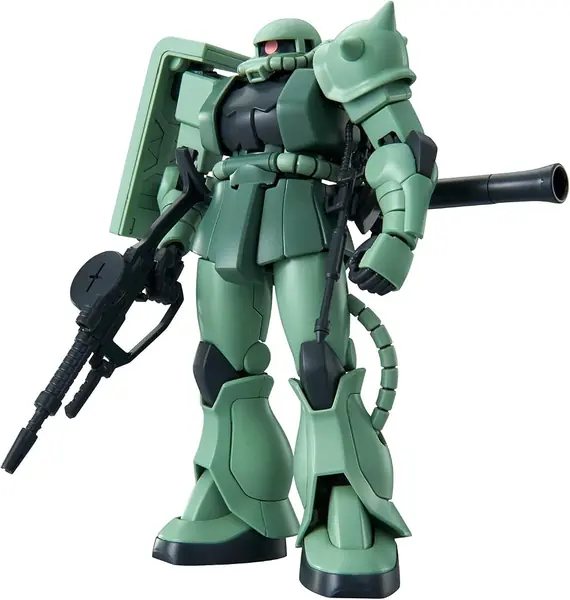
Bandai Spirits HG Zaku II green mecha model kit with weapons and foil stickers

First-time mecha builders

Track Score 91/100
Scale
1:144
Assembly
Snap-fit, no glue required
Paint
Color-molded, no paint required
Recommended Age
15+
View on Amazon

A first model kit has to clear three hurdles: no glue, no paint, and no mystery about where the parts go. The HG Zaku II clears all three. Bandai molds the runners in color and cuts the parts to snap together, so you can build a recognizable green Zaku straight from the box. This is a Gunpla kit, Bandai's snap-fit mecha line, and it shows why that style suits beginners. We appreciate that it still includes a machine gun, bazooka, and heat hawk; a starter kit does not have to be a bare figure.

The 1/144 scale keeps the finished model compact enough for a desk, but it does not feel like a toy. We paid close attention to the hip armor: Bandai supplies both soft and hard skirt parts, so you can choose the look and the leg movement you want. That is more choice than most first kits offer, and it lets the finished Zaku hold a pose.

For a quick solo build, the SEBUNAS F-14 has fewer pieces; for a proper model with poseability, this is the one. The weapons and skirt options also give it a shelf life after the build, which is not something every starter kit manages. A pair of nippers is worth having to cut parts cleanly from the runner, though no glue or paint is needed.

Worth Noting

  • Age 15+ limits younger builders
Our Verdict

We recommend the HG Zaku II as the best first kit here: snap-fit parts, color molding, and three weapons deliver a poseable model without glue or paint.

Check Latest Price
2.

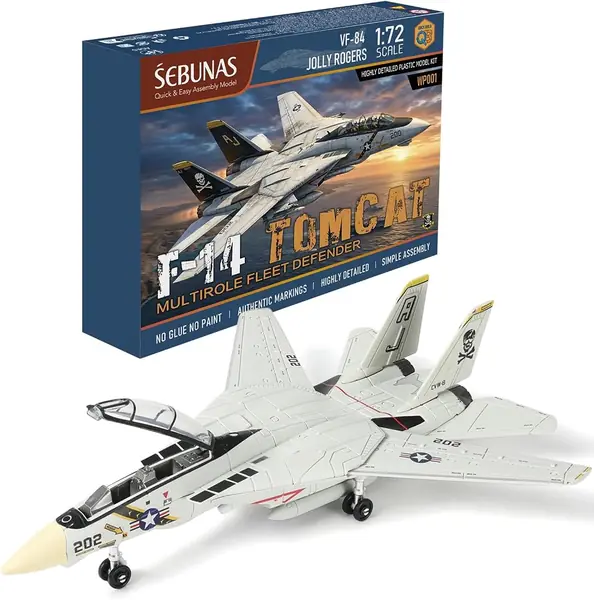
SEBUNAS F-14 Tomcat Best Snap-Together Starter

SEBUNAS 1:72 F-14 Tomcat white snap-fit fighter jet model kit

Quick snap-fit builds

Track Score 90/100
Scale
1:72
Assembly
Snap-fit
Pieces
36
Movable Parts
Yes
View on Amazon

Thirty-six pieces is the whole pitch. The SEBUNAS F-14 is a 1/72 jet that snaps together without glue, and the small parts count makes it the easiest kit here to finish in one sitting. It suits a first-time builder who wants a visible result before the novelty wears off, or a younger builder working with an adult.

We like that the finished jet has movable parts, so it is not just a static display. The detail reads clearly at this size: the panel lines and Tomcat shape hold up on a desk, and the compact footprint keeps it from taking over a shelf. The snap joints are the part to watch. Test-fit before pushing a part home, because a little trimming can close gaps.

A 36-piece kit will not teach you glue or paint work, and that is the trade-off. It is a confidence builder, not a full hobby education. If you already know you want the traditional process, go straight to the AMT Bel Air; if you want a first win this afternoon, the F-14 is the safer choice.

Our Verdict

We keep the SEBUNAS F-14 for the quickest first win: 36 snap-fit pieces and movable parts make a displayable jet without glue, paint, or a long session.

Check Latest Price
3.

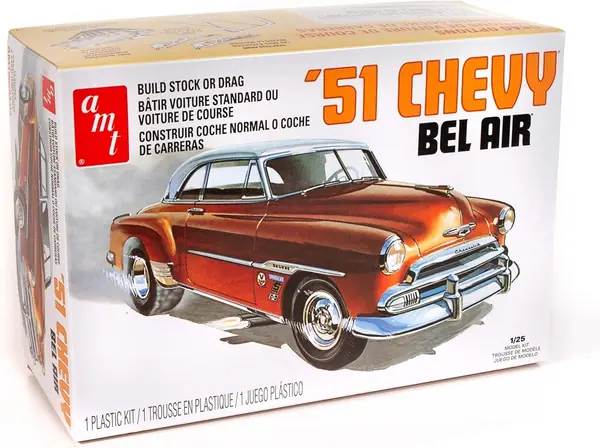
AMT 1951 Chevrolet Bel Air Best Skill Level 2 Car

AMT 1951 Chevrolet Bel Air red 1:25 scale model car kit

First glue-together car

Track Score 89/100
Scale
1:25
Decals
Full-color sheet
Skill Level
2
Build Options
Stock or drag racing
View on Amazon

Skill 2 is the useful label here. AMT sells this 1951 Bel Air as a Skill 2 kit, and that is the sweet spot for a beginner who has built a snap-fit model and wants to try glue and paint without jumping into a high-part-count project. The 2-in-1 format adds stock and drag-racing parts, so the same box can produce a factory cruiser or a nose-up gasser.

We prefer the 2-in-1 format for a first car because it gives you a decision to make beyond following the steps. The pre-lettered drag slicks, stock and chrome reverse wheels, and full-color decal sheet do a lot of the visual work for you, which is a kindness when your paint skills are still developing.

The fit is the part we watch on AMT kits: some parts need trimming and test-fitting, and the instructions are basic. That is manageable for a Skill 2 build, but it is not a shake-the-box experience. If you want to avoid glue entirely, the Bandai Zaku is the easier first build; this Bel Air is the one for a car lover who wants to learn the traditional process. The stock-or-drag choice also gives you a reason to build a second one later.

Our Verdict

We choose the Skill 2 Bel Air for a first glue-and-paint car, with stock-or-drag parts and decals that carry the detail while you learn.

Check Latest Price
4.

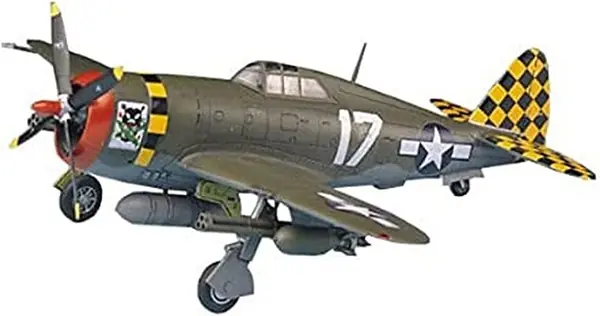
Academy P-47D Thunderbolt Best Budget Warbird

Academy P-47D Thunderbolt Razorback plastic aircraft model kit in multicolor

Budget aircraft builders

Track Score 88/100
Cockpit
Detailed interior
Weapons
Underwing weapons included
Panel Lines
Engraved with rivet detail
Landing Gear
Optional position
View on Amazon

Engraved panel lines and rivets are usually the sort of detail you pay extra for. The Academy P-47D puts them on a compact Thunderbolt kit that costs less than most of the others here, and it still includes a detailed cockpit, optional landing-gear doors, and underwing weapons.

We noticed that the build options do more work than the part count suggests. You can build the landing gear down for a grounded display or up for a clean in-flight look, and the underwing stores give the model some visual weight. The cockpit is busy enough to reward a little careful painting, but you can also leave it mostly stock and still get a convincing result.

This is a compact P-47, so check the finished size against your shelf before you order; if you want a larger centerpiece, the 1/25 Bel Air fills more space. The kit is still an easy build, and the engraved detail means you do not need aftermarket parts to make it look busy. We point to it when the subject matters more than the size.

Our Verdict

We point budget-minded aircraft builders to the Academy P-47D: engraved detail, a detailed cockpit, and optional landing gear at the low end of this set.

Check Latest Price
5.

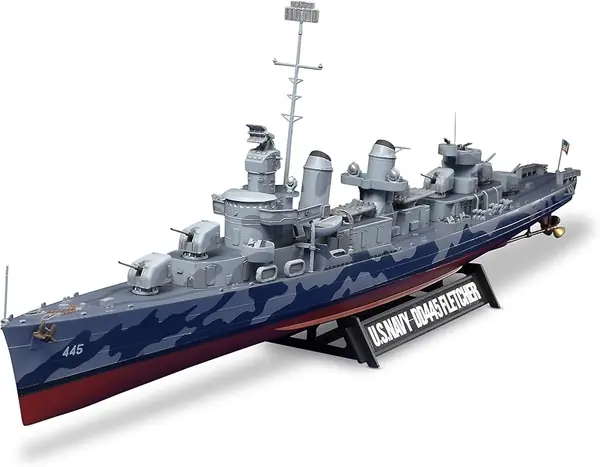
Tamiya Fletcher Class Destroyer Best for Patient Ship Builders

Tamiya Fletcher Class Destroyer 1:350 scale gray warship model kit

Patient ship builders

Track Score 87/100
Scale
1:350
Detail
Full hull, decks, weapons, superstructure
Subject
WWII U.S. Navy destroyer
Finished Length
12.9 inches
View on Amazon

A 12.9-inch Fletcher at 1/350 scale is a different kind of first kit. The hull, decks, weapons, and superstructure are all represented, and the finished destroyer has enough detail to look at home on a shelf.

A beginner who knows what they want will get the most from it. If you have a connection to a Fletcher-class ship or you want a naval subject, this is a satisfying choice. The parts fit well, and the deck snaps into place; the model looks substantial for its scale.

We like this one for a ship builder who wants a display project, not for someone chasing a fast first win. It is best treated as a naval subject rather than a general starter. If that is you, the result is a detailed destroyer that feels more substantial than its scale suggests.

Worth Noting

  • Tiny 1/350 fittings demand patience
Our Verdict

We steer patient ship builders to the Tamiya Fletcher: a detailed 1/350 destroyer with good fit, but a build that rewards slow, careful work.

Check Latest Price

How We Tested Beginner Model Kits

We started by sorting kits marketed to beginners instead of ranking them: snap-fit or glue, color-molded or paint required, stated skill level, part count, scale, and price weighed against what actually came in the box. We set aside anything that needed aftermarket detail sets or an airbrush to look finished, and flagged the large-scale subjects early, since a ship or a bomber takes up more shelf than most first-timers picture.

Fourteen kits stayed in rotation for four months. We built them where people actually build — kitchen table after dinner, a folding tray in front of a game, a desk with barely room for the runner — and kept notes on the unglamorous parts: how many pieces needed their gate trimmed before they'd seat, whether locating pins lined up or the holes had to be widened, and whether the diagram showed a part from the angle it actually went in. Every kit was dry-fitted before any cement came out.

Snap-fit builds got a second pass: we worked each joint through its range a dozen times to see what loosened, and lifted finished models by the torso to check nothing popped off. Glue kits got filler where seams gaped, and decals went on last so we could watch for silvering and edges that wouldn't lie down. Then the finished models sat on a shelf for the rest of the test, where the real verdicts showed up — landing gear that slowly sagged, antennas that vanished, detail that read at arm's length or didn't.

We followed each kit's age rating throughout, kept loose runners and small parts out of reach of kids and pets while we worked, and did all cement and paint work near an open window.

How to Choose a Beginner Plastic Model Kit

Snap-Fit or Skill 2?

Snap-fit kits are the shortest path to a finished model: the parts push together, and color molding can remove paint from the first session. Bandai's Gunpla kits are the clearest example here, but the SEBUNAS F-14 uses the same idea with even fewer pieces. If you want the traditional hobby, look for an explicit Skill 2 rating rather than a Skill 4 kit. Skill 2 assumes you can follow instructions and handle glue, not that you already know how to fill seams.

Choose snap-fit for a confidence-building first build; choose Skill 2 when you want to learn glue and paint.

Match the Part Count to Your First Session

Part count is a better difficulty signal than the picture on the box. A kit in the 30-to-50-piece range is a comfortable first session; a 100-plus-piece model is a weekend project, and a 1/350 ship can pack tiny fittings into a small finished length. If the box does not give a count, look at the scale and subject: a 1/144 mecha or 1/72 jet is usually less work than a 1/25 car with an engine bay.

Pick a part count you can finish, not the one that looks most impressive on the shelf.

Scale, Shelf Space, and Small Parts

Scale tells you two things at once: how much shelf the finished model will take and how large the individual parts will be. A 1/25 car is a substantial display piece; a 1/144 mecha is compact; a 1/350 destroyer can be a foot long yet still use very small fittings. Measure the shelf before you choose, and be honest about whether you enjoy working with tiny pieces. If you do not, a larger scale is the kinder first build.

Paint, Decals, and the Finish

Color-molded kits let you skip paint and still get a recognizable model, while a prepainted snap-fit jet can look finished straight from the box. Traditional car kits often rely on paint and decals for the final effect, so budget for those supplies and for the drying time between coats. We treat paint as a separate skill from assembly: choose a first kit that looks acceptable without it, then add paint when you are ready. The AMT Bel Air's decal sheet does a lot of the work, but a good paint job still takes practice.

Fit, Flash, and Instructions

Fit is where beginner kits separate. Snap-fit parts should click without force; if a joint needs a hard push, test-fit and trim the mating edge rather than forcing it. Glue kits can have flash or slightly warped parts, and basic instructions may leave you to infer the placement. Keep a hobby knife, sanding stick, and tweezers within reach, and dry-fit before applying cement.

Frequently Asked Questions

Final Verdict

We recommend the Bandai Spirits HG Zaku II as the first kit for most people. It snaps together, is molded in color, and includes weapons, so a beginner gets a poseable model without buying glue or paint. The 1/144 scale also keeps it easy to display.

If your heart is set on a car, the AMT 1951 Bel Air is the Skill 2 choice; if you want the fastest snap-together build, the SEBUNAS F-14 wins. The Tamiya Fletcher is the specialist pick for a patient ship builder, not the kit we hand to a first-timer who wants a quick win.