Best Hobby Knife Blades of 2026

Every hobbyist knows the small, dry snap of a #11 tip letting go halfway through a clean line. A good blade pack prevents it with an edge that's sharp out of the wrapper, a shank that seats all the way into the collet so it doesn't rock, and enough blades that you swap rather than soldier on with a dull one. A built-in slot for spent blades beats the coffee can of dead points under the desk.

The tip fails before the edge does, so how a blade handles light passes through the material you actually cut matters more than anything on the package. Across 18 packs used on cardstock, balsa, plastic sheet, leather and mat board, the seven picks stayed sharp, fit the handle they were made for and cost little enough per usable edge that swapping feels easy.

Our Top Picks

The Best Hobby Knife Blades

1.

X-Acto #11 Blades with Dispenser Best Overall
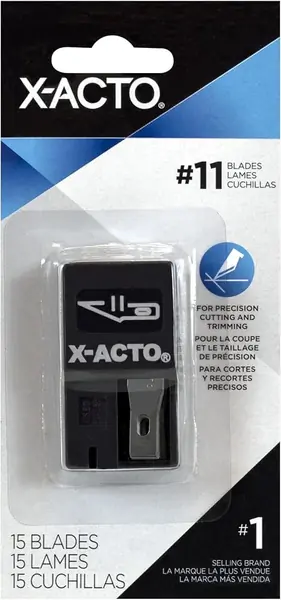
X-Acto #11 fine point knife blades in a putty colored safety dispenser case

Fine detail work

Track Score 97/100
Count
15 blades
Blade Type
#11 fine point
Handle Fit
X-Acto Type A
Dispenser
Built-in slot for used blades
View on Amazon

The dispenser is the reason this pack stays within reach on our bench. Unscrew a dull #11, drop it through the slot in the side of the case, and the blade is out of the trash and away from fingers. The fifteen blades inside are standard #11 fine points, the profile X-Acto's Type A handle was built around.

We recommend this pack to anyone who wants the blade their handle was designed for. The points are sharp and finely honed, they start a cut exactly where you set them instead of skating across the surface, and the shank drops into other makers' handles as easily as it does into an X-Acto. A #11 is a standard, and these are the blades the others get measured against.

The fine point is also the fragile part. Lean on one in basswood or thick cardstock and the tip is what gives first, so we keep the cut shallow and take a second pass rather than forcing it. If your work is mostly heavy stock, the #2 or a thicker carbon blade will last longer between changes; for paper, vinyl, tape and detail trimming, this is the pack we reach for.

Worth Noting

  • Costs the most per blade of our picks
  • New blades can be stiff to lift from the case
Our Verdict

We recommend this pack for anyone who wants the blade every #11 handle was designed around, plus a dispenser that makes swapping a dull point safe.

Check Latest Price
2.

Nicpro 120-Piece #11 Hobby Blades Best Bulk Value

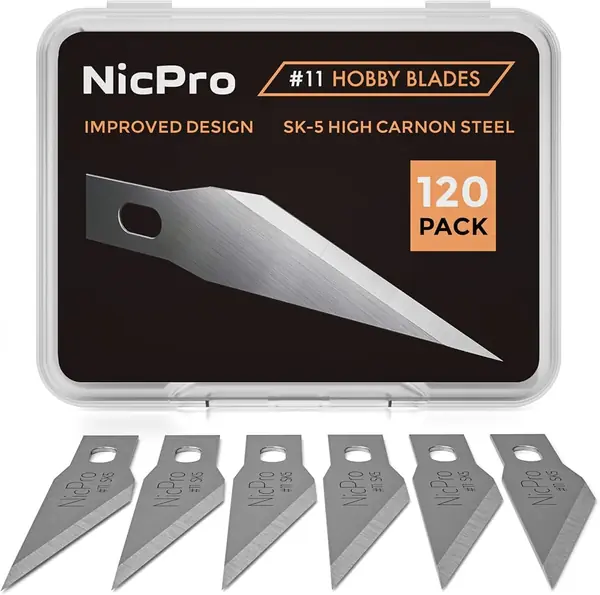
Nicpro #11 hobby knife blades in silver steel packed in a storage case

High-volume cutting

Track Score 96/100
Count
120 blades
Blade Type
#11 fine point
Material
SK-5 high carbon steel
Edge Angle
25 degrees
View on Amazon

One hundred and twenty blades in a storage case changes the economics of a hobby knife: a dull edge stops being something to nurse. We keep this box on the shelf as our working supply and change the blade the moment a cut starts to drag, which is the habit a bulk pack is really buying. The 25-degree SK-5 edge is sharp out of the case and handles paper, vinyl, cardstock and light leather cleanly.

Quality holds up across the box in a way we don't take for granted at this count, and the fit is standard #11 — snug in X-Acto handles old and new and in the off-brand knives we keep in a drawer. The trade is at the tip. This is thin steel, and in anything thicker than cardstock it can snap before it wears out, so leave the balsa and mat board to a #2 or a thicker blade.

Set that against our top pick and the arithmetic makes the case for itself: eight times the blades for about the same money. If you cut most days, that is the difference between reaching for a fresh point and pressing on with one you should have changed an hour ago.

Worth Noting

  • Tips can snap in material thicker than cardstock
Our Verdict

If you cut most days, we think this box is the sensible buy: a working supply that makes a fresh edge cheaper than a forced one.

Check Latest Price
3.

Excel Blades #11 Replacement Blades (5-Pack) Best for Tip Strength

Excel Blades #11 double honed carbon steel craft knife blades in a five pack

Plastic and balsa

Track Score 95/100
Count
5 blades
Blade Type
#11 double honed
Material
Carbon steel
Origin
Made in the USA
View on Amazon

A #11 usually dies at the point. The edge is still serviceable, but the last millimeter has folded, chipped or snapped off, and the blade goes in the tin anyway. Excel double-hones a carbon steel blade that runs a little thicker behind the tip than a standard #11, which is the change that keeps points alive through plastic trimming, scoring balsa and cleaning up prints.

That thickness is also the caveat. In an Excel or X-Acto handle these seat perfectly well, but the stock is too thick for slim keychain knives such as a Gerber Artifact, and a very old handle can prefer a standard blade. Check the knife you plan to feed before you commit to a five-pack.

What we like most is the tip life. In work that eats cheap points we got noticeably more cutting from each blade before the point let go, and the steel has stayed bright in the drawer instead of spotting. These are American-made carbon blades aimed at modelers, hobbyists and graphic artists, and they behave like it.

Our Verdict

We point modelers and plastic trimmers here when tips keep letting go, since the thicker carbon blade survives work that shortens a standard point.

Check Latest Price
4.

Fiskars #11 Replacement Blades (5-Pack) Best Small Pack

Fiskars standard #11 replacement craft knife blades with a plastic storage case

Fiskars handle owners

Track Score 94/100
Count
5 blades
Blade Type
#11 standard
Material
Stainless steel
Storage
Plastic case
View on Amazon

If the handle in your hand says Fiskars, this is the refill made for it: five stainless #11 blades in a hard plastic case that keeps the points away from your fingers in a drawer.

We like it best as a drawer pack. Stainless is the quiet advantage here — carbon blades left in a humid studio or a garage go spotty and dull faster, and these don't — and the angled edge does a clean job on cardstock, photos, felt and thin plastic. The shank is standard enough that it seats in other holders too, including Gerber's Prybrid, so it isn't a one-brand blade.

Where it lands is a Fiskars knife, a pencil case, weekend paper projects and a classroom table. A hard case and stainless steel are the right things to pay for in a blade that sees occasional use, and this pack gets both without asking you to store a hundred loose points.

Worth Noting

  • Five blades go fast for regular cutting
Our Verdict

The right refill for a Fiskars handle and a light-use drawer, where stainless steel and a hard case matter more than a big count.

Check Latest Price
5.

X-Acto X202 #2 Large Fine Point Blades (5-Pack) Best for Heavy Stock

X-Acto X202 #2 large fine point carbon steel blades for a Type B handle

Heavyweight materials

Track Score 93/100
Count
5 blades
Blade Type
#2 large fine point
Material
Carbon steel
Handle Fit
X-Acto Type B
View on Amazon

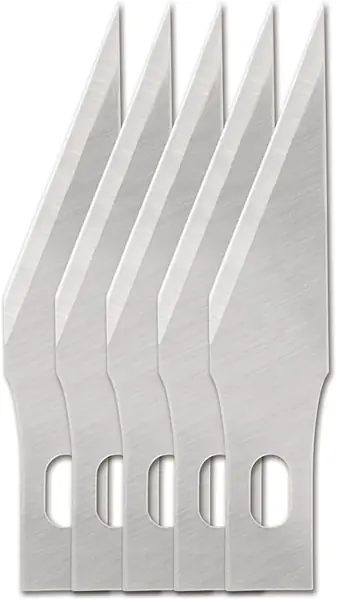
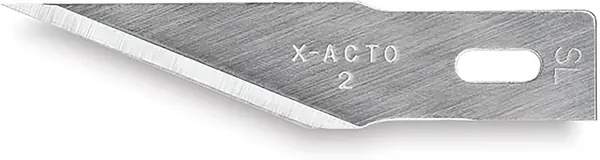
These will not fit the knife in your drawer. The X202 is a Type B blade, with a wider shank for X-Acto's larger handle, and if you own a standard Type A knife you want the #11 packs above. What the #2 buys is steel behind the edge for mat board, balsa, film, acetate and light metal, and it is the blade we keep for the cuts a fine point cannot survive.

At this size the edge is what you are paying for, and it holds: the carbon steel takes a keen edge and carries it through leather and heavy cardstock that would take three #11 blades. It is a leather-working and model-making blade more than a paper blade, and that is exactly how it cuts.

Used as intended — long straight cuts in mat board, scoring balsa, skiving leather — the extra width tracks a line more steadily than a #11 and the edge does not wander. It is slower in tight curves, which is the honest trade: you give up a fine point's precision and get an edge that lasts through abrasive stock.

Worth Noting

  • No case or dispenser in the pack
  • Closeout item with no returns
Our Verdict

For mat board, leather and film in an X-Acto Type B handle, we take this pack over any #11 — the extra steel is what gets through.

Check Latest Price
6.

Nova #11 Hobby Blade Refills (120-Pack) Best for Bulk Buyers

Nova #11 hobby blade refills in silver steel inside a compact storage box

Bulk buyers

Track Score 92/100
Count
120 blades
Blade Type
#11 fine point
Material
SK-2 high carbon steel
Storage
Storage box with lifting tab
View on Amazon

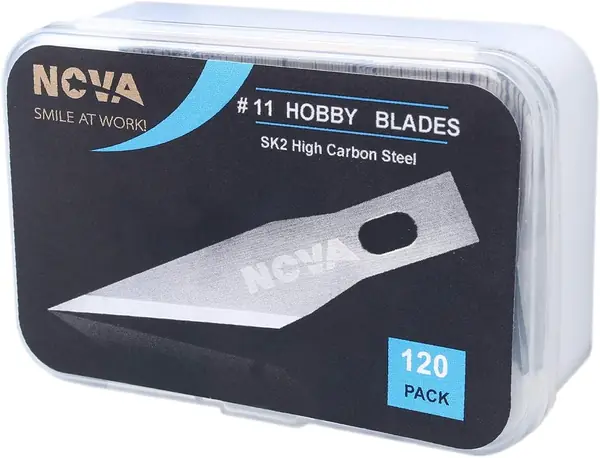
SK-2, not SK-5: Nova's pitch is a higher grade of high carbon steel than most of the bulk boxes here use, sold as stronger tips and longer edge life. Steel grade is not something we can confirm from the handle, so we judged the blades on the work. They come sharp, they seat in standard #11 handles, and the case is the best of the bulk boxes on this list.

That case has a lid and a lifting tab, so one blade comes out cleanly instead of half the box ending up on the bench. Fit is standard, and these turn up in everything from X-Acto handles to the Gerber Prybrid X. The tip is the weak point — in thicker stock these can break more readily than the SK-5 boxes.

Our reservation is the price of the steel story. These cost more than the Nicpro box for the same 120 blades, and we did not find the tips any tougher in cardstock, vinyl or foam board. Buy this one if the lifting-tab case and the higher-grade steel claim are worth the premium to you; otherwise the Nicpro is the better value in a bulk #11.

Worth Noting

  • Tips can break in heavier material
Our Verdict

A good bulk box if the lifting-tab case appeals, though we found nothing in the higher-grade steel to justify its premium over our value pick.

Check Latest Price
7.

DIYSELF #11 Exacto Blades (20-Pack) Best for Occasional Crafters

DIYSELF #11 exacto knife blades in silver steel packed in a storage case

Occasional crafters

Track Score 91/100
Count
20 blades
Blade Type
#11 fine point
Material
SK-5 high carbon steel
Storage
Storage case
View on Amazon

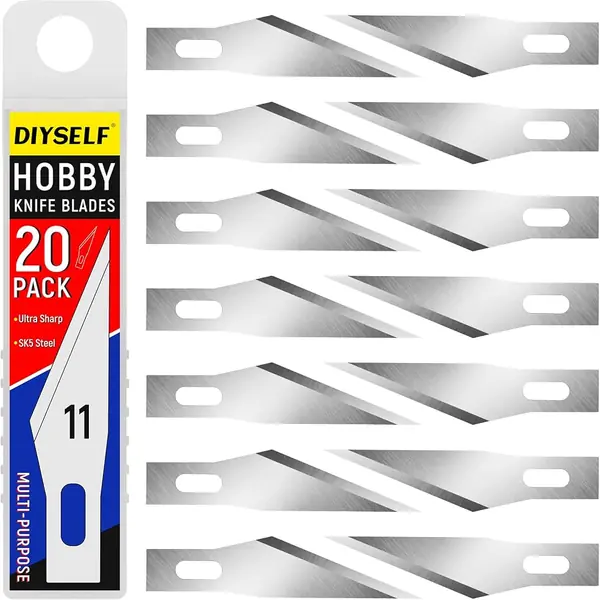
Consistency is what we flag about this box. Some blades come out of the case shaving-sharp, and the next one drags through cardstock and leaves a fuzzy edge instead of a clean one. That is the risk of twenty SK5 blades and a case for very little money, and it is why this box sits lower on our list than the brand packs.

The shank, at least, is dependable: standard #11, and it fits handles older than most of the people using them. It sits snug in the holder with no wobble once the collet is tight, which is more than we can say for some no-name blades.

What you get for the money is genuine — twenty blades, a case that keeps them together, and a coating that holds rust off in storage. For a single project or a drawer that sees occasional use, that is plenty of blade and then some.

So this is a stocking box, not a working box. For a card, a kid's project or a spare in the kitchen drawer, twenty blades in a case is exactly right. If you cut every day and want the tenth blade to feel like the first, pay the extra for the X-Acto pack or the Excel blades.

Worth Noting

  • Edge quality varies from blade to blade
Our Verdict

Twenty standard blades in a case for very little money make a fine stocking box for occasional crafting, though the edge varies more than we like.

Check Latest Price

How We Tested Hobby Knife Blades

We built the shortlist the way a shopper would, then trimmed it — reading pack details for blade number, handle type, steel, count, and what the blades arrive in, and dropping any pack that never said which handle it fit. That left 18 packs worth putting on the bench.

Testing ran five months, mostly on weekend afternoons at a workbench and at the dining table during a long model build. Each blade came out of its pack and went straight into the handle it was made for — a #11 in a Type A, the large fine point in a Type B — where we checked whether the shank seated fully or rocked in the collet. We cut 1/8-inch balsa with light passes and counted how many it took, traced tight curves through stencil film, sliced leather and mat board, and noted whether the tip folded or the edge dulled first. Light passes throughout, and no fine point ever got used to pry anything.

We opened every pack to see what it arrived in — a dispenser with a used-blade slot, a plain case, or a sleeve — and dropped spent blades straight into a dispenser slot or a rigid sharps container, never loose in the trash. Steel and corrosion protection got checked by leaving blades in their packs in a garage workshop for a few weeks and looking for rust and for the oil film meant to stop it. For consistency, we cut the same material with three blades from one pack and compared the pass counts; for value, we compared how many edges per pack actually held up.

How to Choose Hobby Knife Blades

Match the Blade Number to Your Handle

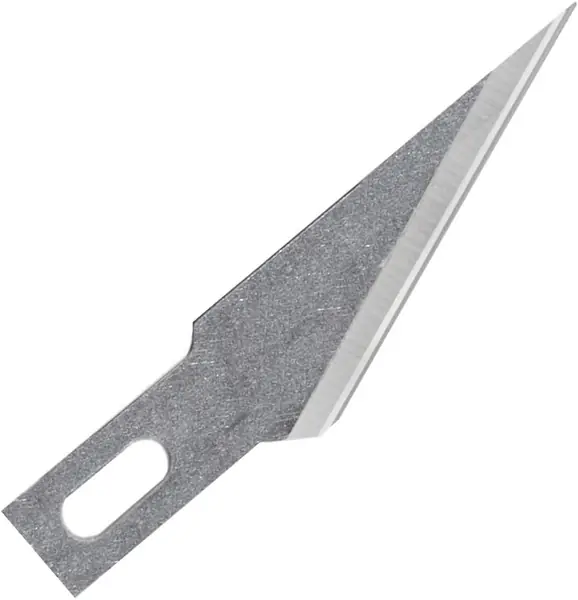
#11 is the fine point that fits the great majority of hobby and craft knife handles, and it is the safe default when you are unsure what you own. A #2 blade is wider and needs the larger Type B handle, while #16 and #17 blades are scoring and chisel profiles for specific cuts rather than all-purpose points. Number and shape travel together, so a cheap box of #2 blades is no bargain if your knife takes a #11.

The trap is the bundle: if a pack ships handles along with the blades, it is a kit, not a refill. Read the handle type printed on your knife before you order, and when there is no marking, buy a small #11 pack first — it seats in almost everything.

Expect the Tip to Fail Before the Edge

A #11 is thin at the point by design, and that point is what breaks when you pry, curve hard or push through thick stock. We rank a blade on how long the point survives, not on how sharp it feels on the first cut, because a snapped tip takes the blade out of service as surely as a dull edge does.

Light passes cost less than blade changes: two shallow cuts through cardstock outlast one forced one every time. For anything thicker than cardstock — balsa, mat board, leather — move up to a #2 or a #17 instead of leaning on a fine point.

Buy the Count You Will Actually Use

Small packs make sense for a drawer or a classroom, where five blades can last a season. If you cut most days, a hundred-blade box turns a fresh edge into something you don't think about, and the cost per blade falls sharply at that count.

The trap here is buying two hundred blades of a blade you have not tried. Start with a small pack from the brand you are considering, run it on scrap, then buy the box once the fit and the edge suit your hand.

Look at What the Blades Arrive In

A dispenser with a slot for spent blades, like the X-Acto pack in this guide, solves the worst moment of blade ownership: the second between unscrewing the old point and getting it somewhere safe. A plain plastic case is the next best thing, and a cardboard sleeve is the least. Whatever you choose, have a rigid container ready before you open the pack, and keep it within arm's reach of where you cut rather than across the room.

Consistency Separates a Cheap Box from a Good One

The blade at the bottom of a bargain box is often not the blade at the top: one shaves paper and the next tears it. We pay attention to that spread because it decides whether you trust a fresh blade on a finished piece rather than on scrap.

A small pack is the cheap test. Run four or five blades from it on scrap before you trust the whole box with a project that matters.

Frequently Asked Questions

Final Verdict

For most people the X-Acto #11 pack is the right buy. The blades seat in the handle you already own, they start a cut where you put them, and the dispenser turns the worst part of a blade change — the spent point — into a two-second job. If volume matters more than the name, the Nicpro box gives you eight times the blades for about the same money, and if your tips keep snapping in plastic and balsa, the thicker Excel blades are the ones to try.

If you own a Type B handle and cut mat board, leather or film, skip all of these and buy the X-Acto #2 pack. It is the only blade here sized for that knife, and no #11 will do the job it does.